Swatch card No. SW-4015 · cut October 30, 2026
Apparel ManufacturingMill spec card
Yue Yuen profit warning: 50%-55% nine-month decline
Yue Yuen expects nine-month 2026 profit to fall 50% to 55% from $278.7 million, as shorter brand orders, higher factory costs and tariff uncertainty erode manufacturing revenue.
- Fiber
- Apparel Manufacturing
- Count
- 3 min read
- Cut
- Weight
- 678 words
Spec notes
- Preliminary nine-month 2026 forecast calls for a 50%-55% profit decline from $278.7 million in the comparable 2025 period.
- Group manufacturing revenue declined 3.8% year over year.
- Short lead-time orders increased during the nine-month period as brands placed orders cautiously.
- Footwear shipments rose in September 2026, but the increase did not offset first-half operating challenges.
- Most China imports faced an around-30% tariff in October 2026, down from a 145% high; the U.S.-China truce runs through Nov. 10.
By Elena Vasquez
Yue Yuen Industrial (Holdings) Ltd. expects profit for the nine months ended Sept. 30, 2026 to decline 50% to 55%, compared with $278.7 million in the same period of 2025.
The company issued the warning Monday after a preliminary review of its unaudited consolidated financial statements. The estimate covers the nine months ended Sept. 30, 2026; no final profit figure was disclosed.
Yue Yuen attributed the decline to “multiple headwinds in the operating environment” in manufacturing. It said: “Weak demand led to a contraction in sales scale, which coupled with rising costs and increasing pressure on product efficiency, weighed on the gross profit margin of the Group’s manufacturing business during the period.”
The disclosure places the warning across demand, cost and execution rather than a single tariff event. Manufacturing revenue fell 3.8% from the year-ago level, while higher labor and overhead costs weighed on gross profit.
What is driving the profit warning?
The company’s explanation combines four pressures: weaker demand, lower sales scale, rising production costs and declining product efficiency. Its forecast therefore points to a margin contraction across a sizable manufacturing operation rather than a revenue decline alone.
Yue Yuen did not quantify the effect of each pressure. For brand customers, the warning gives a broad signal that order volume and factory economics moved against suppliers during the period.
How did brand ordering change?\n
Yue Yuen said: “short lead-time orders increased, as brand customers also adopted a more cautious approach to order placement.” The company said the change produced greater volatility in demand across the nine-month period.
The warning did not disclose what share of orders moved to shorter lead times or quantify the associated margin effect, leaving the 3.8% manufacturing-revenue decline as the clearest measured result.
What pressured factory costs and output?
Yue Yuen also reported increased labor and overhead costs, including rising wages. Overlapping long holidays across its three main production bases complicated production scheduling and resource allocation.
The company did not identify the three production bases, disclose factory-level capacity or utilization, or provide certification updates. That leaves the warning limited to group-level indicators for brands assessing supplier resilience.
Footwear shipments increased in September, which the company said indicated some improvement. The monthly increase did not offset the operating challenges recorded during the first half.
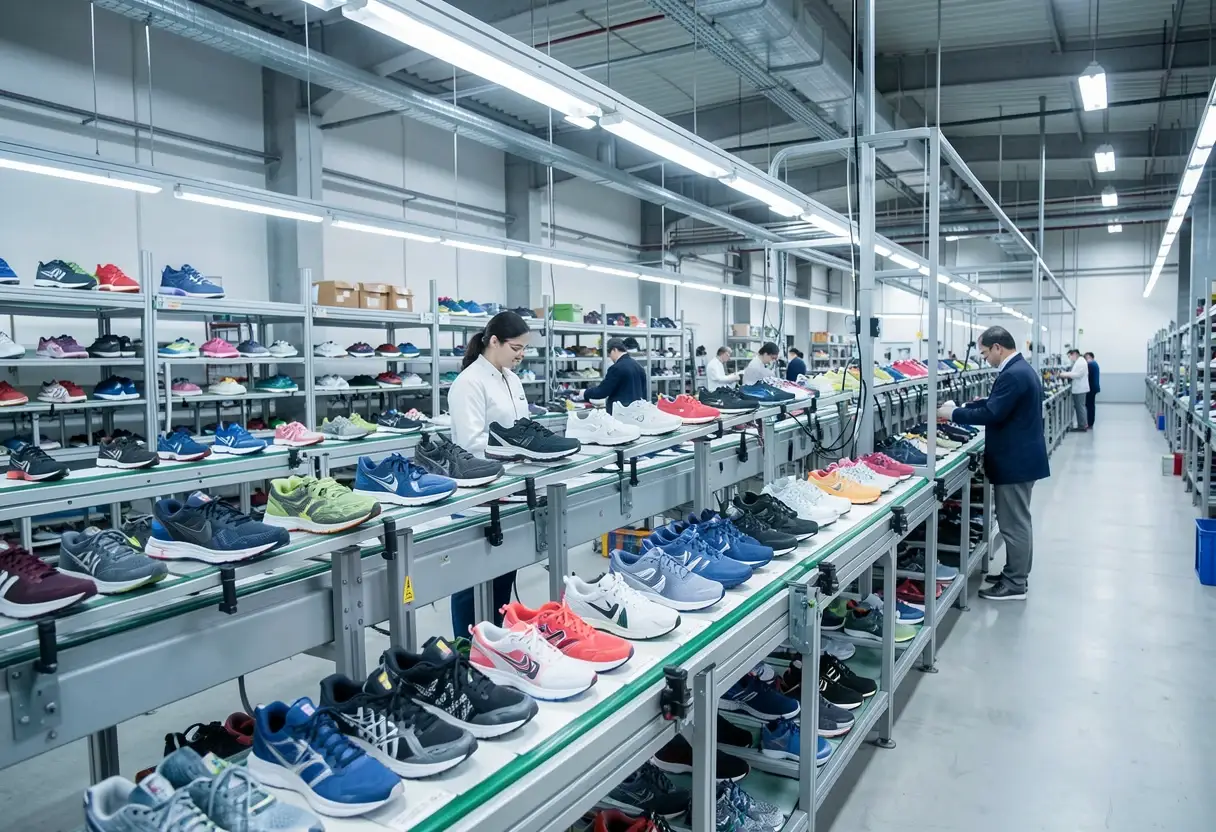
Yue Yuen manufactures athletic, casual and outdoor shoes. Its product scope includes shoe uppers, shoe bottoms and completed products consisting of both uppers and bottoms. The customer list includes Adidas, New Balance, Nike, Salomon, Crocs and Timberland, among others.
What tariff changes still matter?\n
New tariff policies and geopolitical tensions last year created uncertainty for Chinese manufacturers, with effects spreading through shoe orders and factory allocation.
- April 2025: U.S. President Donald Trump’s reciprocal tariff policy introduced increases across geographies, with significant effects on China and Vietnam. The policy reduced shipment volumes at Chinese manufacturers as shoe companies shifted production elsewhere because of tariff fears.
- Last October: Shoe firms received a one-year break from heightened reciprocal tariffs on China imports.
- February: The U.S. Supreme Court ruled most of Trump’s emergency tariffs illegal.
- September 2026: The U.S.-China bilateral truce was signed and remains current through Nov. 10, 2026.
- October 2026: The tariff rate on most China imports stood at around 30%, down from a high of 145% last year.
Those changes alter the tariff baseline but do not settle cost allocation between brands and manufacturers. Yue Yuen did not disclose tariff pass-through, margin effects by sourcing country or how much order weakness reflected tariff fears rather than softer demand.
For brands, the open commercial test is whether the lower rate and the Nov. 10 truce deadline restore Chinese production to order books without surrendering the short-lead-time flexibility that characterized the nine-month period.
With September shipment growth still unable to offset first-half operating challenges, Yue Yuen’s next order and margin data will show whether tariff relief can convert cautious ordering into firmer factory demand.
via WWD (Source)
More from Elena Vasquez
Show full bio
News editor covering money, funding and market shifts around fashion industry as a trade and business at The Fabric Brief.
279 articles
Also on the board
- Yue Yuen September Shipments Rise 6.6%, First Growth Signal in a Weak Year
- Adidas Raises Profit Outlook as Q3 Operating Profit Hits Record €1.01bn
- Deckers Faces Q2 Test as Analysts Split on Hoka and Ugg Momentum
- Shein Posts 55.6% Drop in H1 Adjusted Net Profit as EU Fees Bite
- Vietnam textiles top $36 billion; Vinatex profit outpaces plan