Swatch card No. SW-8433 · cut October 13, 2026
Supply Chain & SourcingMill spec card
Yue Yuen September Shipments Rise 6.6%, First Growth Signal in a Weak Year
Yue Yuen's footwear manufacturing revenue rose 6.6% in September, its first monthly gain amid a 3.8% nine-month decline, as China tariff rates sit near 30%.
- Fiber
- Supply Chain & Sourcing
- Count
- 3 min read
- Cut
- Weight
- 509 words
Spec notes
- Footwear manufacturing revenue rose 6.6% year over year in September 2026
- Nine-month manufacturing revenue through September 2026 is down 3.8%
- Consolidated September revenue rose 5.6% to $668.6 million; Pou Sheng fell 2.5%
- Tariff rate on most China imports is around 30% as of October 2026, down from 145%
- U.S.-China bilateral truce signed September 2026 runs through November 10, 2026
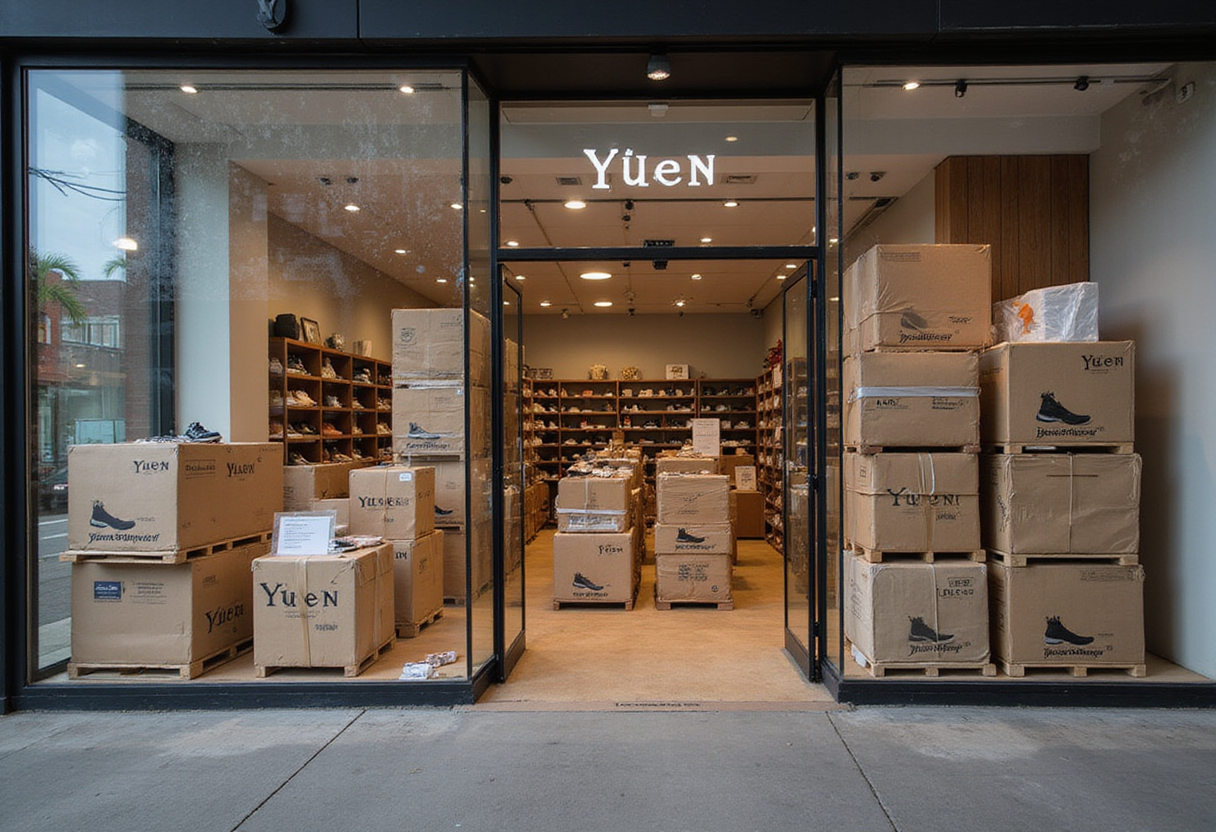
Yue Yuen's footwear manufacturing revenue rose 6.6 percent year over year in September — the first positive monthly print for the world's largest athletic shoe maker in some time, and one that arrives with the nine-month figure still in the red.
For the nine months ended September 2026, the core shoe manufacturing operation's revenue was down 3.8 percent. One month does not reverse three quarters of decline. It does, however, mark a shift from August, when footwear manufacturing revenue fell 1.6 percent.
Consolidated group operating revenue, including the retail subsidiary Pou Sheng International (Holdings) Ltd., rose 5.6 percent in September to $668.6 million. Pou Sheng's own revenue fell 2.5 percent — an improvement on August's 9.0 percent drop, but a decline all the same.
August made for grim comparison. Consolidated operating revenue fell 2.1 percent to $636.6 million that month. September, by the company's account, showed improvement across overall business operations.
Whose shoes does this move?
Yue Yuen manufactures athletic, casual and outdoor footwear, plus uppers, bottoms and completed products, for Adidas, New Balance, Nike, Salomon, Crocs and Timberland, among others. A 6.6 percent shipment gain across a customer base of that scale is a volume signal, not a press release. Order intake and shipments both improved, the company said.
What does this change for sourcing teams? Potentially, the arithmetic on China.
The tariff backdrop
China's shoemakers have operated under pressure since April 2025, when U.S. President Donald Trump imposed reciprocal tariffs. China is no longer the low-cost supplier it once was, and brands have shifted volume to Vietnam and Cambodia. Last October, footwear firms received a one-year break from "heightened reciprocal tariffs" on China imports.
Then, this past February, the U.S. Supreme Court ruled most of Trump's emergency tariffs illegal. Trump immediately signed an order for new 10 percent global tariffs for a limited 150-day period, which expired on July 24. That was followed by new tariffs ranging from 10 percent to 12.5 percent. Some shoe brands took advantage of the lowered rates and moved production back to China.
As of October 2026, the tariff rate on most China imports sits around 30 percent — down from a peak of 145 percent last year, though hardly a return to pre-2025 conditions. The bilateral U.S.-China truce signed in September 2026 runs through November 10, 2026.
Green shoots, with an asterisk
A 6.6 percent monthly gain against a 3.8 percent nine-month decline is the definition of early-stage recovery: the trend line has bent, the cumulative picture has not. Sourcing executives will want to see whether October and November confirm the pattern, particularly given the tariff window that closes on November 10.
The manufacturer has given a monthly number, not a forecast. If the truce holds and the 30 percent rate persists, the question becomes whether September was the bottom or merely a favorable month. The next two releases should answer that.
via WWD (Source)
More from Tom Whitfield
Show full bio
Market editor covering regulation, policy and their impact on fashion industry as a trade and business at The Fabric Brief.
214 articles
Also on the board
- Nike Cuts Guidance, Launches 'Pace' Overhaul to Reduce Costs
- Sanuk Plots 2027 Sneaker Launch After 58% Revenue Jump
- Philipp Plein Bankrolls Expansion as Footwear Nears €100M
- Outdoor Unit Sales Fell 5.3% in Q2 as Prices, Not Demand, Prop Up Dollars
- Kohl's Footwear Comp Accelerates 500 Basis Points as Boots Rebound