Swatch card · cut November 23, 2026
Brands & Retail BusinessMill spec card
Western Luxury Brands Reset China Strategy as Market Contracts
Bain logged a 3-5% contraction in mainland China's personal luxury market in 2025, and Western houses are repricing, localizing and pruning stores as Burberry and Ralph Lauren post China gains.
- Fiber
- Brands & Retail Business
- Count
- 5 min read
- Cut
- Weight
- 985 words
Spec notes
- Mainland China's personal luxury market contracted 3-5% in 2025, according to Bain.
- Burberry posted Greater China retail growth of 9% in Q1 and 5% in Q2 of fiscal 2026.
- Ralph Lauren China sales rose more than 35% in Q2; Kering's Asia-Pacific revenue excluding Japan fell 8%.
- Hermès Greater China growth turned broadly flat year-on-year after Q3 results on declining traffic.
- Louis Vuitton, Dior, Loro Piana and Tiffany opened Tier-1 flagships while scaling back Tier-2 and Tier-3 presence.
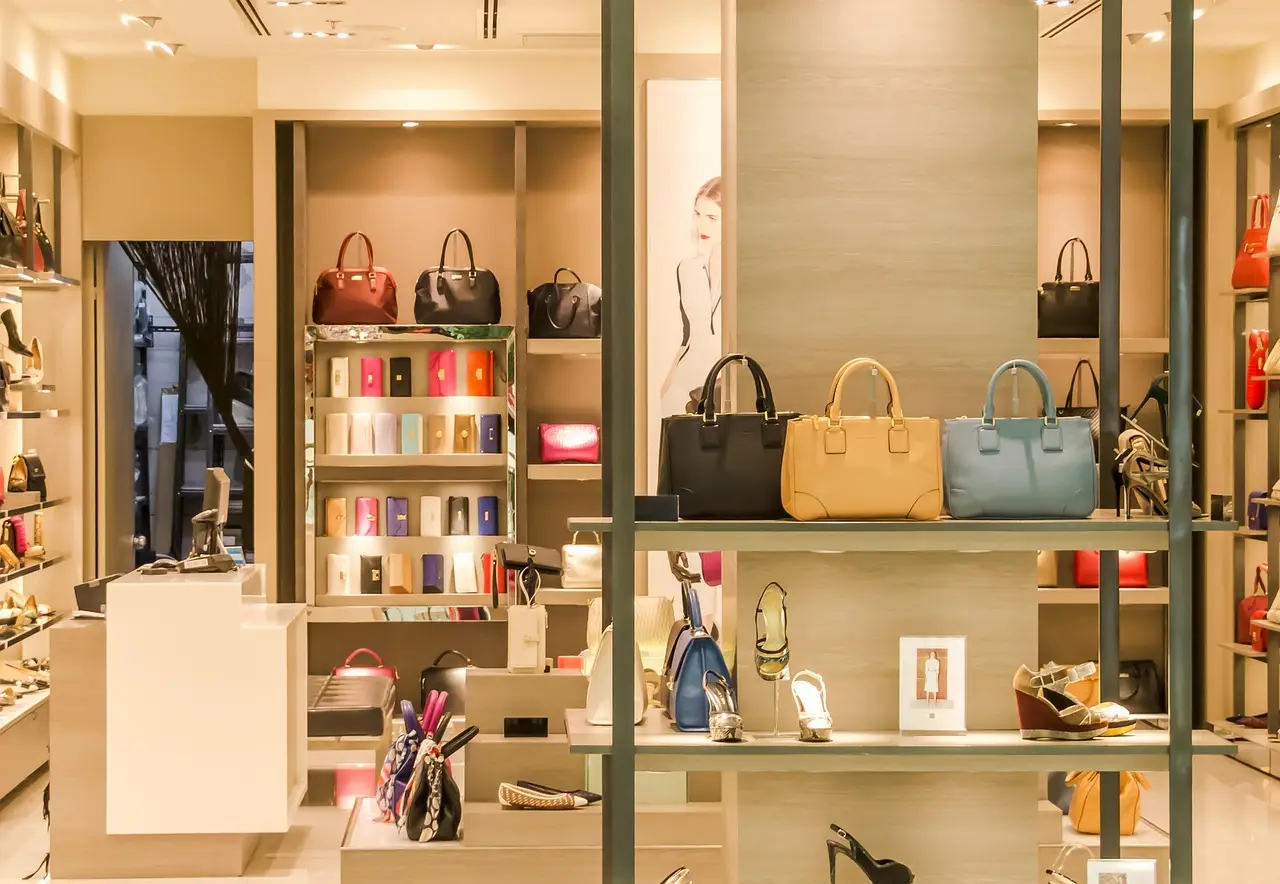
Mainland China's personal luxury market contracted 3% to 5% in 2025, Bain reported early this year, with fashion lagging the broader second-half recovery. Western houses face a planning reset, not a wait-and-see cycle: pricing, localization and channel decisions cannot wait for a rebound analysts cannot date.
How bad is the downturn?
LVMH chief financial officer Cécile Cabanis said on the October earnings call: "The third quarter brought a more challenging Chinese consumer backdrop with a 'feel-good' factor deteriorating at the very beginning of the quarter."
Goldman's luxury analyst Erwan Rambourg told Vogue Business in October: "There have been quite a few [Chinese] store closures, and I think the mood is unsupportive of luxury." Results split along brand lines.
Hermès grew in Greater China through June, then went broadly flat year-on-year after third-quarter results on declining traffic. Kering fell 8% in Asia-Pacific excluding Japan, where CEO Luca de Meo said in a statement that "delivering our action plan in China" will help restore momentum. Prada Group still counts China as a weak point.
Euromonitor International's Fflur Roberts linked weaker discretionary spending to softer consumer confidence, slower growth and heightened price sensitivity, after more than a decade in which China drove global luxury growth.
Who is gaining share?
Burberry's Greater China retail growth of 5% in Q2 of fiscal 2026 followed a 9% climb in Q1, carried by local spending, CEO Joshua Schulman told investors earlier this month. He said: "We clearly understand that the market in China is challenging right now. That said, we are pleased with our outperformance in a dynamic market."
The brand spent two years aligning price with consumer expectations after what Schulman called a historic positioning that had exhausted itself.
Ralph Lauren's China sales rose more than 35% in Q2 on store sales and distribution expansion, CEO Patrice Louvet told investors. Against Kering's 8% Asia-Pacific decline excluding Japan, that figure frames the split: premium American style priced below most luxury houses is taking volume that European heritage houses are losing. Chanel also performs well in China, with Matthieu Blazy's appointment cited by 2034 co-founder Julio Ng as a fresh creative direction that renewed consumer interest at an established house.
What do mall sales data show?
Overall tenant sales at Chinese high-end malls outpaced luxury brand growth in 2025 and 2026, China International Capital Corporation vice president Liwei Hou reported. Star performers:
- Sportswear: Arc'teryx and Salomon
- Accessible brands, including Ralph Lauren
- Chinese labels Laopu and Songmont
- Fine dining
"A crisis of luxury is an opportunity for others," Hou said. "Proactive changes are needed." Domestic rivals win on value for money, and China's cost-effective manufacturing base leaves them room for wider margins. The "Guochao," or national tide, movement favors brands with native cultural fluency.
What must Western brands change?
Price first. Hotpot CEO Jonathan Travers-Smith said: "The Chinese consumer hasn't stopped spending. They've stopped overpaying for a logo. Status has moved from visible wealth to taste, craft, and wellbeing." His prescription: stop annual price hikes, invest in clienteling.
Citi's head of luxury goods research, Thomas Chauvet, said: "The industry has spent a lot of time talking about creativity and marketing, but I think the bigger challenge is rebuilding a sense of value." He rejects blanket discounting, favoring stronger products, better assortments and clearer reasons to buy.
Localization next. 2034 co-founder Olivia Chen said: "A China strategy cannot simply be an adaptation of global marketing materials." Local teams need brand knowledge and decision authority, with local activity aligned to international positioning. Burberry's second quarter included Chinese Valentine's Day capsule collections and a localized activation with China National Geography. Consultant Calvin Wang warns against "superficial 'Guochao' tokenism," where zodiac animals or calligraphy on Western silhouettes reads as opportunistic.
On media, Travers-Smith urges brands to study how consumers talk on Xiaohongshu and Douyin, build cultural moments made in China rather than adapted for China, and put user-generated content from influencers and key opinion leaders ahead of polished brand-owned posts.
How should stores and channels be restructured?
Bismuth recommends closing underperforming stores, reducing promotional activity and slowing retail expansion. Louis Vuitton, Dior, Loro Piana and Tiffany opened new flagships in Tier-1 cities while scaling back Tier-2 and Tier-3 presence over recent years, though some insiders favor selectivity over a blanket Tier-1-only strategy: China behaves as a continent of distinct territories.
On wholesale and direct-to-consumer networks, Chen said brands need people who understand positioning and represent it over the long term, because where and how products sell shapes reputation. Chinese DTC discovery, communication and clienteling run largely through WeChat mini-programs and Tmall Luxury Pavilion, which brands must align into one consumer journey.
What comes next?
Analysts cannot date a recovery, and they doubt the old market returns. Travers-Smith said: "The slump might be cyclical, but the change in behavior is structural." Property wealth will not return to 2021 levels, and the consumer who learned to buy less and better will not unlearn the habit.
For 2027 he flags AI assistants such as Doubao and Qwen as the first place consumers ask what to buy, making accurate brand descriptions a visibility issue at the moment of consideration. Hou expects Gen Z and Gen Alpha to become business pillars in 10 to 20 years, offering cultural relevance before direct revenue. 2034's Cherry Xu wants brands to move from cultural marketing to cultural production through long-term relationships with local artists, designers and independent cultural institutions.
"Chinese luxury demand may recover, but I suspect the market that emerges will be more mature and more competitive than the one brands enjoyed over the past decade," Chauvet said. Brands that reprice, localize output and prune underperforming doors should hold share into that reset.
via vogue.com (Source)
More from Elena Vasquez
Show full bio
News editor covering money, funding and market shifts around fashion industry as a trade and business at The Fabric Brief.
357 articles
Also on the board
- Luxury Q3: Sector Growth Halves to 4% as China Sinks Results
- Singles' Day Sales Hit $251.7 Billion as AI and Livestreams Take Over
- On Expands Asia-Pacific Footwear Capacity Amid China Push
- Ms Min Trades Mall for Xuhui Townhouse in Shanghai Retail Reset
- Chanel Outpaces Luxury Market as Blazy Era Reshapes Production