Swatch card No. SW-2684 · cut November 13, 2026
Fashion TechMill spec card
Singles' Day Sales Hit $251.7 Billion as AI and Livestreams Take Over
Singles' Day generated $251.7 billion across China's major platforms, up 3.7 percent, as AI chatbots drove 5 percent of October purchases and apparel took 13.8 percent of sales.
- Fiber
- Fashion Tech
- Count
- 4 min read
- Cut
- Weight
- 730 words
Spec notes
- Singles' Day sales across major platforms grew 3.7 percent year over year to 1.679 trillion renminbi ($251.7 billion), per third-party data.
- Apparel accounted for 13.8 percent of sales; technology and gadgets took roughly 30 percent and beauty 8.2 percent.
- AI drove about 5 percent of purchases in October via chatbot-embedded links, according to WPIC.
- Unica recorded $6.2 million in a six-hour livestream; Vgrass sales rose more than tenfold on its mime-theater stream.
- Fila topped Tmall's sportswear rankings; Nike fell to sixth; beauty sales rose over 20 percent with Proya at number one.
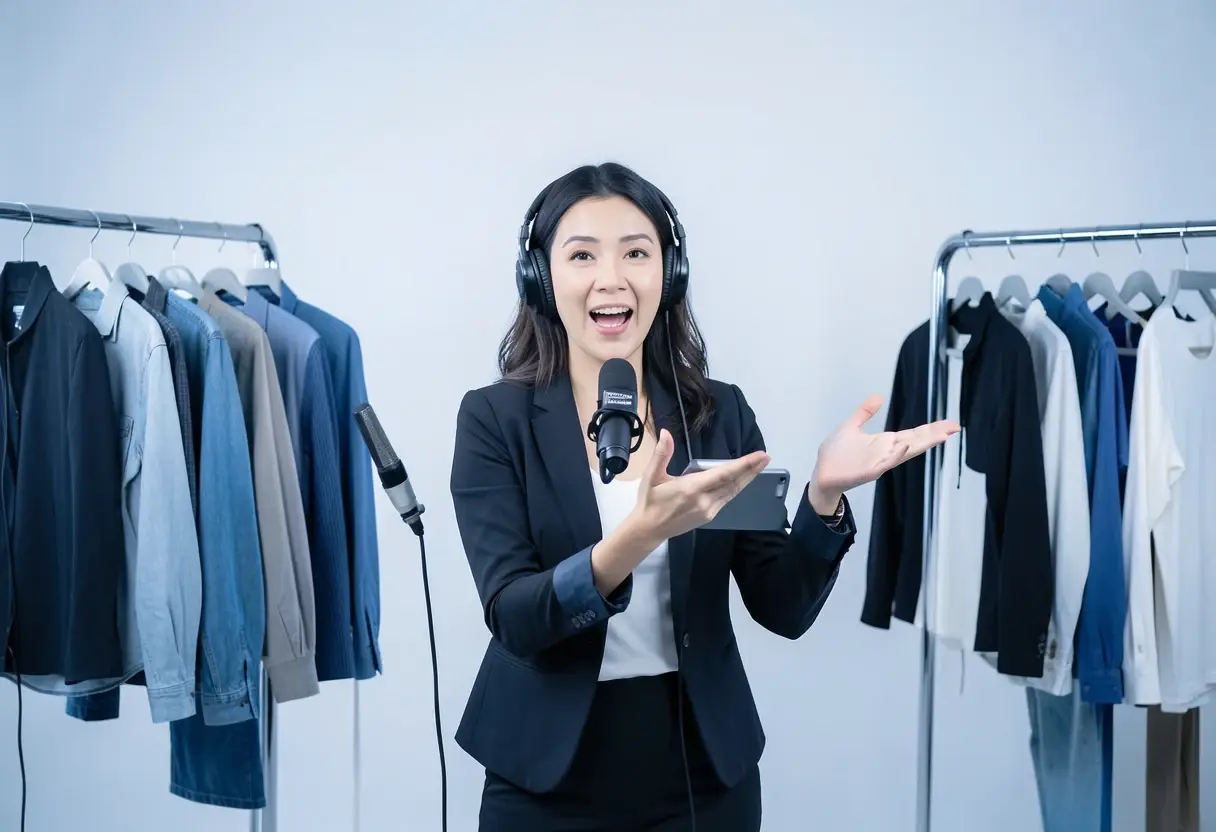
China's Singles' Day closed on Wednesday with 1.679 trillion renminbi ($251.7 billion) in sales across Tmall, JD.com, Pinduoduo, Douyin and Kuaishou, up 3.7 percent year over year, according to third-party data — the sharpest commercial signal yet that the festival has matured into a slower-growth, channel-driven market where platforms no longer publish official gross merchandise figures.
Apparel ranked second among categories at 13.8 percent of total sales, behind technology products and gadgets at roughly 30 percent. Personal care and beauty took 8.2 percent.
What did the consumer data show?
"I would frame the Chinese consumer as cautious but resilient," said Jacob Cooke, CEO of Beijing-based e-commerce consultancy WPIC Marketing + Technologies. "Chinese consumers are increasingly focused on health, wellness, hobbies and experiences. We're seeing this across multiple age, gender, regional and socioeconomic divides."
Cooke described the emerging status symbol among younger Millennials and Gen Z as "less Louis Vuitton, more Lululemon." For apparel brands, the implication is direct: performance and value narratives now outrank prestige positioning at the mid-market level.
How are apparel brands using livestreams?
Livestreaming moved beyond discounting into merchandising and brand-building. Womenswear label Unica, which runs a Paris-based design team, recorded 42 million renminbi ($6.2 million) during a six-hour "Super Live" runway show and styling sessions on Tmall. Fourteen styles each surpassed 1 million renminbi ($150,000).
Vgrass, the Nanjing-based womenswear brand that recently hired designer Xuzhi Chen as creative director, staged a mime theater that lifted sales by more than tenfold. Icicle, which recently named Sabato De Sarno creative director, streamed a runway show against Shanghai's skyline from the Pudong Art Museum.
Offline, resale also performed. Zhuanzhuan, parent of luxury resale platform Super Zhuan — which operates two stores in Beijing and Shanghai — recorded its strongest growth with Canada Goose, Roger Vivier, Bottega Veneta, Alexander Wang and Versace during the promotional period. Watches and accessories grew nearly 40 percent year over year. Jewelry posted continued double-digit growth.
Who won sportswear and beauty?
In Tmall's first-week rankings, Fila held the top spot in sportswear, followed by Adidas. Lululemon climbed to third, ahead of Descente, owned by Anta. Nike fell to sixth, followed by The North Face and Anta.
Beauty sales rose more than 20 percent on Tmall, with domestic brands leading. Goldman Sachs noted in an October report that intense competition and aggressive discounting by global brands dominated retail, and reaffirmed its bullish stance on Chinese beauty players. Per Syntun data, Proya held number one on Tmall; L'Oréal's SkinCeuticals rose to second. Tmall's initial results showed Helena Rubinstein climbing to 12th and Mao Geping up one spot to 19th, while all Estée Lauder Group brands slipped.
Promotions centered on VIP gift sets and full-size gifts-with-purchase rather than headline discounts. "This is a way to appeal to those high spenders without hurting margin or brand prestige from heavy discounts," said Cooke — a margin-protection tactic worth noting for any brand weighing China discount depth.
Where does AI fit in the funnel?
AI adoption spread rapidly into the consumer space. During a livestream by Tmall's "Lipstick King" Austin Li, 100,000 personal AI subscriptions of Alibaba's QwenWork — equivalent to 2 trillion tokens — sold within 30 minutes.
Muji used Alibaba's built-in AI tool on its Tmall flagship to run 24-hour livestreams with "digital humans," capturing late-night impulse buyers. Similar deployments ran at L'Oréal and Estée Lauder brands.
Zhuanzhuan's AI image-checking tool now verifies luxury goods in seconds rather than the 15 minutes a human expert requires. "This makes the process nearly 900 times faster," the company said in an email, citing a 99.99 percent accuracy rate — a figure with direct authentication-cost implications for resale channels.
WPIC data showed AI drove around 5 percent of purchases in October alone through links embedded in chatbots. "As AI chatbot adoption grows in China, expect it to account for a growing share of direct purchases, comparable to livestreaming or social commerce," said Cooke, adding that chatbots' interactive search suits a consumer "who is deliberate with their spending and focused on how a product performs." Brands selling into China should expect AI chatbots to function as a measurable sales channel, not a novelty, by next year's festival.
via google.com (Original)
More from Rebecca Stone
Show full bio
Staff writer covering people, launches and day-to-day practice in fashion industry as a trade and business at The Fabric Brief.
285 articles
Also on the board
- Golden Week Traffic Up 55%, Bernstein Data Signals China Luxury Rebound
- On Expands Asia-Pacific Footwear Capacity Amid China Push
- Chanel to Open First Wuhan Store at SKP, Its Fifth China Door
- Ms Min Trades Mall for Xuhui Townhouse in Shanghai Retail Reset
- China's Textile Innovation Drives Shift Toward All-Day Sportswear