Swatch card No. SW-4774 · cut October 30, 2026
Supply Chain & SourcingMill spec card
Sri Lanka Apparel Exports Rise 3.47% in September, Still Down 5.52% for Year
Sri Lanka apparel exports hit $416.99m in September, up 3.47%, with US shipments up 7.17%, but nine-month exports remain 5.52% below last year.
- Fiber
- Supply Chain & Sourcing
- Count
- 3 min read
- Cut
- Weight
- 531 words
Spec notes
- September 2026 apparel exports: $416.99m, up 3.47% year-on-year
- US shipments rose 7.17% to $172.03m; EU (ex-UK) up 6.5% to $132.46m
- January–September exports fell 5.52% to $3.59bn, about $210m below last year
- China's share of EU apparel imports grew from 26.9% to 28.6% between January and April 2026
- Chinese apparel shipments to the US fell roughly 34% in the first seven months of 2026
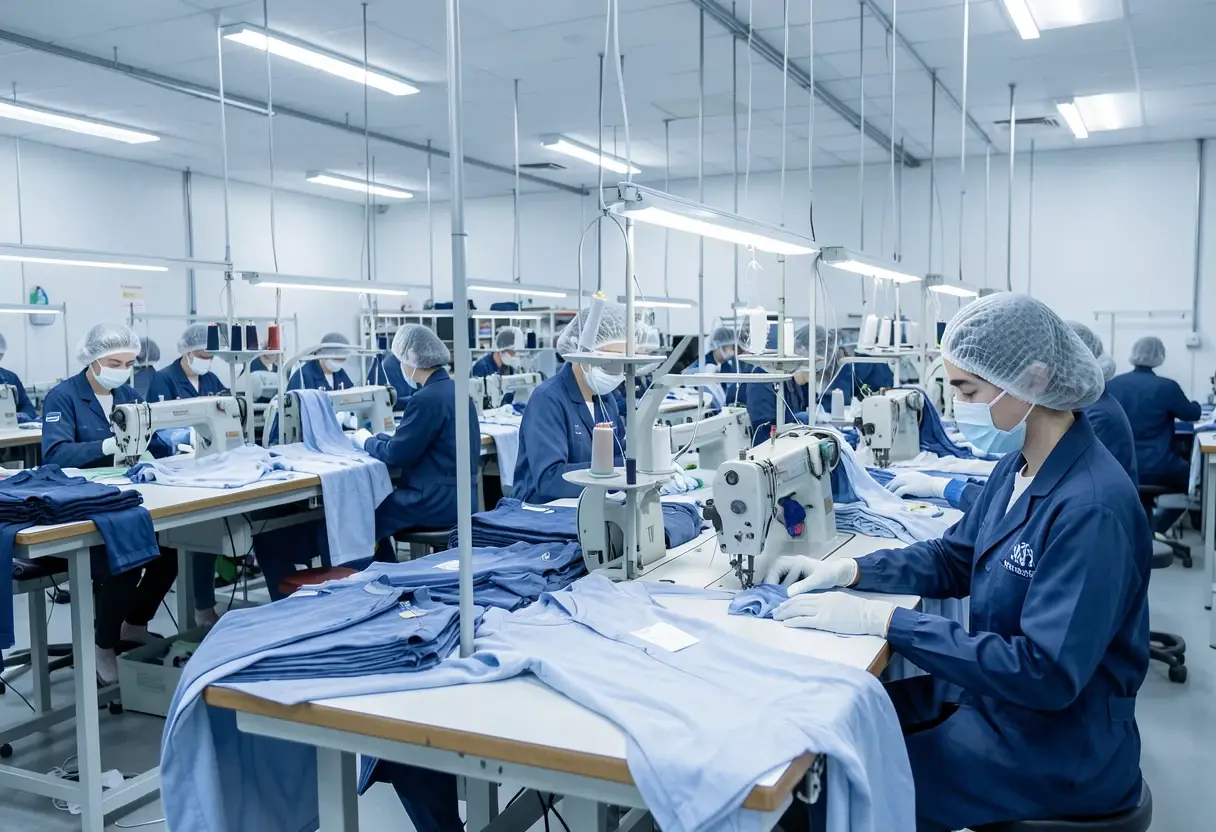
Sri Lanka's apparel exports reached $416.99m in September 2026, up 3.47% year-on-year, according to the Joint Apparel Association Forum (JAAF), the body representing the country's apparel industry. The monthly gain sits inside a annual decline: exports for January to September fell 5.52% to $3.59bn, roughly $210m below the same period last year.
Shipments to the two largest markets drove the September uptick. Exports to the US climbed 7.17% to $172.03m, while exports to the EU, excluding the UK, grew 6.5% to $132.46m. JAAF called the growth in both markets an "encouraging sign," but cautioned it does not yet constitute a turnaround.
Performance elsewhere was uneven. Exports to the UK dropped 5.92% to $47.33m in September. Shipments to other destinations fell 3.89% to $65.17m.
What do the nine-month numbers show?
Every major market is in decline on a cumulative basis. The UK recorded the sharpest year-on-year fall at 10.85%. The EU and other markets posted drops of 5.44% and 5.43% respectively. The US saw the smallest contraction, at 3.69%.
JAAF secretary general Yohan Lawrence said: "September's growth in the US and EU is encouraging, and it shows our manufacturers can compete when demand is there. We're still more than five percent behind where we were this time last year."
Lawrence tied the industry's near-term prospects to input costs rather than order books alone. He said: "What the industry needs now is steady, competitively priced energy and a supportive policy environment, so that this momentum lasts beyond a single month."
Why is EU competition intensifying?
JAAF stated that global shifts in trade dynamics are shaping Sri Lanka's export outlook. US import data shows Chinese apparel shipments to the US dropped by approximately 34% in the first seven months of 2026.
Stakeholders in other apparel-exporting countries observe that China and India redirected more exports to Europe after facing higher US tariffs. China's share of apparel imports to the EU grew from 26.9% to 28.6% between January and April 2026.
That shift puts direct price pressure on Sri Lankan suppliers in a market that generated $132.46m in September alone. JAAF said the intensifying competition, particularly in Europe, highlights the need for producers to focus on competitiveness, reliability and market diversification.
What is not yet confirmed?
One strong month does not reverse a nine-month deficit of about $210m. JAAF itself framed the September result as a sign, not a recovery. The association did not publish order books, capacity utilisation or forward bookings that would confirm whether October will hold the trend.
The energy cost demand from Lawrence remains a request, not a delivered policy. Sri Lankan manufacturers face EU rivals with growing Chinese share at the same time as they seek price competitiveness, a squeeze with no announced relief measure attached.
For sourcing teams, the September data confirms Sri Lanka retains demand traction in the US and EU when orders appear. Whether that traction survives redirected Chinese and Indian supply in Europe will test the sector through the final quarter of 2026.
via Just Style (Source)
More from Priya Raman
Show full bio
Correspondent covering people, launches and day-to-day practice in fashion industry as a trade and business at The Fabric Brief.
290 articles
Also on the board
- Sri Lanka's Textile and Apparel Manufacturing Rises 8% in 2025
- Sri Lanka apparel PPI climbs 10% YoY in July 2026
- Ocean Lanka Marks 30 Years in Sri Lanka Apparel Production
- Sri Lankan president meets apparel leaders on sector challenges
- India's Textile Exports Climb 19.87% to $1,946.93 Million in September