Swatch card No. SW-2925 · cut October 30, 2026
Supply Chain & SourcingMill spec card
India Holds Just 1% of Japan's $23bn Garment Imports. Jaipur's Factories Explain Why
India shipped just US$234.5 million of Japan's US$23 billion garment imports in 2024. Two Jaipur suppliers detail the fabric, QC and fastness standards that decide who wins Japanese orders.
- Fiber
- Supply Chain & Sourcing
- Count
- 4 min read
- Cut
- Weight
- 839 words
Spec notes
- India held about 1% of Japan's roughly US$23 billion annual garment import market in 2024, with exports of US$234.5 million.
- Fashion Images Overseas has supplied Japanese buyers since 1995; Kanhaiyalal Kalyanlal since 1969, both from Jaipur.
- KK House's standard MOQ is about 800 pieces for solids and 1,000 pieces for prints.
- Colour fastness under JIS L 0849 Type II requires grade 4 minimum for high-end Japanese brands; KK House metal-checks every garment three times.
- Fast Retailing and other Japanese firms have shown renewed interest in sourcing from and investing in India.
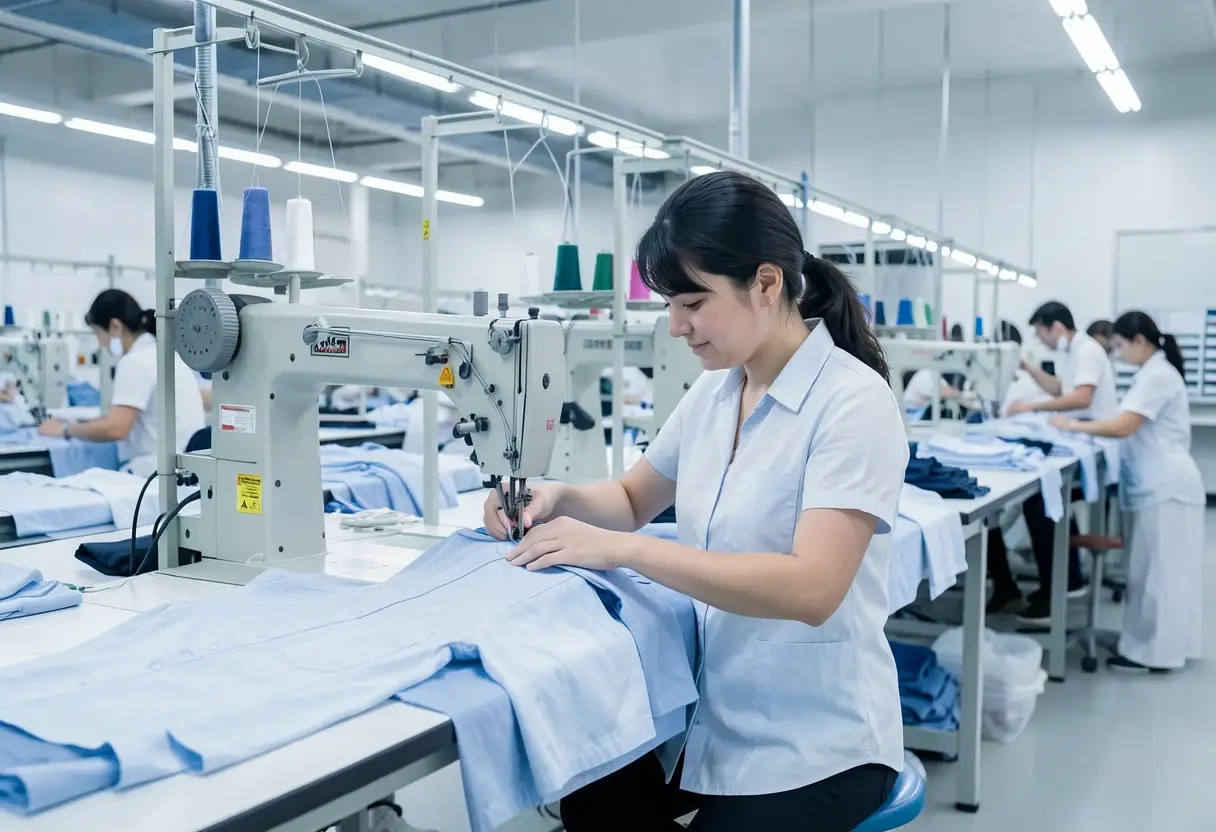
India supplied only US$234.5 million of Japan's roughly US$23 billion in annual garment imports in 2024. That equals barely 1% of the market, despite duty-free access and decades of manufacturing experience. The gap is not a tariff problem. It is a specification problem.
Japanese buyers, including Uniqlo parent Fast Retailing, have shown renewed interest in sourcing from and investing in India. The question for suppliers is whether they can convert that interest into sustained volume. Two Jaipur manufacturers already have, and their operations show what the market actually demands.
Who supplies Japan from India?
Fashion Images Overseas (FIO) has worked with Japanese buyers since 1995. It makes shirts, blouses, woven tops, dresses, skirts, trousers, shorts, jumpsuits, lightweight jackets, overshirts and coordinated sets, with heavy use of linen and linen blends. It serves both commercial programmes and fashion-driven collections, and handles both low and high minimum order quantities.
"Japan has been a very important market for us because garments can often appear clean, understated and effortless, while the development, construction and finishing standards behind them are extremely demanding," said Aseem Singla, founder and president of FIO.
Kanhaiyalal Kalyanmal (KK House) has exported women's wovens and nets to Japan since 1969. Its range includes two- and three-tiered dresses, panel skirts, cotton jacquard and dobby blouses, and half-Schiffli tops. "Our standard MOQ is around 800 pieces for solids and 1,000 pieces for prints," said partner Siddhartha Mittal.
What fabrics does Japan buy?
Fabric selection goes beyond fibre content or GSM. Japanese buyers evaluate hand-feel, drape, transparency, texture, softness, wrinkle behaviour, colour appearance and performance after stitching and finishing.
For FIO, lightweight cotton anchors the business. "Two constructions we use very regularly are 92 x 80 cotton voile and 60s cotton cambric, both of which are suitable for lightweight shirts, blouses, dresses and other summer products," said Singla.
KK House works mainly in rayon and cotton, plus rayon-cotton, poly-cotton, cotton-flax and 100% cotton jacquards. Rayon appears in slub, flax, sheeting and dobby constructions. Polyester blends have gained ground with Japanese buyers recently. The wider mix across both suppliers includes viscose, linen and linen blends, lyocell, polyester-nylon blends and blended wovens.
The mix differs sharply from production for other markets. "A maximum of light fabrics, such as 60-micron rayon sheeting, are exported to Japan," said Mittal. He cited extensive use of "Cool Touch" fabrics. Jaipur's Japan business concentrates on Spring/Summer, while China captures most of Japan's autumn-winter sourcing — a seasonal split that defines where Indian mills hold an advantage.
Suppliers also run yarn-dyed fabrics, dobby, jacquards, pin-tucks, cording, pinstripes, 3D Schiffli and cutwork. Detailed pin-tucks demand tight control over stitch, spacing and measurements.
How strict is the quality regime?
FIO and KK House inspect fabric exhaustively. "Every single metre of fabric is checked under proper light and also in sunlight. We do not do random checking; every metre is carefully watched and supervised," said Mittal.
After inspection, fabrics pass through dyeing, washing, softening, silicone washing, printing and embroidery, with control over colour, hand-feel, shrinkage, surface appearance and dimensional stability from lab dips through bulk. Softeners may be added during dyeing or printing so the fabric keeps its hand-feel after washing.
Lightweight combinations raise the technical bar. In Schiffli-and-solid garments, the two fabrics undergo different embroidery, dyeing and finishing, and can behave differently in width and shrinkage. They must be dyed and matched with no visible shade variation. A mismatch sends the fabric back for redyeing before cutting begins.
"For certain products, buyers may also request specialised visual effects such as hammered, crushed or wrinkled finishes, where the final texture and appearance of the fabric or garment become part of the design itself," said Singla.
Colour fastness carries a formal standard. Under JIS L 0849 Type II, fabrics are rubbed with a dry or wet cloth and graded from Class 1 to Class 5. High-end brands and select shops generally expect a minimum grade of 4.
Metal detection adds another gate. KK House runs every garment through metal-checking machines three times before dispatch, because a single stapler pin can trigger a major claim or rejection.
Trims face the same scrutiny. Buttons, zips, tapes, cords, embroidery density and thread colour are evaluated for wear, washing and bulk production. Nearly all materials undergo laboratory testing before use. Some specialised accessories come directly from buyers or from China.
Can India close the gap?
Mittal identified fabric, not garment-making, as the binding constraint. "The major thing is the kind of fabrics that are being imported into Japan from other countries, such as China and Vietnam. It is very difficult for us to replicate them because of the count, construction, GSM and quality that they are providing," he said.
For India, winning a larger share of Japan's US$23 billion market will depend as much on building that fabric capability as on execution already proven in Jaipur's factories.
via Apparel Resources (Source)
More from Rebecca Stone
Show full bio
Staff writer covering people, launches and day-to-day practice in fashion industry as a trade and business at The Fabric Brief.
242 articles
Also on the board
- Japanese Buyers Look to Expand Apparel Sourcing Under EPA Framework
- India Positioned to Capture Apparel Sourcing Shift Away from China: Report
- India's Industrial Output Data Splits Textiles From Apparel
- India Faces 10% US Tariff Gap Despite $520 mn Input Trade
- India's Textile Edge Now Hinges on Capacity, Not Tariffs