Swatch card No. SW-9788 · cut November 9, 2026
Mill spec card
Bangladesh Wage Protests Idle 600 Factories, Cost $68M in Shipments
Over 600 Bangladeshi garment factories halted work on November 2 as workers demanded BDT 30,000 monthly wages. Shipment losses hit $68.3 million.
- Fiber
- General trade
- Count
- 5 min read
- Cut
- Weight
- 1,052 words
Spec notes
- More than 600 of Bangladesh's 4,000 garment factories suspended operations on November 2 amid wage protests.
- Unrest caused BDT 850 million ($68.3 million) in shipment losses, per wage board member ABM Shamsuddin.
- Workers demand a rise from BDT 12,500 ($100) to BDT 30,000 ($240) per month; a new wage structure takes effect in December.
- One worker was killed in Gazipur and more than 100 people were arrested.
- A May CCC/Public Eye report found brands pay $2-3 per cotton T-shirt, with some prices 30% lower than 20 years ago in real terms.
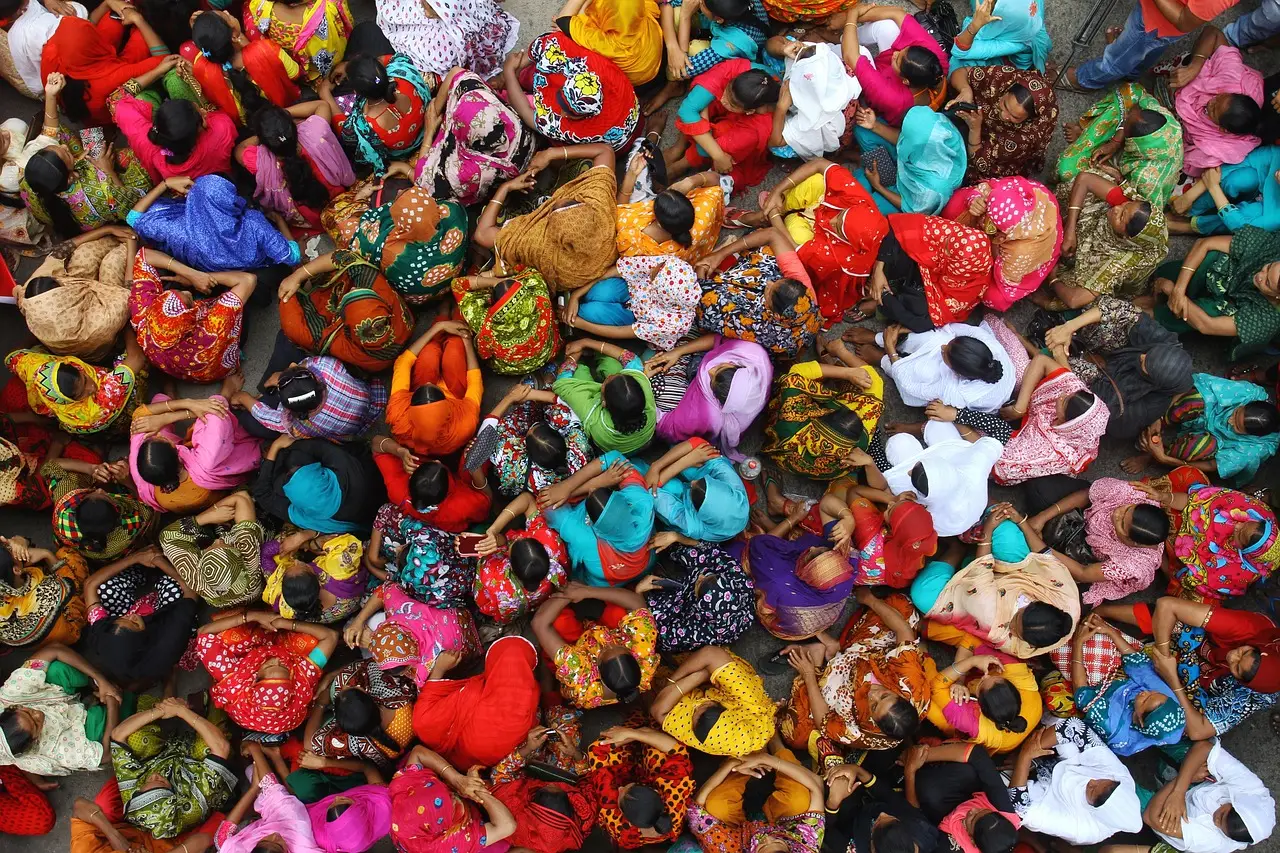
More than 600 of Bangladesh's 4,000 garment factories suspended operations on November 2 as workers protested the national minimum wage, and the ensuing unrest has cost manufacturers BDT 850 million (around $68.3 million) in lost shipments, according to factory owner ABM Shamsuddin, who represents manufacturers on the newly formed six-member wage board.
Workers demand a raise from BDT 12,500 (around $100) to BDT 30,000 (around $240) per month. One worker died in Gazipur as law enforcement contained the unrest. Police arrested more than 100 people. Protests temporarily subsided on Wednesday after the government announced a Minimum Wage Board and confirmed a revised wage structure will take effect in December, with higher payments showing in January payslips.
The disruption hit Mirpur, one of Bangladesh's five major manufacturing hubs, home to more than 300 garment factories supplying Walmart, H&M, Zara, Levi's, Marks & Spencer and Primark. On Thursday, the last working day of the Bangladeshi week, the area stood quiet.
The wage structure for garment workers has not changed since 2023. "We can say our first demand has been met, as a wage board has been formed and they said that the new wage will take effect in December," said Sajal Sardar, a sewing machine operator at a knitwear factory in Mirpur. He is one of roughly four million garment workers in the country, more than half of them women.
Sardar, 23, started factory work as a child a decade ago and has built no savings. He supports a family of seven with his brother, the only two earners, on a combined BDT 30,000 per month. He earns BDT 14,200 ($115) base, or BDT 17,000-18,000 ($136-144) with overtime. "We don't want to take to the streets," he said, "but there is no affordable healthcare for us. Landlords keep raising house rents every January. The prices of staple food items and cooking gas have gone up several times during this period, and our wages have remained the same."
Can Bangladesh afford BDT 30,000?
Economic indicators complicate the wage math. Export earnings rose 6% to $17.04 billion in the third quarter, but the trade deficit widened 31% year-on-year to $7.48 billion as Middle East conflict inflated the fuel import bill. The Asian Development Bank cut its growth forecast to 4% for the current year and projects 9% inflation, with experts warning the real rate could reach 20%. The World Bank downgraded its 2026-27 growth forecast to 3.4%, from 4.6% in June and 6.1% in January.
Input costs have already squeezed manufacturers before any wage increase. The government led by Tarique Rahman of the Bangladesh Nationalist Party, which took office after the February 12 election, raised fuel prices twice — in April and September — for a cumulative increase above 35%. Retail electricity prices rose more than 16% in June. Retail LPG climbed from BDT 1,625 ($13) to BDT 2,060 ($16) per 12-kilogram cylinder across two consecutive hikes; the same cylinder cost BDT 1,340 ($10) in March.
The wage board is unlikely to approve the full BDT 30,000 demand. Its formation follows a legal requirement introduced by the interim government of Nobel laureate Muhammad Yunus, installed after the 2023 clashes and the student-led uprising that ousted Sheikh Hasina, requiring wage reviews every three years instead of five. Progress lagged the statute: "The government should have initiated the process by forming the wage board six months before the ending of the three-year tenure," Sardar said.
Khairul Mamun Mintu, a union leader at the Bangladesh Garment Workers Trade Union Center, said unions back the December timeline but will resume action if the outcome falls short: "We have placed our demands. Now, stakeholders will decide what would be a reasonable wage for all. If that also doesn't work, we will have to take to the streets again."
What do the shipment losses mean for buyers?
Shamsuddin laid out the three likely buyer responses: accept delayed shipments without penalties — the ideal — demand products at a 50% discount, or require air freight instead of sea. Each of the latter two would hit factory finances hard. He wants brands to acknowledge the unrest was beyond factory owners' control. "They can see what is happening here," he said.
Mahmud Hasan Khan, president of the Bangladesh Garment Manufacturers and Exporters Association (BGMEA), said protests recur whenever wage revisions come due and have eroded buyer confidence, but directed that anxiety elsewhere: "They (the buyers) can convey their concerns to the government in writing. Both their interests and ours are at stake."
The Clean Clothes Campaign is pressing brands sourcing from Bangladesh to support workers' demands, publicly commit to continued sourcing, and ring-fence labor costs or adjust commercial terms so suppliers can pay the new minimum. "It is crucial that brands act immediately and speak out in support of workers' demands rather than waiting until the wage negotiations are over," said Anne Bienias, the CCC's living wage coordinator.
Who pays for the increase?
A May report by the CCC and Public Eye found global brands pay nearly the same per-item prices as 20 years ago, with some 30% lower in inflation-adjusted terms, and still source a standard cotton T-shirt at $2-3 per piece, some as low as $1. The report said this "undermines suppliers' economic resilience and depresses wages."
Kalpona Akter, president of the Bangladesh Garment and Industrial Workers Federation, pointed to the absence of collective bargaining inside factories as the structural gap: "If workers could negotiate directly with factory owners inside the factories, they wouldn't have to take to the streets." She noted the interim government raised the annual wage increment from 5% to 9%, but with a low base salary the change barely registers against commodity prices.
Akter's prescription sets the sequence for the months ahead: manufacturers should first raise wages, then negotiate with buyers to reflect the added cost in purchasing prices. "Otherwise, buyers will stand firm on their position, manufacturers will keep bleeding, and workers will keep protesting on the streets," she said. The December wage board decision, and brands' pricing response to it, will determine whether January payslips quiet the streets or reignite them.
via vogue.com (Source)
More from Marcus Bennett
Show full bio
Senior reporter covering money, funding and market shifts around fashion industry as a trade and business at The Fabric Brief.
279 articles
Also on the board
- Hundreds of Bangladesh Garment Factories Shut as Wage Protests Enter Fourth Day
- Bangladesh Wage Board Commits to Garment Pay Rise by January
- Bangladesh Opposition Chief Claims Conspiracy Behind Garment Unrest
- Bangladesh Wage Protests Disrupt Garment Production
- Dhaka blames factory owners and ex-officials for RMG unrest