Swatch card · cut November 25, 2026
Supply Chain & SourcingMill spec card
Bangladesh garment wage board settles floor at Tk 17,000
Bangladesh's Minimum Wage Board has set the RMG minimum at Tk 17,000, up 36% from Tk 12,500, effective December 1, 2026, after a 4-2 secret ballot on the entry grade.
- Fiber
- Supply Chain & Sourcing
- Count
- 3 min read
- Cut
- Weight
- 671 words
Spec notes
- Minimum wage set at Tk 17,000/month, a 36% rise from Tk 12,500, effective December 1, 2026.
- Grade 4 wage decided by secret ballot: 4 members for Tk 17,000, 2 for Tk 18,000; Grades 1-3 agreed.
- Grade ladder: Tk 19,200 (Grade 3), Tk 20,000 (Grade 2), Tk 21,500 (Grade 1).
- Workers earning above the new minimum receive at least Tk 2,000 more.
- Announced November 25 by Chairman Syed Azad Subhani; gazette notification pending.
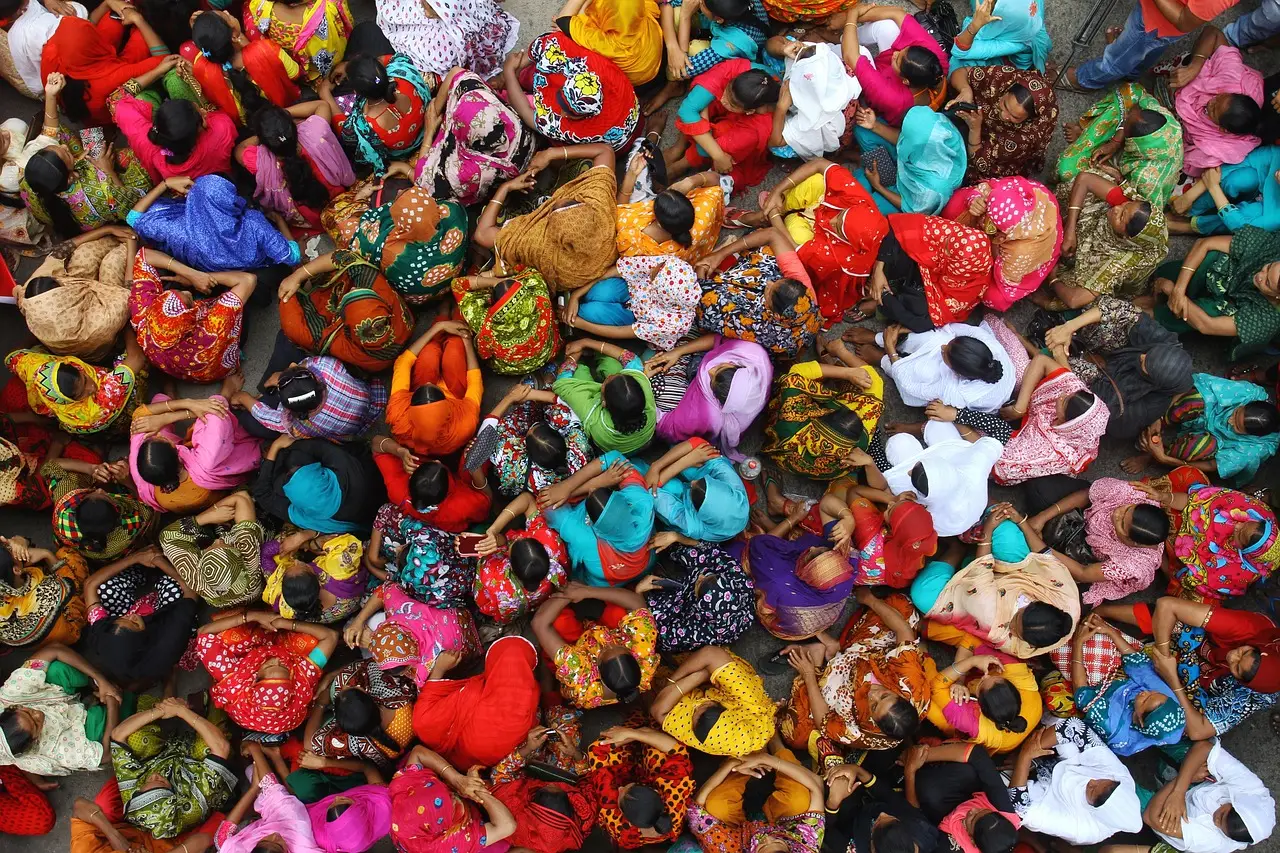
Bangladesh's Minimum Wage Board has fixed the monthly minimum for readymade garment workers at Tk 17,000, a 36% increase on the existing Tk 12,500, effective December 1, 2026. The figure, announced in Dhaka on Wednesday, November 25, lands amid labor unrest in major garment manufacturing hubs and will require payroll recalculation across the country's export-oriented apparel base.
Minimum Wage Board Chairman Syed Azad Subhani, a District and Sessions Judge, announced the decision at a press briefing following an extended meeting at the board's Segunbagicha office. A formal gazette notification is expected to follow. Until that gazette appears, buyers sourcing from Bangladesh should treat Wednesday's announcement as a decision taken, not yet a legally operative instrument.
What does the new structure pay?
The revised grade ladder, per the board's announcement:
- Grade 4 — helpers, thread cutters, line assistants: Tk 17,000 per month.
- Grade 3 — junior operators, sewing assistants: Tk 19,200.
- Grade 2 — sewing, cutting, finishing and quality control operators: Tk 20,000.
- Grade 1 — senior operators, pattern makers, sample makers: Tk 21,500.
The board also ruled that workers currently earning above the new minimum must receive an increase of at least Tk 2,000, with factories free to offer more depending on their financial capacity. That clause matters for costing: it extends the wage bill impact beyond entry-level lines and into mid-tier operators who had already cleared the old floor.
How was the number reached?
Negotiations between employer and worker representatives ran long and did not fully converge. Wages for Grades 1 to 3 were settled by agreement; the Grade 4 minimum went to a secret ballot, where four board members backed Tk 17,000 and two voted for Tk 18,000. The Tk 1,000 gap between the ballot options is, in effect, the price of deadlock — borne by the lowest-paid grade in the sector.
The announcement follows production disruptions in several major garment manufacturing areas, where workers demanded higher pay to cope with rising living costs. Worker representative Babul Akhter, General Secretary of the Bangladesh Garment and Industrial Workers Federation, urged workers to resume production following the announcement. He also said the board would recommend measures addressing the dismissal, arrest and harassment of workers involved in recent protests, including the withdrawal of related cases.
Akhter's message on further agitation was pointed. He stated that any agitation carried out under an organization's banner after the wage announcement would make that organization accountable, and that anyone else attempting to incite disorder would face action in accordance with the law. The subtext is a joint effort to close the unrest window quickly.
What does this change for sourcing decisions?
For brands and sourcing managers, the immediate arithmetic is a 36% jump in the labor floor — roughly one-third again on the previous base — from the December 2026 payroll. Factories will need to adjust payroll and production costing, and the Tk 2,000 minimum uplift for above-floor earners means FOB quotations tied to older wage tables will not hold. Buyers should expect revised price negotiations and, where labor cost is a contract variable, updated compliance documentation once the gazette confirms the figures.
The board's stated frame is the familiar dual challenge: improving worker earnings while preserving manufacturing competitiveness. Both sides of that equation now sit in buyers' cost sheets. Restoring industrial stability and employer-worker cooperation, as the announcement notes, remains the condition for sustaining productivity, meeting export commitments and maintaining buyer confidence.
Attendees at the briefing included the board's neutral member, Professor Dr. Mosleh Uddin Ahmed of the Department of Public Administration at the University of Dhaka; ABM Shamsuddin, Director of the BGMEA; employer representatives Asif Ayub, Joint Secretary-General of the Bangladesh Employers Federation; and worker representative Anwar Hossain, President of the Jatiyatabadi Sramik Dal.
The gazette notification, the pace of worker returns to production lines, and how quickly factories pass the new wage floor into quoted prices will determine whether this settlement holds.
via textiletoday.com.bd (Source)
More from Tom Whitfield
Show full bio
Market editor covering regulation, policy and their impact on fashion industry as a trade and business at The Fabric Brief.
399 articles
Also on the board
- Bangladesh RMG Board Proposes Tk 32,000 Monthly Minimum Wage
- Leather wage floor hits Tk 23,255 for top grades as 200,000 workers get raise
- Bangladesh Wage Board Commits to Garment Pay Rise by January
- Hundreds of Bangladesh Garment Factories Shut as Wage Protests Enter Fourth Day
- CPD Proposes Tk18,578–Tk24,204 RMG Wage Floor in Bangladesh