Swatch card · cut November 24, 2026
Sustainability & ComplianceMill spec card
Cambodia Launches EU-Backed Energy Partnership for GFT Sector
Cambodia's GFT sector, worth $16.2bn in 2025 exports, gains an EU-UNIDO clean-energy partnership with 210 factory audits and green financing support.
- Fiber
- Sustainability & Compliance
- Count
- 3 min read
- Cut
- Weight
- 592 words
Spec notes
- Cambodia's GFT sector generated $16.2 billion in export revenue in 2025 across more than 1,800 factories employing about 1.11 million workers.
- The Cambodia-EU Partnership for Sustainable Energy Practices in Industry launched on November 19 in Phnom Penh.
- The programme plans 210 energy audits at garment, footwear and travel goods factories.
- Q1 2026 exports reached $3.75 billion, up nearly 8% year-on-year, or 46% of Cambodia's total exports.
- Around 75% of the sector's workforce is female, per Better Factories Cambodia's 2025 annual report.
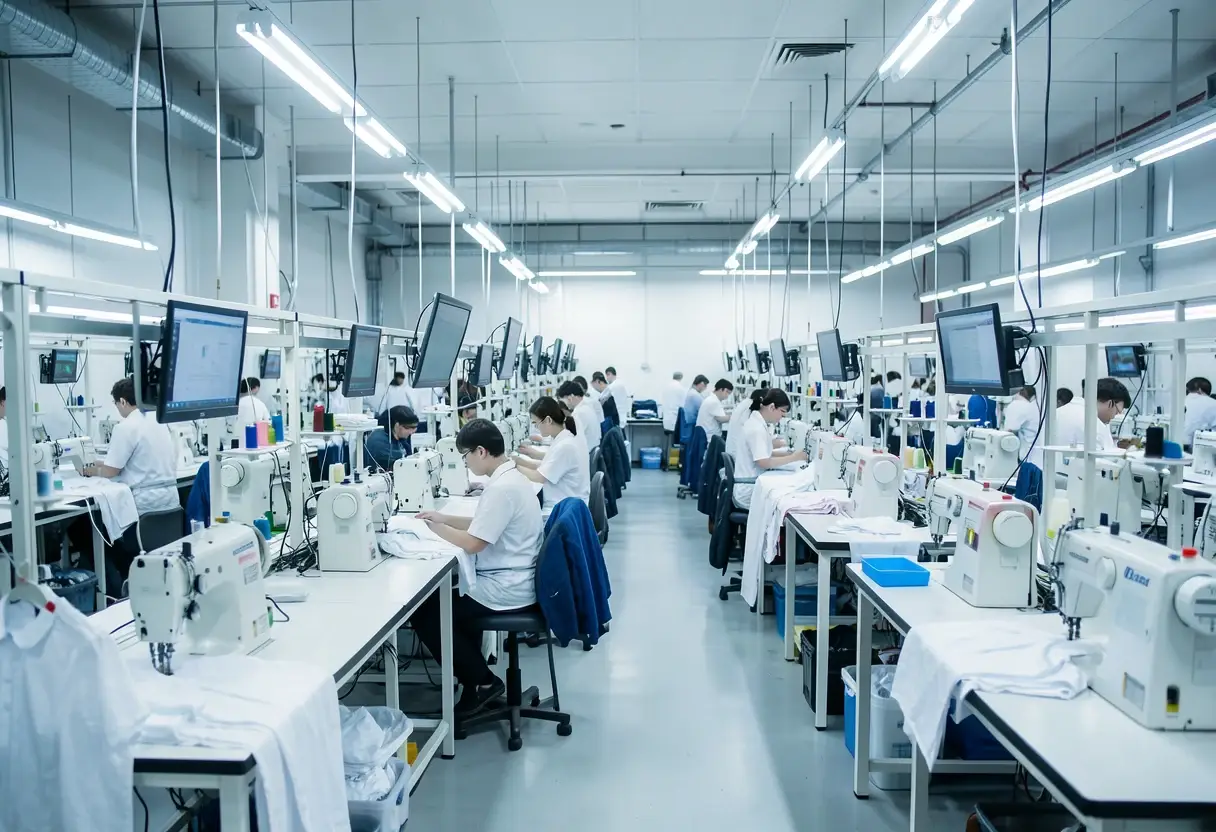
Cambodia's garment, footwear and travel goods industry generated $16.2 billion in export revenue in 2025, and it is now the target of a new clean-energy programme launched with EU money in Phnom Penh on November 19.
The Cambodia-EU Partnership for Sustainable Energy Practices in Industry brings together the Cambodian government, the European Union and the United Nations Industrial Development Organization (UNIDO). Its stated aim is to accelerate the clean energy transition across the GFT sector, with the emphasis squarely on energy efficiency, renewable energy uptake and — the part buyers will notice — lower production costs.
The headline figure for supply-chain managers is 210. That is the number of energy audits the programme plans to conduct at garment, footwear and travel goods factories. The audits are designed to help manufacturers identify where they can cut energy consumption, improve production efficiency and assess the payback on investments in energy-saving technology. These are confirmed plans, not completed work; results will depend on execution over the programme's timeline.
What else is in the package?
Beyond the audits, the partnership sets out three further workstreams:
- Sustainable biomass: promotion of biomass as an alternative energy source for factory operations.
- Working conditions: better ventilation, improved lighting and measures to reduce heat stress among workers — a compliance point that has quietly climbed buyer audit checklists.
- Green financing: support for industry associations to help factories prepare investment proposals and secure funding for energy efficiency and renewable energy projects. The programme's own framing here is candid — manufacturers face financial barriers to adopting cleaner technologies, and someone has to underwrite the bridge.
The initiative sits under the EU's Global Gateway strategy, which aims to connect policy development, technical support and investment. It also supports Cambodia's National Energy Efficiency Policy and the country's broader industrial modernization agenda.
Why buyers should care
The commercial context is not in dispute. More than 1,800 factories employ approximately 1.11 million workers in the sector, and around 75% of that workforce is female, according to Better Factories Cambodia's 2025 annual report. That is roughly one in seven of the country's jobs sitting behind energy bills that the programme wants to shrink.
The momentum is intact. In the first quarter of 2026 the sector generated $3.75 billion in export revenue, up nearly 8% year-on-year, and accounted for 46% of Cambodia's total exports for the period. A sector carrying that much of the national trade balance has little room for compliance slippage.
The driver is external as much as domestic. International buyers continue to strengthen environmental requirements across their supply chains, and for Cambodian manufacturers the calculus is straightforward: reduced energy consumption and greater renewable energy use lower operating costs while improving environmental performance and, with it, market access. Buyers tightening Scope 3 expectations will read a UNIDO-audited factory differently from an unaudited one.
What does this change for sourcing teams? In the near term, little — the audits have yet to run. Over the medium term, it offers a credible route to verifiable energy data from a sourcing destination that supplies nearly half of Cambodia's exports, and a mechanism — green financing — for factories that cannot fund efficiency retrofits from their own margins.
The programme's success will be measured not in Phnom Penh launch ceremonies but in the number of audits completed, the proposals financed and the kilowatt-hours saved. The sector's 8% growth gives it the volume; the EU partnership now has to supply the velocity.
By Tom Whitfield
via textiletoday.com.bd (Source)
More from Tom Whitfield
Show full bio
Market editor covering regulation, policy and their impact on fashion industry as a trade and business at The Fabric Brief.
396 articles
Also on the board
- Clean Energy Shift Opens New Doors for Cambodia Garment Sector
- Cambodia's Garment Sector Posts Strong Four-Year Growth
- M&S Pushes Renewable Electricity Into Fashion Supply Chain
- Levi Strauss, M&S and Schneider Electric Team on Clean Energy for Fashion Supply Chains
- Reuters Turns Spotlight on Cambodia's Garment Sector