Swatch card No. SW-8001 · cut November 3, 2026
Brands & Retail BusinessMill spec card
Savills Map Shows Luxury Retail Leasing Spreading Beyond Gateway Cities
North America led 2025 luxury store openings with 27 percent share, Savills says, as Hermès and others push into secondary wealthy markets like Short Hills and Scottsdale.
- Fiber
- Brands & Retail Business
- Count
- 3 min read
- Cut
- Weight
- 635 words
Spec notes
- North America took 27 percent of global luxury store openings in 2025, first regional lead since Savills began tracking in 2016.
- New York ranked first globally for new luxury openings, up 23 percent year-on-year, with an estimated 384,500 millionaires.
- Hermès opened in Short Hills, N.J., and Wilmette, Ill., using wealth-concentration data.
- Scottsdale is adding millionaires faster than almost any city globally, drawing Loro Piana, Hermès and Montblanc firsts.
- Dallas's Knox Street gained Toteme, Staud, Dôen, Cult Gaia and a 10,000-square-foot Conservatory concept store.
By Priya Raman
North America captured 27 percent of global luxury store openings in 2025. Savills, the global real estate firm, says that is the largest regional share and the first time the region has led its rankings since tracking began in 2016. The claim anchors the firm's new report, "America's Expanding Luxury Map," which argues luxury retail's next growth lies in secondary wealthy enclaves, not only New York or Los Angeles.
New York still matters. The city reemerged as the world's top market for new luxury openings, with activity up 23 percent year-on-year, according to the Savills Global Luxury Retail Outlook 2026. New York holds an estimated 384,500 millionaires and again topped Savills' "Next-Generation Wealth Hubs Index." Miami, San Francisco and Los Angeles rank in the global top five.
Where is the new wealth coming from?
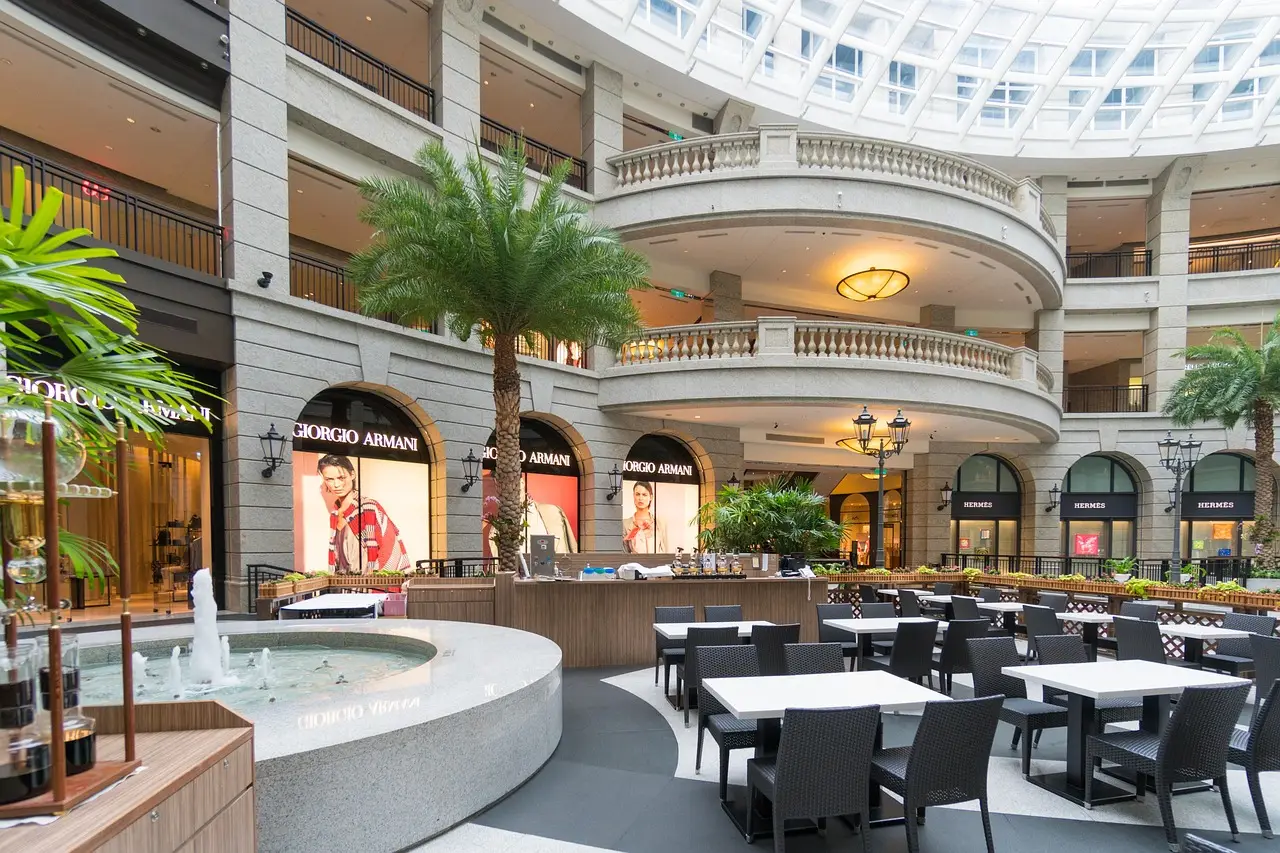
Savills points to Hermès as proof of the thesis. The brand uses customer, demographic and location data to find "growing concentrations of wealth" and has opened stores in Short Hills, N.J., and Wilmette, Ill. The report frames this as "bringing luxury retail closer to affluent consumers rather than relying solely on traditional gateway markets."
Savills attributes new U.S. wealth to local growth in technology, finance, energy, health care and entrepreneurial businesses. It also cites investment in luxury residential developments, hospitality and lifestyle amenities as reinforcing these markets. Note what the report does not quantify: no revenue figures, lease terms or sales-per-square-foot data accompany the wealth-clustering claims. The evidence is store count, not performance.
Which markets does Savills single out?
The report names concrete locations:
- Scottsdale, Ariz. Adding millionaires faster than almost any city globally, per Savills. Scottsdale Fashion Square has welcomed Arizona-first boutiques from Loro Piana, Hermès and Montblanc.
- Dallas — Knox Street. A corridor north of downtown described as "a hotbed for luxury retail activity," drawing Toteme, Staud, Dôen and Cult Gaia, plus a 10,000-square-foot Conservatory, a multibrand, cross-category concept store.
- The Knox, Auberge Collection hotel and residences anchor the Dallas neighborhood's hospitality offer.
Dallas is an instructive case. The city already had an affluent base and an established luxury shopping culture. Savills says "recent investment demonstrates how strong underlying fundamentals can support the emergence of new luxury destinations within an already mature market." Read that carefully: Dallas is less a new market than a maturing one, deepening rather than expanding.
What should sourcing and retail executives take from this?
For brands weighing distribution strategy, the report implies an extra layer of site-selection analytics. Hermès' data-driven approach — demographic and customer analysis before committing to a location — is presented as the template. That raises the cost of market entry analysis, even as it may lower the risk of mis-located flagships.
The caveat is scale. Savills does not say how many openings occurred in emerging markets versus gateway cities, nor whether the new boutiques are performing. Gateway markets still dominate the absolute numbers: New York alone leads the world. The "expanding map" may describe a thinning of demand across more locations rather than a shift away from the coasts.
There is also a structural point. Much of the reported expansion — multibrand concepts like Conservatory, hotel-linked retail like The Knox — rides on mixed-use real estate development, meaning luxury leasing depends on property investment cycles as much as consumer demand. Savills, a real estate firm, has an evident interest in that framing.
Savills concludes that retail success today depends on identifying where the next cohorts of affluent consumers are emerging. Brands and landlords will now watch whether the 2026 opening data confirms secondary markets can sustain first-unit boutiques at full-price sell-through, or whether the wealth map widens faster than the customer base actually spends.
via WWD (Source)
More from Priya Raman
Show full bio
Correspondent covering people, launches and day-to-day practice in fashion industry as a trade and business at The Fabric Brief.
301 articles
Also on the board
- The Borrowed Opens New York HQ, Betting $360 Rentals on U.S. South Asian Fashion
- Golden Week Traffic Up 55%, Bernstein Data Signals China Luxury Rebound
- The RealReal Hires eBay Fashion Chief Alexis Hoopes as CMO
- Frasers Raises Burberry Stake to 6.32%, Launches Luxury Division
- Me+Em Lifts Revenue 29% to £190M, Buoyed by U.S. Machine