Swatch card No. SW-9719 · cut October 30, 2026
Brands & Retail BusinessMill spec card
The Borrowed Opens New York HQ, Betting $360 Rentals on U.S. South Asian Fashion
UK rental platform The Borrowed opens its US headquarters in New York, with average rentals of $360 against $1,800 piece costs and designer-direct sourcing from major South Asian houses.
- Fiber
- Brands & Retail Business
- Count
- 3 min read
- Cut
- Weight
- 677 words
Spec notes
- The Borrowed has launched its US headquarters in New York after building its business in the UK.
- Average rental revenue is approximately $360 against an average piece cost of $1,800; pieces pay back within about five rentals.
- Cofounders are Divina Chopra (ex-Hermès, Burberry, Rolex merchandising) and Shreeya Thakkar (a decade at Goldman Sachs).
- The platform carries Sabyasachi, Manish Malhotra, Anita Dongre, Tarun Tahiliani and roughly a dozen other designers, plus archival stock dating to 1990s Neeta Lulla and 2001 Sabyasachi.
- London partner retailer Estiee is used to move aged inventory and samples.
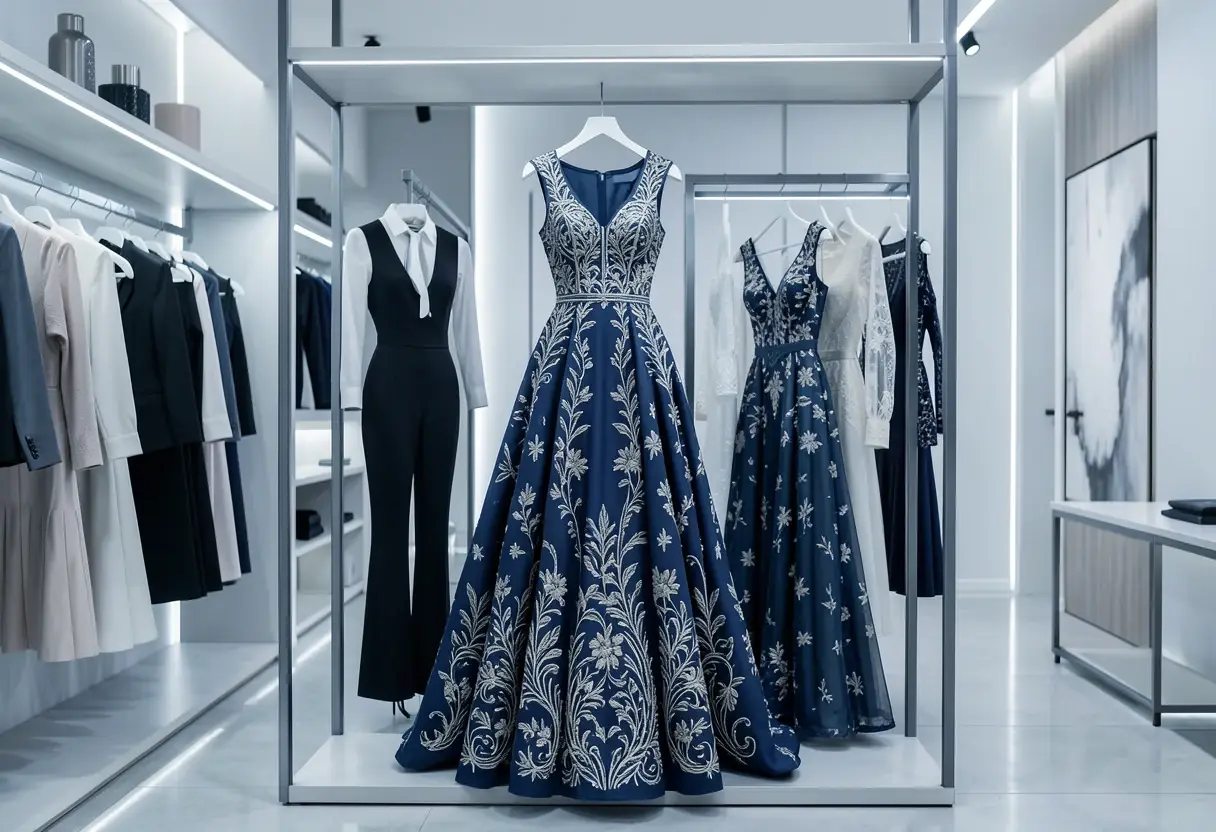
The Borrowed, a UK peer-to-peer rental and resale platform for South Asian designer fashion, has opened its United States headquarters in New York, with an average rental generating approximately $360 against an average piece cost of $1,800. At that ratio, lenders recover the cost of a garment within roughly five rentals — the commercial spine of a marketplace that has now crossed the Atlantic.
The company was founded by Divina Chopra, chief executive officer, whose merchandising résumé includes Hermès, Burberry and Rolex, and Shreeya Thakkar, chief operating officer, who spent a decade at Goldman Sachs. The pair built the business on a straightforward observation about an already active category.
"When Shreeya and I started The Borrowed, peer-to-peer rental for South Asian fashion was already booming in the U.K. and U.S., but the experience had become very transactional," Chopra said in an interview with WWD. "When you're renting from dozens of different lenders, trust and consistency suffer — and we were missing a truly curated, luxury experience for South Asian designer fashion."
Why New York?
The geography is arithmetic, not sentiment. New York sits in the largest South Asian consumer market outside the subcontinent, and the founders say US clients were already requesting the same service they received in London. Expansion answered existing demand rather than testing hypothetical demand. For a platform whose inventory is supplied by lenders and designers alike, an installed customer base shortens the runway to volume.
The roster on the platform reads as a directory of major South Asian couture houses: Sabyasachi, Manish Malhotra, Anita Dongre, Tarun Tahiliani, Mahima Mahajan, Payal Singhal, House of Masaba, Seema Gujral, Jayanti Reddy, Rabani & Rakha, Aseem Kapoor, Mrunalini Rao, Sawan Gandhi and Neeta Lulla.
What does this change for designers and inventory holders?
Two supply-side moves deserve attention. First, The Borrowed sources contemporary wear directly from South Asian designers — AK-OK, Rahul Mishra Pret and Anita Dongre Grassroot are on board, alongside newer labels for whom the platform functions as a distribution channel without wholesale commitments.
Second, in London the company works with retailer Estiee to move aged inventory and samples, while giving emerging brands a presence in both London and New York. That is a clearance mechanism dressed as curation, and it is the kind of arrangement a brand CFO can approve: inventory turns without markdown-driven brand damage in primary channels.
Archival and vintage stock is a further draw. Clients rent Sabyasachi looks from 2001 and 1990s Neeta Lulla, particularly for one-of-a-kind bridal styling — merchandise that cannot be re-ordered and therefore commands rental rather than resale logic.
The operating model: controlled, not merely matched
Unlike a pure marketplace that matches lender to renter and steps aside, The Borrowed manages quality assurance, dry cleaning and shipping in-house. Each customer receives a virtual call or in-person appointment, plus mood boards covering jewellery, accessories, preferred colour hues and sizing before selections are made. Chopra's framing is accessibility with experiment.
"Instead of feeling compelled to invest in outfits that can easily run thousands of dollars, clients can experiment with fashion without the price commitment," she said. "For us, South Asian fashion doesn't begin and end with lehengas and saris."
What comes next
Chopra expects South Asian brands to appear more widely at household luxury multibrand retailers as the category gains Western traction, and notes a consumer shift toward archival fashion over fast fashion. Her verdict on the competitive question is blunt: brands that embrace rental will win consumers who "value access over ownership."
What does this change for sourcing and channel strategy? For designers, a New York base adds a US rental channel with managed logistics and a designer-direct supply route. For lenders, a five-rental payback period plus a second market is a stronger asset utilisation case than a wardrobe archive.
The goal, Chopra said, is that clients feel "fully dressed, not just like they rented a piece." Whether US clients agree at scale will be settled by rental counts, not mood boards.
via WWD (Source)
More from Tom Whitfield
Show full bio
Market editor covering regulation, policy and their impact on fashion industry as a trade and business at The Fabric Brief.
278 articles
Also on the board
- Frasers Raises Burberry Stake to 6.32%, Launches Luxury Division
- Proper Cloth Expands SoHo Showroom, Targets 10 New US Locations
- Philipp Plein Bankrolls Expansion as Footwear Nears €100M
- Fashion Store Break-Even in 3-6 Months, Full Payback in 18-24
- Malaysian Founder Banks US$3M for Fashion Tech Startup Lekondo