Swatch card No. SW-1152 · cut October 30, 2026
Brands & Retail BusinessMill spec card
Retail Ranks Among Highest Cyber-Risk Sectors, Moody's Warns
Moody's ranks retail in the top five for both cyber risk and modeled losses as a share of gross profit, citing large digital footprints, vendor access and disruption-sensitive margins.
- Fiber
- Brands & Retail Business
- Count
- 4 min read
- Cut
- Weight
- 838 words
Spec notes
- Moody's ranked 21 U.S. sectors; retail is in the top five for overall cyber risk and for modeled losses as a share of gross profit.
- Binance said hackers withdrew $6.3 billion after a compromised DevOps engineer's laptop, freezing withdrawals on Friday.
- Hackers claimed to have 'fully compromised the Snowflake instance' at Asos after impersonating a trusted contact to steal an employee's login credentials.
- Moody's Christopher Vos said retail's business model is 'quite sensitive to disruption' and retailers are not 'super, super hard targets.'
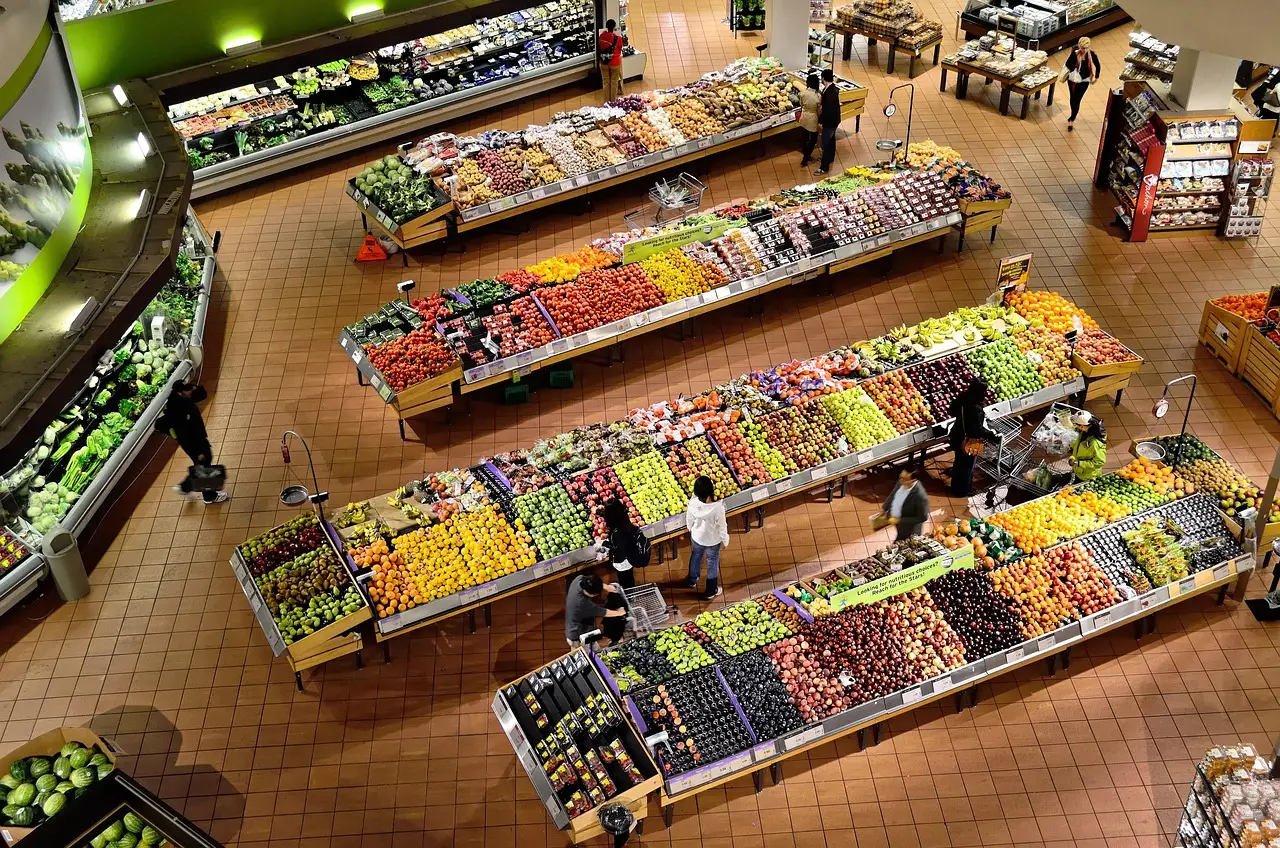
Moody's has placed retail among the five U.S. sectors with the highest overall cyber risk, and among the five with the highest modeled losses as a share of gross profit — a double ranking the rating agency says only media shares. For sourcing and supply-chain teams, the finding lands directly on cost, lead time and vendor-access decisions.
The analysis, published in Moody's Cyber Risk Heat Map, ranked 21 U.S. sectors on exposure to online threats and the strength of their defenses in the age of AI. Retailers showed what the report called "large digital footprints" paired with "moderate defenses with some of the highest modeled losses." In plain terms: wide attack surface, average armor, expensive consequences.
How exposed is retail, exactly?
Moody's identified two high-risk clusters. Retail sits in both.
- Highest overall cyber risk: media, telecom, education, retail, IT hardware.
- Highest modeled losses as a share of gross profit: food and agriculture, manufacturing, energy, media, retail.
"Retail is one of five sectors with the highest overall cyber risk and one of five with the highest modeled losses as a share of gross profit," Moody's said, noting media is the only other sector appearing in both groups. Fashion retailers should read that as a margin question, not an IT-department question. A major incident hits gross profit at a moment when markdown pressure is already acute.
Two recent cases frame the range of outcomes. On Friday, cryptocurrency exchange Binance said hackers withdrew $6.3 billion, forcing a suspension of withdrawals during security checks; its initial investigation pointed to "a compromised DevOps engineer's laptop, which allowed an attacker to gain access to a service container and submit unauthorized withdrawal transactions." Retail has not seen a loss of that scale. But the mechanism — credential compromise via one employee's device — is precisely the pattern Asos just faced.
Hackers recently threatened Asos, sending its app users an alert naming the company's data protection officer and claiming to have "fully compromised the Snowflake instance," apparently referring to the cloud-based data storage company. The e-commerce retailer said the attackers reached an Asos employee's account by impersonating "a trusted contact to obtain login credentials." Asos has not quantified any data loss. The company's disclosure is a reminder that vendor and employee access points, not exotic exploits, remain the practical entry route.
Why does an attack hurt retailers more than banks?
Christopher Vos, director of cyber modeling at Moody's, said retailers are not especially likely to be attacked. But "it's pretty bad when it happens."
Three structural factors drive the losses, in his account:
- Retailers collect a large amount of personal information.
- Complex supply chains mean vendors often access retailer systems directly.
- The business model is, in Vos's words, "quite sensitive to disruption."
That sensitivity is where fashion sourcing professionals should pay attention. Like grocery stores, fashion retailers hold perishable inventory — seasonal stock that loses value weekly. "If a bad guy can get in and drop a ransomware payload — for example, lock up a bunch of their machines — the retailer's squirming a fair amount," Vos said. "And as a result, they can demand quite a high ransom and get some payment out of that." A warehouse or order-management outage during peak season does not merely pause sales; it strands containers, misses delivery windows and forces markdowns on the other side.
Vos rated retailers as "reasonably well positioned" against phishing and similar attacks, but he drew an explicit comparison: retailers are not banks. "It only takes one person to click the link in order for someone to come through," he said. "The defenses of retailers as a whole aren't amazing. They're not super, super hard targets." That assessment carries weight for vendor-onboarding policy: every third-party login extends the perimeter Moody's measured as merely moderate.
What can retailers actually do?
Vos outlined concrete mitigations, none exotic. Patch critical vulnerabilities. Segment the corporate network so access to one area does not grant free run of the systems. Back up critical systems and keep those backups isolated from the network.
The step he called "crucially" important is rehearsal. "Actually doing fire drills, practicing using some of these sort of recovery mechanisms is really important," he said. "It's all very well having something on the shelf that looks great, but when the time comes, if you don't know how to actually bring things back up online quickly and somewhat painlessly, then it doesn't matter that much."
That is a governance finding as much as a technical one. Recovery-time capability, not documented policy, determines how long order flows and factory communications stay dark. Moody's has not published sector-level loss estimates for retail; the modeled-loss ranking is relative, not absolute, and the agency says nothing about which retailers are best defended. Buyers and sourcing directors should expect cyber posture questions to move steadily up the vendor-audit checklist, alongside compliance and capacity.
via WWD (Source)
More from Priya Raman
Show full bio
Correspondent covering people, launches and day-to-day practice in fashion industry as a trade and business at The Fabric Brief.
292 articles
Also on the board
- GlobalData Flags Cyber-Attacks as Operational Test for Fashion Retail
- Levi Strauss Breach Reframes Cybersecurity as a Sourcing Decision
- Asos Shares Slide 11% as Snowflake Hack Threat Reaches Shopper Phones
- Moody's Lifts Retail and Apparel Outlook on Easing Tariffs
- Christine Hunsicker Gets Five-Year Sentence in $300 Million Fashion Tech Fraud