Swatch card No. SW-6838 · cut October 10, 2026
Apparel ManufacturingMill spec card
Nike Signs New Partnerships for Circular Footwear and Apparel Making
Nike has announced new partnerships to drive circular manufacturing across footwear and apparel, with partner names, volumes and timelines still undisclosed.
- Fiber
- Apparel Manufacturing
- Count
- 2 min read
- Cut
- Weight
- 495 words
Spec notes
- Nike has announced new partnerships covering circular manufacturing in both footwear and apparel.
- Partner names, production locations, volumes and timelines have not been disclosed.
- The program spans Nike's two largest product categories, indicating a platform-level strategy.
- The move comes amid tightening EU eco-design and extended producer responsibility rules.
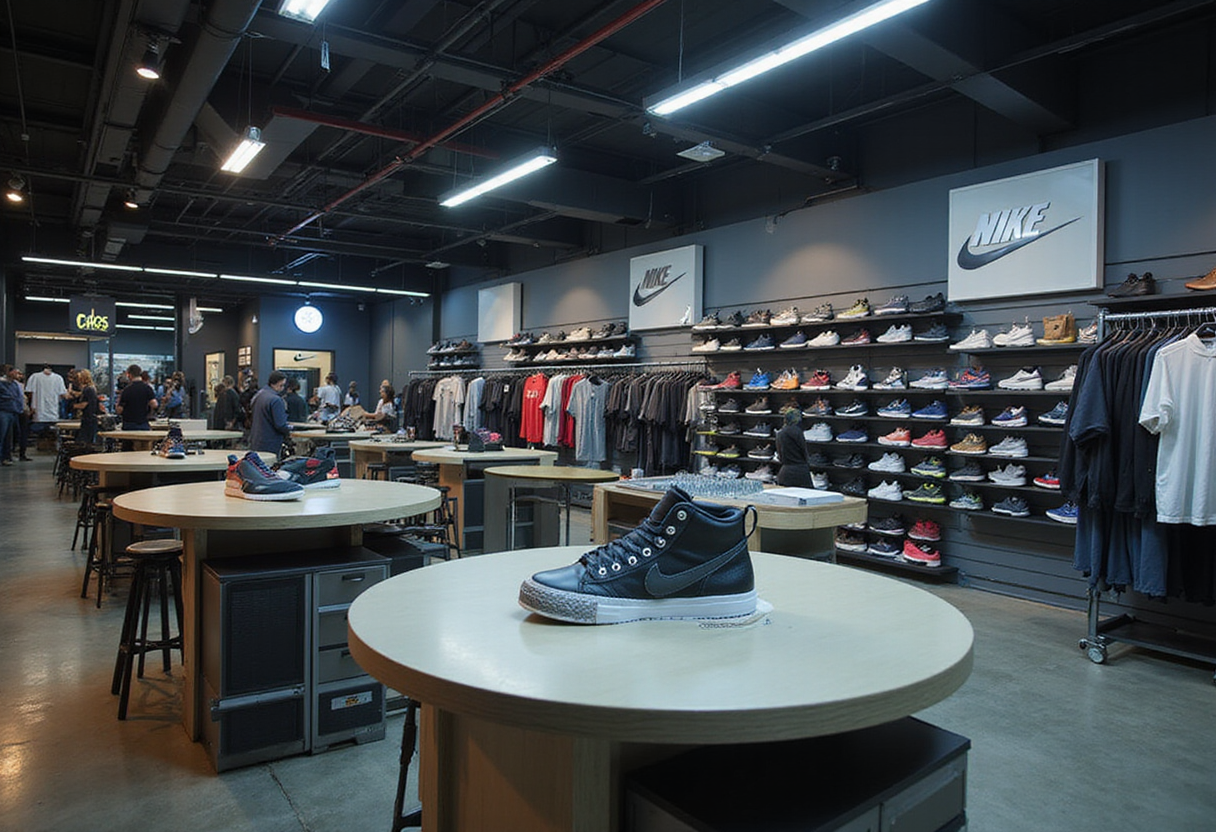
Nike has announced a set of new partnerships aimed at pushing circular manufacturing across both its footwear and apparel lines, marking the company's most explicit commitment to date on closed-loop production at scale.
The announcement, reported by The Business Journals, confirms the Beaverton, Oregon-based sportswear company is directing partner resources at circularity in product categories that account for the bulk of its sourcing volume. What the announcement does not yet confirm is equally important for supply-chain planners: the names of the partner companies, the factories or regions involved, the volumes targeted, or the timeline for deployment.
For sourcing executives, the gap between the headline and the details matters. Circular manufacturing commitments translate into real operational questions — recycled-content thresholds, material certification requirements, disassembly-friendly construction standards, and reverse-logistics capacity for take-back programs. None of these parameters has been published yet.
What do the partnerships cover?
According to the report, the partnerships span both of Nike's core product engines:
- Footwear — historically Nike's hardest circularity challenge, given multi-material uppers, bonded midsoles and limited disassembly options at end of life.
- Apparel — where fiber-to-fiber recycling and recycled polyester adoption are further along industry-wide, but where blended fabrics still limit true closed-loop claims.
The breadth across both categories signals Nike is treating circularity as a platform-level manufacturing strategy rather than a single-product marketing exercise, as earlier initiatives like its Refurbished and Take Back programs were.
Who pays, and what changes for vendors?
That question is now the industry's to watch. Circular manufacturing programs at major brands typically shift new costs upstream — segregated material streams, additional certifications, requalification of recycled inputs — before they deliver savings in material spend or compliance positioning. Nike's supplier base, concentrated heavily in Vietnam, Indonesia and China for footwear, will be assessing whether the new partnerships come with volume commitments, tooling investment or margin support.
The announcement also lands as regulatory pressure builds. Extended producer responsibility (EPR) schemes and eco-design rules in the EU are pushing brands toward exactly this kind of structural change, with deadlines attached. A circularity program built through partnerships rather than in-house gives Nike a faster route to compliance readiness without capital-heavy retrofits of its own.
Confirmed versus intended
What is confirmed today: Nike has entered new partnerships specifically framed around circular footwear and apparel manufacturing.
What remains intention until disclosed: partner identities, production locations, launch dates, volume targets and the share of Nike's output the program is designed to cover.
Sourcing teams and vendors should treat this as a directional signal rather than an actionable spec change. No sourcing allocation, certification requirement or cost implication can yet be derived from the announcement itself.
Nike has not said when it will name the partners or detail the program's scope. Expect clarification — and the supplier-facing requirements that follow — as the company publishes further specifics on the partnerships in the months ahead.
via Google News: Apparel manufacturing (Source)
More from Elena Vasquez
Also on the board
- Nike to Cut Jordan Retro Volume, Restore Scarcity Model
- Nike Restructures Into Three Geographies, Targets $2.5B in Savings
- US Apparel Sourcing Tilts Toward Fewer, Larger Strategic Vendors
- Nike to Fold Greater China Into New APGC Unit Run From Singapore
- Apparel sector must adopt technology to stay competitive, experts say