Swatch card No. SW-1414 · cut October 10, 2026
Sustainability & ComplianceMill spec card
Marks and Spencer Rolls Out Fashion Supply Chain Decarbonization Program
Marks and Spencer has launched a fashion supply chain decarbonization program, ESG Today reports, extending the UK retailer's climate work upstream into apparel and fibre sourcing and aligning it with European peers.
- Fiber
- Sustainability & Compliance
- Count
- 3 min read
- Cut
- Weight
- 510 words
Spec notes
- Marks and Spencer launched a new decarbonization program for its fashion supply chain, per ESG Today.
- Program scope, supplier enrollment mechanics, and targets were not disclosed in initial reporting.
- The launch follows similar supplier-facing programs already in place at Inditex, H&M, ABF/Primark, and Zalando.
- The UK retailer's apparel operation is undergoing restructuring under its Resets to Growth strategy launched in recent years.
- UK SECR and EU CSRD regimes are reshaping Scope 3 disclosure obligations for retailers sourcing apparel.
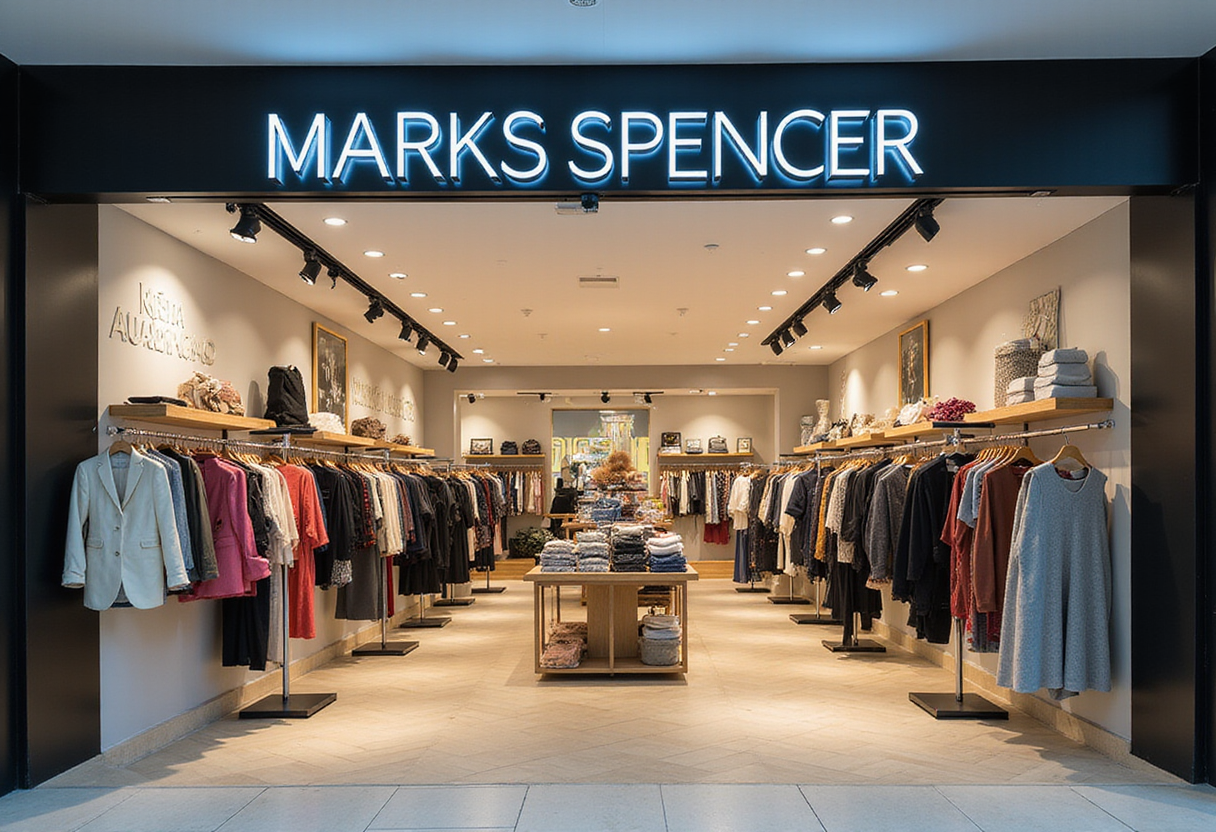
Marks and Spencer has launched a new decarbonization program for its fashion supply chain, ESG Today reported, marking a further upstream extension of the UK retailer's climate work into apparel manufacturing and fibre processing rather than store-and-distribution-centre operations.
Program specifics — supplier enrollment mechanics, baseline year, reduction targets, and a verification standard — were not disclosed in the reporting made available. M&S had not posted a corresponding program document on its corporate sustainability or investor relations pages at the time of writing.
For sourcing teams serving M&S clothing and home, the announcement raises immediate operational questions:
- Which tiers of the supplier base the program actually covers
- Whether participation is contractual for existing vendors or voluntary
- How emissions data will feed into order allocation, scorecards, or future RFQ processes
- Whether the retailer will share mill-level abatement costs or absorb them into FOB pricing
How does the M&S program sit against European peers?
The launch follows the template now standard among European apparel retailers. Inditex, H&M, Primark owner Associated British Foods, and Zalando have all rolled out supplier-facing decarbonization programs that combine mill-level energy audits, renewable-energy procurement support, and disclosed reduction targets linked to order pipelines. M&S's entry brings a UK clothing supply base — historically slower than Continental peers on Scope 3 disclosure — into the same framework.
The retailer's apparel operation has been reshaped over the past three years under its Resets to Growth strategy, including store-format investment, range rationalisation, and some reshoring of UK textile capacity. A Scope 3 program layered onto that restructuring would tighten the link between climate metrics and margin decisions for vendors.
What changes for mills and garment factories?
The commercial impact on the factory side will hinge on four variables:
- Target structure: binding supplier targets or voluntary self-reporting
- Cost recovery: whether M&S absorbs abatement capex into pricing or shares the bill
- Category treatment: how long-lead-time categories such as wool, denim, and knitwear are handled, given fibre processing dominates their emissions profile
- Tier reach: whether Tier 2 and Tier 3 mills are enrolled directly or via Tier 1 garment factories
Why the disclosure clock matters
Retailer-level Scope 3 disclosure is tightening on both sides of the English Channel. The UK's Streamlined Energy and Carbon Reporting (SECR) regime and the EU's Corporate Sustainability Reporting Directive (CSRD) are reshaping what retailers must report on purchased goods and services, lifting the stakes on vendor-level data quality and third-party verification.
Until M&S publishes the program's scope, methodology, supplier roster, and verification protocol, the announcement should be read by vendors as a compliance signal rather than a confirmed sourcing condition.
The forward question for supply-chain professionals is whether M&S conditions future orders on verified mill-level emissions data, treats participation as voluntary, and how it accounts for abatement cost at the factory gate — pricing decisions that will shape whether suppliers invest ahead of the curve or hold capacity decisions pending further clarity from the retailer.
via Google News: Apparel sourcing & supply chain (Source)
More from Tom Whitfield
Show full bio
Market editor covering marketplaces and e-commerce at The Fabric Brief.
173 articles
Also on the board
- M&S Launches Re:Spark to Speed Renewable Power in Fashion Supply Chain
- M&S and Levi's Align on Renewable Energy for Apparel Suppliers
- Levi Strauss and M&S Back Renewable Energy Push in Supply Chains
- M&S Launches Re:Spark to Scale Renewable Power in Supply Chain
- Levi Strauss, M&S Launch Supply-Chain Renewable Energy Program