Swatch card · cut November 22, 2026
Supply Chain & SourcingMill spec card
Bangladesh's Lotus Silk Sells at $3,500/kg — But Chapai Beel Output Has Stalled
Lotus silk yarn from Faridpur trades at $2,000–$3,500/kg, with 15,000 stems per kilogram — half Myanmar's count — yet output stalled after the BPRD training programme ended and no export deal exists.
- Fiber
- Supply Chain & Sourcing
- Count
- 3 min read
- Cut
- Weight
- 546 words
Spec notes
- Lotus silk yarn sells internationally at $2,000–$3,500 per kg; fabrics fetch $25–$1,000 per yard.
- Faridpur needs ~15,000 lotus stems per kg of yarn, versus ~30,000 in Myanmar, Vietnam and Cambodia.
- The initiative began under a BPRD research project; women in Ranakail learned the hand-spinning technique in three days.
- Production slowed after the training programme ended; no commercial-scale output or export contract yet.
- Faridpur-3 MP Chowdhury Nayab Yusuf pledged support to take lotus silk to international markets.
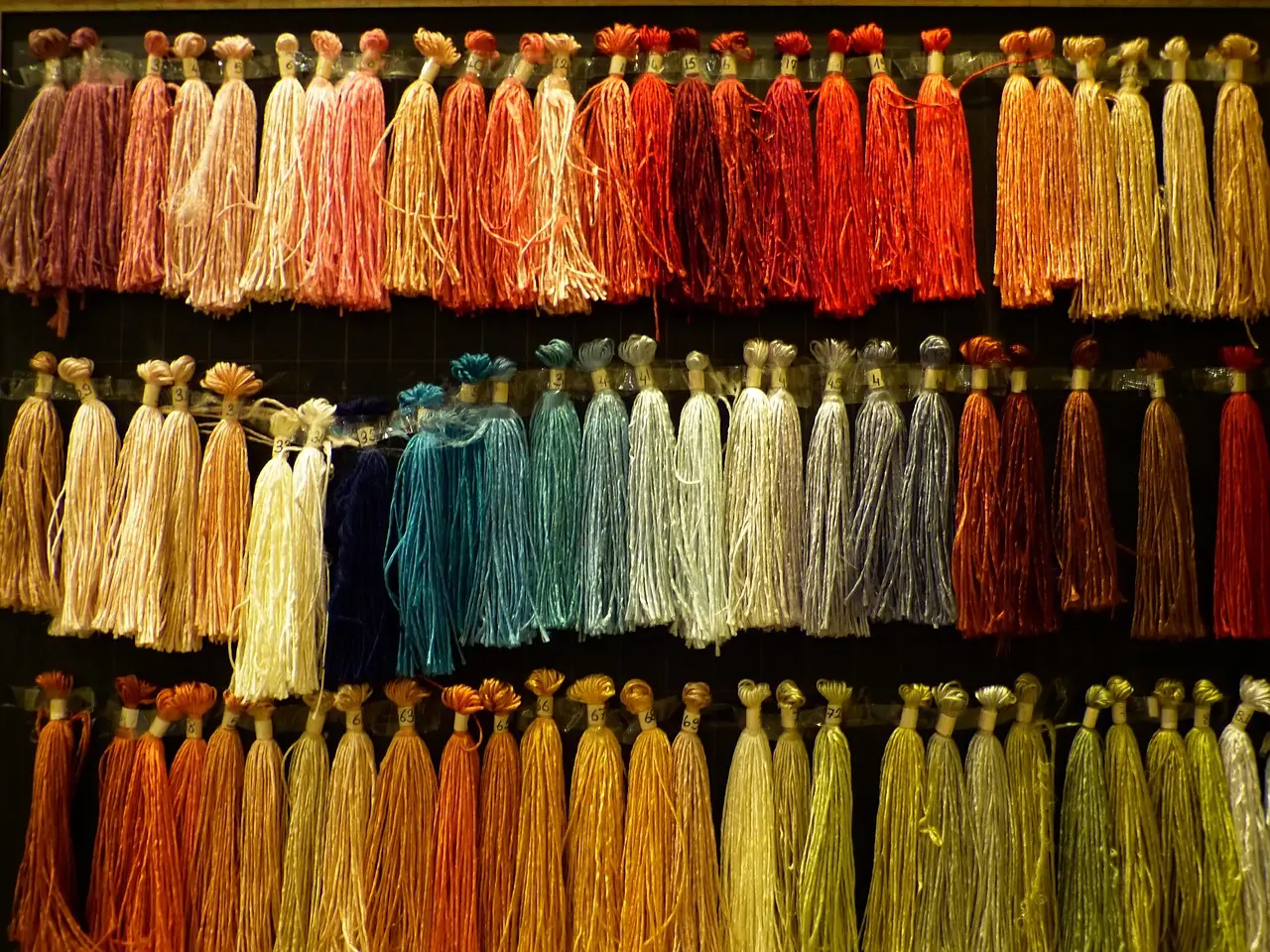
Lotus silk yarn from Bangladesh's Chapai Beel trades internationally at $2,000 to $3,500 per kilogram — a price point that dwarfs conventional silk — yet the Faridpur initiative that produces it has stalled since its research phase ended, local artisans report.
The fibre comes from the stems of pink lotus flowers in Chapai Beel, also known as Padma Beel. Women in Ranakail village extract fine natural filaments from fresh stems through a hand-spinning process that uses no chemicals, and spin them into yarn. The work began under a research project titled 'Diversity, Utilization and Conservation of Lotus Flowers', run by the research organization BPRD. Lotus researcher Shikdar Abul Kalam Shamsuddin led the training programme; the women learned the technique in three days.
What does the yield look like?
The numbers are, on paper, competitive. According to the Faridpur office of the Bangladesh Small and Cottage Industries Corporation (BSCIC), roughly 15,000 lotus stems from Faridpur produce one kilogram of yarn. In Myanmar, Vietnam and Cambodia — the established lotus-silk producers — the equivalent figure is around 30,000 stems. Faridpur's raw material is, in effect, twice as productive per stem.
The output already has a downstream channel. Traditional Jamdani weavers in Sonargaon have used the yarn to make scarves and fabrics. The material itself is durable, water-resistant and less prone to wrinkles than conventional silk or cotton. Finished lotus-silk fabrics fetch $25 to $1,000 per yard, depending on quality.
Why has commercial scale not arrived?
The gap between the price tag and the production line is the story. Artisans say the work slowed after the initial research and training programme wound down, and the beel's lotus resources have faced neglect since. This is an announced intention in search of an order book.
Rekha Rani, one of the artisans, said the work gives women a chance to earn income alongside household responsibilities, though current earnings remain limited. Kanaipur Union Parishad Chairman Altaf Hossain said proper use of the lotus resources could bring significant economic benefits to the area.
Political attention has now arrived. Chowdhury Nayab Yusuf, Member of Parliament for Faridpur-3, recently visited the beel and met the women producing the yarn. He pledged support to develop the initiative and take the industry to international markets. A pledge, it should be noted, is not a purchase order.
Local stakeholders identify three requirements to reach commercial scale:
- government and private-sector investment;
- modern spinning equipment to replace hand processes;
- direct links with international buyers.
The economics justify the effort. One kilogram of yarn at the lower end of the range — $2,000 — is worth as much as several bales of conventional cotton fibre, and the Faridpur yield advantage halves the stem-gathering labour per kilogram against Southeast Asian competitors.
What does this change for sourcing teams? For now, very little: there is no confirmed volume, no certified supply chain and no export contract on record. The confirmed facts are a three-day training programme, a small artisan cluster and Jamdani weavers willing to work the yarn. Everything beyond that rests on the MP's pledge materialising as investment. If equipment and buyer links follow, Chapai Beel could become a genuine supplier of one of the world's most expensive plant fibres.
via textiletoday.com.bd (Source)
More from Tom Whitfield
Show full bio
Market editor covering regulation, policy and their impact on fashion industry as a trade and business at The Fabric Brief.
390 articles