Swatch card No. SW-4955 · cut November 3, 2026
Apparel ManufacturingMill spec card
Trident Commits Rs 4,650 Crore to Yarn, Sheeting and Paper Capacity
Trident's board has approved Rs 4,650 crore across yarn, sheeting, paper and renewables, with the largest slice — Rs 1,660 crore — funding a 1,99,680-spindle plant at Dhar by 2029.
- Fiber
- Apparel Manufacturing
- Count
- 3 min read
- Cut
- Weight
- 582 words
Spec notes
- Trident approved a Rs 4,650-crore investment programme with completion from December 2027 to September 2029.
- Rs 1,660 crore funds a new 1,99,680-spindle yarn plant at Dhar, Madhya Pradesh, on 179.2 acres of leasehold land.
- Sheeting loom capacity rises from 504 to 840 with Rs 1,018 crore, despite 58% current utilisation.
- Budhni yarn facility runs at 94% utilisation; paper business at 81%.
- Rs 654 crore adds 60 MW wind and 20 MW solar, complementing 57.3 MW DC peak of existing solar.
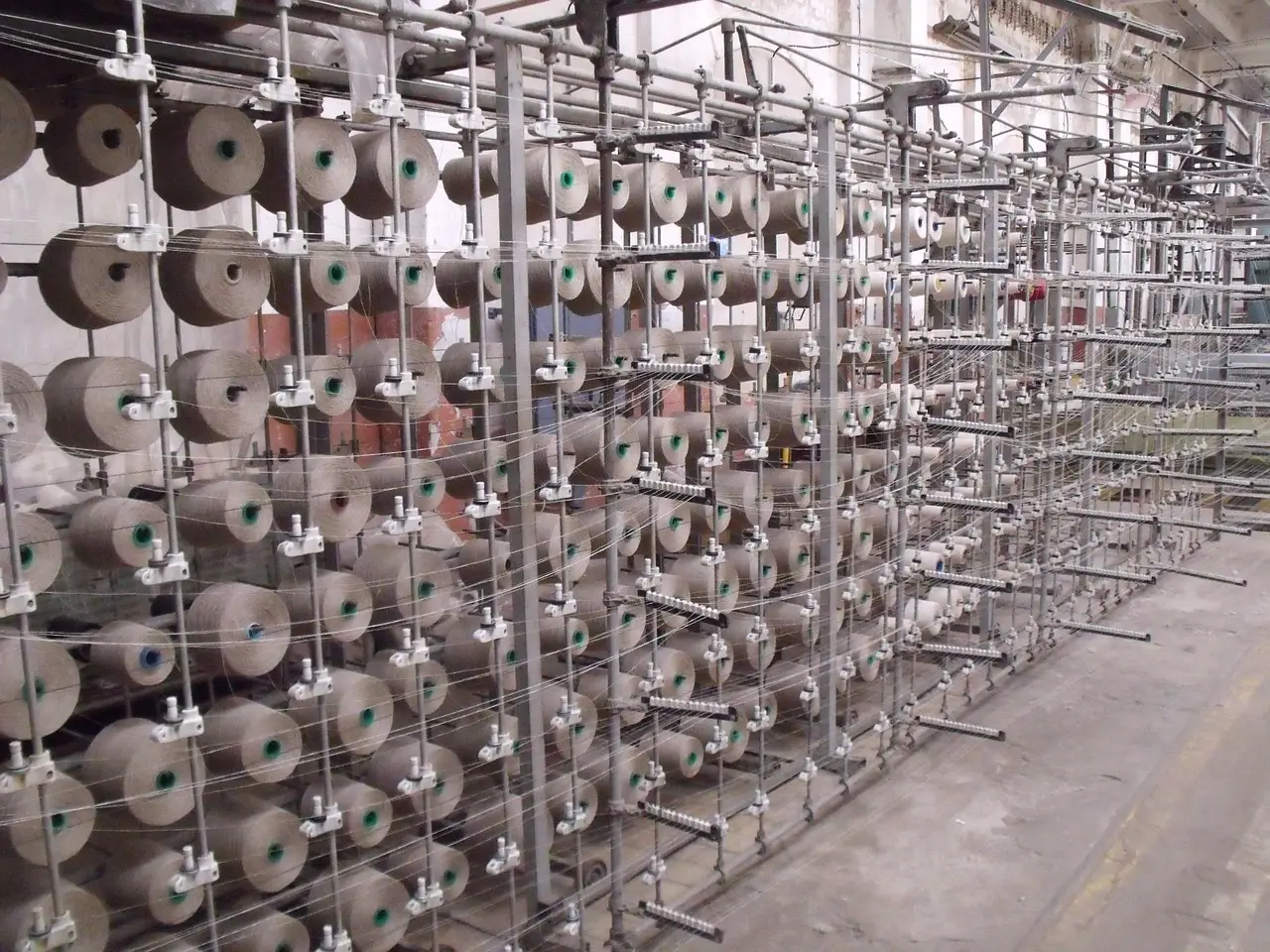
Trident Ltd. has approved a Rs 4,650-crore (roughly USD 550 million) capital programme to expand yarn, sheeting, paper and renewable energy capacity, with completion dates running from December 2027 to September 2029. The board-approved projects will be implemented in phases and target both new capacity and replacement of ageing machinery at the company's existing sites in Madhya Pradesh.
The decision signals sustained demand confidence at one of India's largest vertically integrated home textile producers, and it lands at a moment when two of the three manufacturing businesses are already running at high utilisation.
Where is the money going?
The largest single allocation is Rs 1,660 crore for a greenfield yarn plant at Dhar, Madhya Pradesh, with a proposed capacity of 1,99,680 spindles. Trident expects completion by September 30, 2029. The company has already secured 179.2 acres of leasehold land for approximately Rs 106.09 crore, meaning site acquisition is a confirmed step rather than a stated intention.
The remaining funds are distributed as follows:
- Budhni yarn modernisation: Rs 1,022 crore, due December 31, 2027. The project adds 99,840 spindles, replaces 48,000 older spindles with 70,176 new ones for finer-count yarn production, and swaps 960 old rotors for 2,400 new rotors.
- Sheeting expansion: Rs 1,018 crore, due January 31, 2028, adding 336 looms and lifting total loom capacity from 504 to 840 — a 67% increase.
- Hybrid renewable energy: Rs 654 crore, due October 31, 2028, covering 60 MW of wind and 20 MW of solar power on an AC basis, complementing an existing 57.3 MW DC peak solar footprint.
- Paper capacity: Rs 296 crore, due March 31, 2028, raising output by 28 tonnes per day, from 479 to 507 tonnes per day.
What do utilisation rates reveal?
The capacity data explains the sequencing. Trident's Budhni yarn facility operates at 94% capacity utilisation, effectively full, and the paper business runs at 81%. Both face physical constraints on further volume growth without new investment.
The sheeting business tells a different story: utilisation stands at 58%, yet the company is adding looms at the heaviest relative rate of the programme. The move positions Trident to capture additional home textile order volume ahead of demand rather than in response to it — a calculated bet on export channel growth rather than a response to current throughput pressure.
The finer-count spindle replacement at Budhni also shifts the product mix upward, aligning capacity with higher-value yarn specifications that command better margins in terry towel and bed linen supply chains.
How large is the resulting footprint?
Trident's existing yarn operations at Sanghera in Punjab and Budhni in Madhya Pradesh run a combined 7,46,064 spindles, 5,424 rotors and 320 air-jets. The Dhar greenfield plant alone adds roughly 27% to installed spindle capacity, while the Budhhi modernisation adds a further 99,840 spindles net of replacement effects — a step change in the company's spinning base by the end of the decade.
For sourcing executives, the practical consequence is a phased increase in available Indian yarn and sheeting capacity between late 2027 and late 2029, with the first new volume arriving from Budhni at the end of 2027 and the sheeting looms following weeks later.
The programme's completion window now depends on execution: land is secured at Dhar, but the company has disclosed no contractor, equipment vendor or financing structure for the build-out.
By Elena Vasquez
via Apparel Resources (Source)
More from Elena Vasquez
Show full bio
News editor covering money, funding and market shifts around fashion industry as a trade and business at The Fabric Brief.
285 articles