Swatch card No. SW-3111 · cut October 10, 2026
Supply Chain & SourcingMill spec card
Thread Factory Raises ₹1.5 Cr to Digitise Fashion Supply Chains
Thread Factory has raised ₹1.5 crore to organise India's fragmented fashion supply chain, targeting the digital gap between brands and small garment factories.
- Fiber
- Supply Chain & Sourcing
- Count
- 3 min read
- Cut
- Weight
- 512 words
Spec notes
- Thread Factory raised ₹1.5 crore (approx. $180,000) to structure India's fashion supply chain.
- The company targets fragmentation among India's small and mid-sized garment factories.
- Investor names, valuation and customer figures were not disclosed in the announcement.
- The raise positions the startup in the B2B sourcing-tech layer between brands and dispersed vendors.
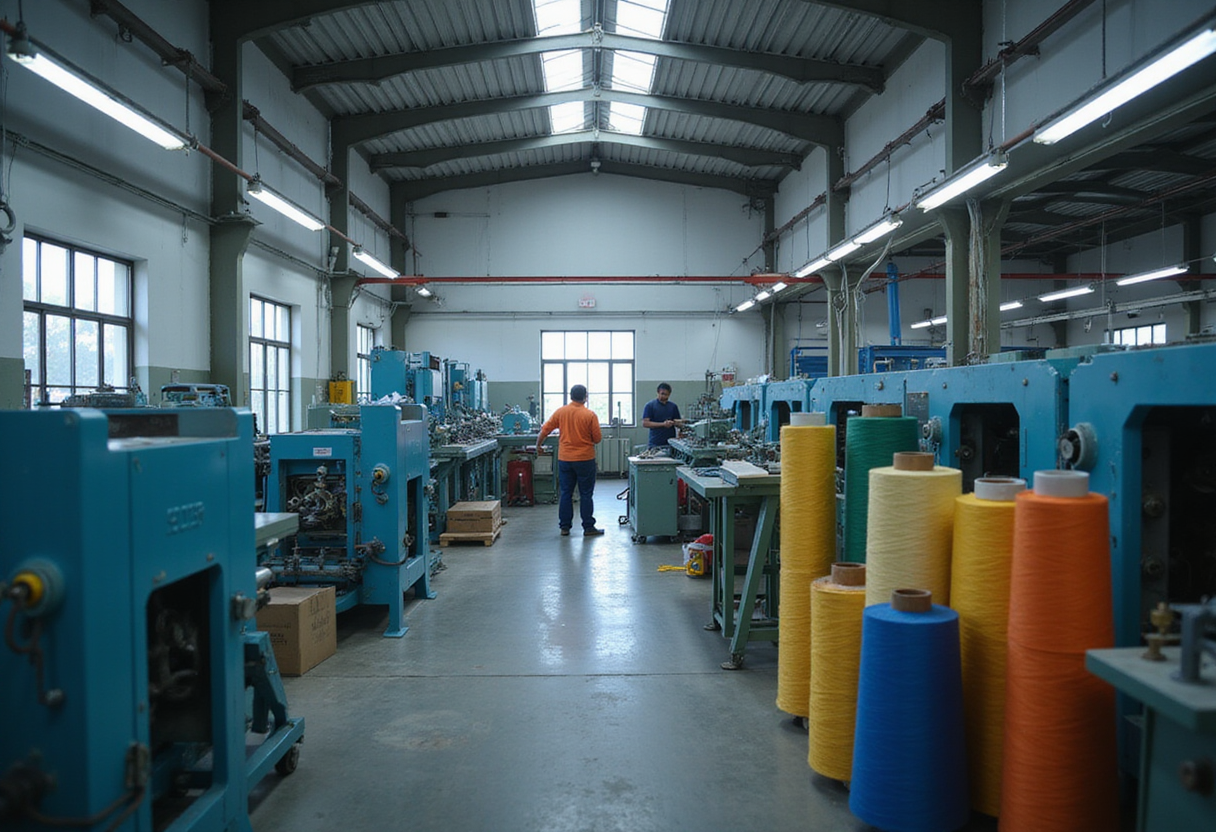
Thread Factory, an Indian supply-chain startup, has raised ₹1.5 crore (roughly $180,000) to bring structure to the country's fragmented fashion supply chain, according to an announcement reported by Indian Startup Times.
The round is small by venture standards, but it signals where early-stage capital is flowing in India's apparel sector: not into consumer brands, but into the software and orchestration layer that sits between brands and the thousands of small factories, job shops and vendor units that make up the country's production base.
What problem is Thread Factory attacking?
India's garment manufacturing sector remains dominated by small and mid-sized suppliers with limited digital infrastructure. Orders, capacity, timelines and compliance documentation often move through phone calls, spreadsheets and informal channels, raising costs for brands that need visibility and predictability.
Thread Factory positions itself as the structural layer for this fragmentation — a platform approach intended to give fashion businesses a more organised way to source, track and manage production across dispersed vendor networks.
The funding announcement frames the company's mission as "bringing structure to India's fragmented fashion supply chain," a phrasing that places it alongside a growing cohort of B2B sourcing-tech ventures targeting the subcontinent's estimated thousands of independent production units.
What does ₹1.5 Cr buy?
At this ticket size, the raise is best read as a seed or pre-seed tranche. Typical uses for capital at this stage in Indian supply-chain SaaS include:
- Building out the core platform and vendor-onboarding tools
- Hiring engineering and operations staff
- Running pilots with early brand and factory customers
The announcement did not disclose the identity of the investors, the valuation, or a named customer roster. Nor did it specify a revenue figure or user count. Those gaps matter for sourcing professionals assessing whether the platform has traction beyond concept stage.
Confirmed: the ₹1.5 crore raise itself. Not yet confirmed: deployment details, investor names, commercial pilots or measurable outcomes. The distinction is worth holding onto until the company publishes more.
Why it matters for sourcing teams
For brands and buying houses sourcing from India, vendor-fragmentation tooling speaks directly to three chronic pain points: lead-time variability, compliance traceability and per-order transaction costs. Any platform that consolidates vendor communication and order tracking into a single system can compress the administrative overhead of managing dozens of small suppliers.
The opportunity is not hypothetical. India's apparel export sector competes on flexibility and small-order capability, but that strength depends on a long tail of suppliers that most enterprise ERP systems never reach. Startups working at this layer are effectively betting that digitising the tail end of the supply chain is a large enough wedge to build a business on.
Thread Factory's ₹1.5 Cr is a modest bet on that thesis. Whether it converts into factory-level adoption — the metric that actually matters in this segment — will depend on execution over the next several quarters, and the company has not yet announced a timeline for expansion beyond its initial announcement.
via Google News: Apparel sourcing & supply chain (Source)
More from Priya Raman
Show full bio
Correspondent covering industry trends and analytics at The Fabric Brief.
167 articles
Also on the board
- India's Industrial Output Data Splits Textiles From Apparel
- India's Industrial Output Data Splits Textiles From Apparel
- India Positioned to Capture Apparel Sourcing Shift Away from China: Report
- India Industrial Data Signals Textile-Apparel Growth Divergence
- India's IIP Data Flags Widening Textiles-Apparel Output Gap