Swatch card No. SW-8512 · cut October 1, 2026
Apparel ManufacturingMill spec card
STCH Bets on AI and a Factory OS to Modernise Apparel Manufacturing
STCH says AI and a Factory OS will modernise its apparel plants, but rollout dates, covered capacity and measured efficiency gains remain undisclosed.
- Fiber
- Apparel Manufacturing
- Count
- 3 min read
- Cut
- Weight
- 685 words
Spec notes
- STCH announced it is applying AI and a proprietary 'Factory OS' to modernise apparel manufacturing, per Inc42.
- The company has not yet disclosed plant-level rollout dates, covered capacity or measured efficiency results.
- Buyers should treat the announcement as intention, pending quantified defect-rate, changeover and delivery metrics.
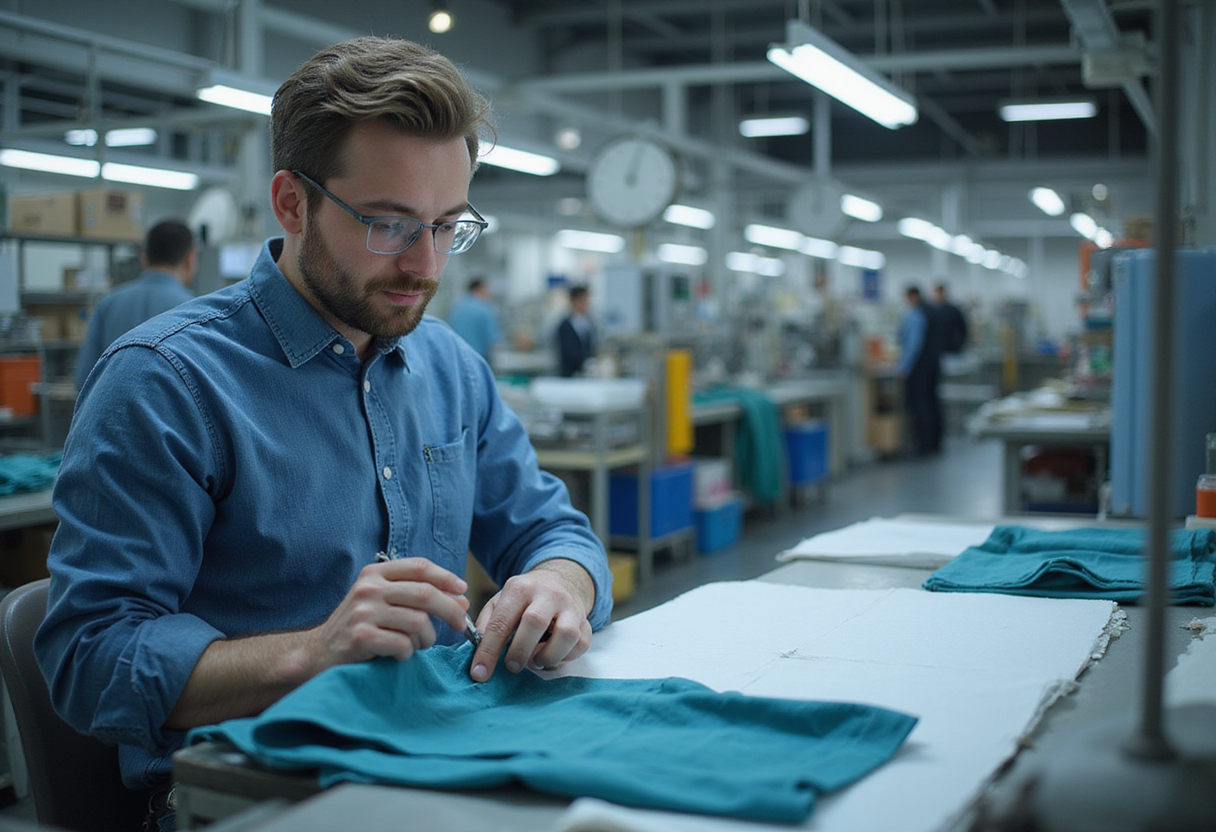
Apparel manufacturer STCH has put digitalisation at the centre of its production strategy, announcing that it is applying artificial intelligence and a proprietary "Factory OS" to modernise its manufacturing operations. The company disclosed the programme in a report published by Inc42. As of this writing, the announcement remains at the intention-and-framing stage: STCH has not yet published capacity figures, plant-by-plant rollout dates, or measured efficiency results alongside the claim.
That distinction matters for sourcing teams. Vendor-led technology announcements are routine in Indian apparel, where exporters face steady margin pressure from brands demanding shorter lead times, tighter compliance reporting and price discipline. What buyers can act on is specificity — which factories run the system, what measurable output or defect-rate change it produced, and who funds the capital cost. The STCH disclosure, as reported, does not yet answer those questions.
What the company has put on record is directional. STCH says AI and a factory operating system are its instruments for modernising how garments move through cutting, sewing and finishing. In practice, apparel suppliers that take this route typically pursue three commercial outcomes: faster line changeovers, real-time visibility of work-in-progress for order tracking, and data capture that supports compliance and quality documentation for brand audits. Each of these maps directly to decisions brand sourcing managers make — order allocation, lead-time commitments and vendor scorecards.
For STCH, the timing aligns with broader economics. Indian apparel exporters are competing for orders shifting out of China and diversifying away from single-country sourcing bases, and buyers increasingly weight factories that can prove digital traceability rather than merely claim it. A factory operating system that logs production data at machine level can shorten the audit cycle and reduce the cost of brand-mandated reporting. If STCH operationalises the system across its floor, the credible proof points would be quantified: percentage reduction in defect rates, changeover time saved per style, and on-time delivery improvement — figures the company has not yet released.
The announcement also invites scrutiny of scope. "Factory OS" can mean anything from a full manufacturing execution system with IoT-connected machines to a scheduling dashboard layered over manual data entry. The capital intensity differs sharply between the two, and so does the payback period. Machine-level connectivity typically requires new hardware, network infrastructure and retraining — costs a supplier either absorbs into its margin or builds into quoted prices. Dashboard-only deployments are cheaper and faster but deliver weaker data guarantees to brands. STCH has not specified where on that spectrum its system sits.
Buyers assessing STCH as a vendor can treat the announcement as a signal of intent rather than a capability claim. The useful follow-up questions are concrete: which units run the Factory OS today; what share of production orders flow through it; does the system generate buyer-facing tracking; and does STCH hold or plan certifications tied to digital traceability that brands recognise. Answers to those questions determine whether the technology reduces sourcing risk or simply updates the sales narrative.
There is also a competitive read. Exporters in Bangladesh, Vietnam and India are investing in similar shop-floor digitisation, in part because brands such as those with supplier-code requirements now expect data-backed visibility into working hours and production flow. A supplier that cannot deliver machine-level data increasingly competes at a discount. STCH's move, if executed, positions it on the right side of that divide; if execution lags, the announcement carries no cost advantage at all.
The measured-results test comes next. Inc42's report frames STCH as a case study in AI-driven apparel manufacturing, but case-study framing and audited production data are different commodities. Until STCH publishes rollout timelines, covered capacity and before/after efficiency metrics, sourcing professionals should log this as an announced modernisation programme, not a verified capability upgrade.
Watch for the company's next disclosure — plant-level deployment details and quantified output effects would mark the shift from intention to evidence, and would give buyers a basis to revisit order allocation and lead-time terms with the supplier.
via Google News: Apparel manufacturing (Source)
More from Marcus Bennett
Show full bio
Senior reporter covering business strategy at The Fabric Brief.
58 articles
Also on the board
- WhatTheyThink Profiles CreateMe's Apparel Automation Play
- India's Apparel Sourcing Window Reopens—For Now
- Gokaldas Exports Sees More Global Apparel Sourcing Shift to India
- Textile Today urges innovation ecosystem build-out for Bangladesh apparel
- B2B Sourcing Startup Showroom Books ₹150 Cr in Apparel Orders