Swatch card No. SW-9552 · cut September 30, 2026
Apparel ManufacturingMill spec card
Rajby Textiles Opens Karachi Garment Unit, Targets 500,000 Pieces a Month
Rajby Textiles opens a Karachi garment unit at 500,000 pieces monthly, scaling to 1 million, backed by its 3.2 million-meter denim fabric division and ZDHC-linked water targets.
- Fiber
- Apparel Manufacturing
- Count
- 3 min read
- Cut
- Weight
- 587 words
Spec notes
- Rajby Textiles opened a Karachi garment unit on Wednesday with initial capacity of 500,000 pieces per month, planned to double to 1 million in a second phase.
- The company's fabric division, producing 3.2 million meters of denim per month, will supply the new garment plant.
- Sustainability targets include 30 percent wastewater recycling by 2027 and 100 percent by 2030, an 800-KWh solar plant cutting local emissions 25 percent, and a 50 percent GHG reduction by 2030.
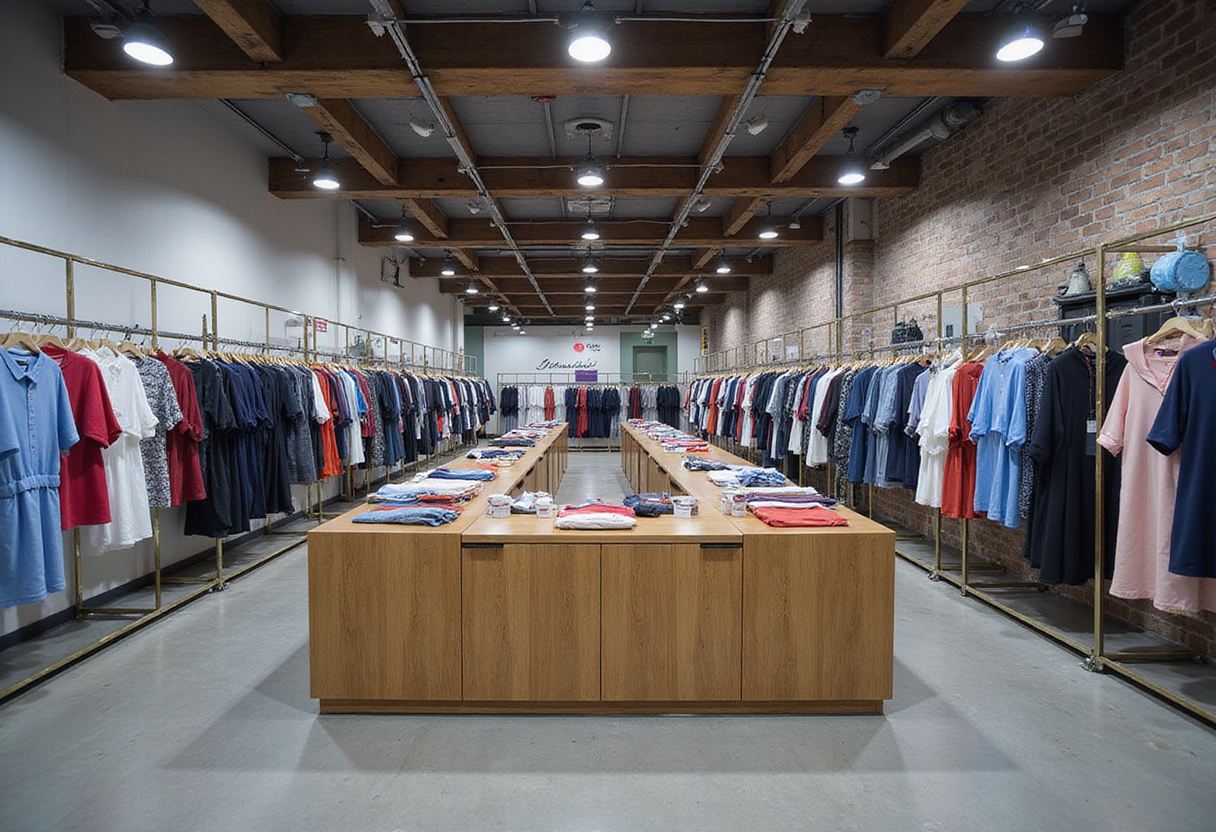
Rajby Textiles Pvt. Ltd. announced on Wednesday the opening of a new garment manufacturing unit in Karachi, Pakistan, with an initial capacity of 500,000 pieces per month and a planned second-phase scale-up to 1 million pieces per month.
The move converts the Karachi-based manufacturer from a fabric supplier into a vertically integrated denim producer. Rajby's existing fabric division, which produces 3.2 million meters of denim per month, will feed the new garment unit directly, shortening the link between fabric output and finished goods for brand buyers sourcing from Pakistan.
The facility is equipped with automation aimed at throughput and consistency: auto spreaders, pocket setters, automatic hemmers and loop attachers. On the finishing side, Rajby has installed eco-finishing systems including Jeanologia ozone technology, laser finishing and high-efficiency industrial washers — equipment choices that directly affect chemical, water and energy footprints per garment, and increasingly factor into brand vendor scorecards.
"For over 50 years, Rajby Textiles has built its reputation on manufacturing excellence, quality, and continuous innovation," said Daniyal Saleem, CEO of Rajby Textiles. "With this new garment facility, we are bringing that same commitment to the finished product. By combining modern automation with sustainable technologies, we are offering our global brand partners an integrated, responsible, and agile supply chain."
Rajby is a supplier to C&A, and the company says the garment plant will build on compliance and sustainability benchmarks already established in its fabric unit. The announced environmental targets for the apparel division cover water, energy and waste — targets that remain plans rather than measured results until the facility ramps up.
On water, Rajby is upgrading its effluent treatment plant with an MBBR biological and tertiary treatment process to reach ZDHC Progressive level. The apparel division plans to install a wastewater recycling plant targeting 30 percent wastewater recycling by 2027 — a saving the company says equals the daily water usage of 17,280 people — and 100 percent recycling by 2030.
On energy, the garment unit will add an 800-KWh solar plant, which Rajby says will cut local emissions by 25 percent. The apparel division aims to halve greenhouse gas emissions by 2030. The plant will also operate under a reduce, reuse and recycle methodology, with a target of zero manufacturing waste to landfill by 2030.
The company frames these commitments as building on "existing energy-saving milestones" at its fabric unit, which currently runs biomass boilers, waste heat recovery systems delivering 95 percent renewable steam generation, and solar power.
For sourcing teams, the significance is structural. The investment reflects the denim industry's broader shift toward vertically integrated suppliers, where a single vendor controls fabric through finishing. That consolidation can compress lead times and simplify compliance auditing, but it also concentrates volume risk with fewer partners. Rajby's pitch to "globally recognized apparel brands" is an end-to-end denim solution — from fabric production to finished garments — under one operational roof.
Buyers will want to verify the details independently: the second-phase capacity expansion carries no announced timeline in the company's statement, and the 2027 and 2030 water, emissions and waste targets are stated goals rather than audited performance. The ZDHC Progressive commitment and the ETP upgrade are the nearest-term, most verifiable markers on that schedule.
If Rajby hits its phase-two target of 1 million pieces per month, it will add a meaningful finished-garment volume block to Pakistan's denim export capacity, backed by in-house fabric supply of 3.2 million meters a month.
via Sourcing Journal (Source)