Swatch card No. SW-4885 · cut September 30, 2026
Supply Chain & SourcingMill spec card
Panama Canal Adds Transit Slots and Raises Draft as Water Levels Recover
ACP lifts Neopanamax bookings to 10 per day and draft to 49 feet as Gatún Lake recovers, cutting waiting traffic to 49 vessels — but El Niño risks could still bring new restrictions.
- Fiber
- Supply Chain & Sourcing
- Count
- 4 min read
- Cut
- Weight
- 886 words
Spec notes
- ACP raises Neopanamax transits from nine to 10 per day from Oct. 15, lifting total daily capacity to 33 slots, and increases maximum draft from 48 to 49 feet effective Tuesday.
- Waiting vessels fell to 49 on Wednesday, down from 118 at the end of August, when average northbound waits exceeded 10 days.
- SK Gas paid a record $5.3 million at auction for a Sept. 1 transit, versus a median auction price of $55,000 from October 2025 through February 2026; BIMCO reports bulker transits down 22 percent year over year since early July.
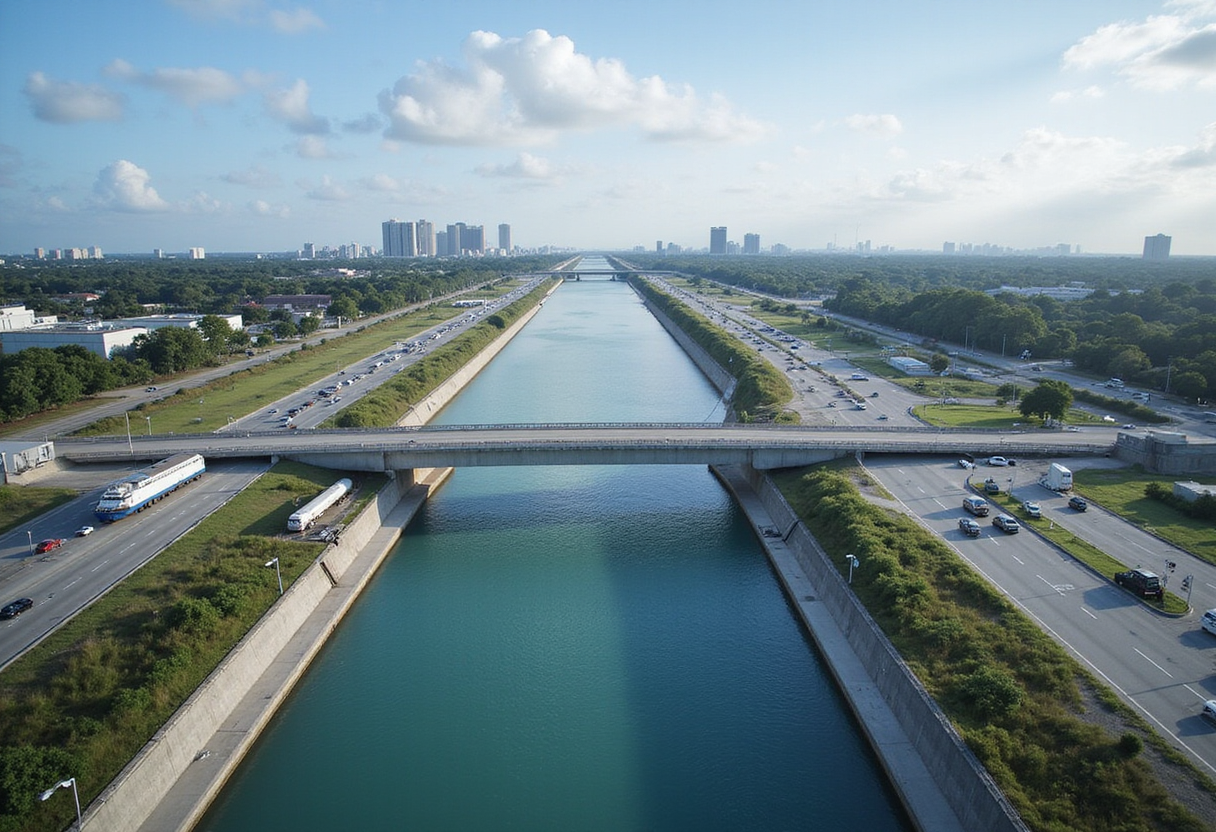
The Panama Canal Authority (ACP) is adding a daily Neopanamax transit slot and raising the maximum authorized draft to 49 feet, reversing the escalating restrictions it imposed through September as a developing El Niño threatened the waterway's supply.
In an advisory to shipping companies on Monday, the canal operator increased bookings for larger Neopanamax vessels from nine to 10 per day for dates beginning Oct. 15. The move lifts total daily capacity across the Neopanamax and Panamax locks to 33 slots. The draft increase, up from the 48-foot limit set in late August, took effect Tuesday and stands until further notice.
For apparel and consumer-goods shippers routing Asia-to-U.S. East Coast cargo through the canal, the timing matters. The loosening comes ahead of peak holiday-season arrivals and after months of absorbing the cost of reduced capacity — priority auction premiums, surcharges and alternative routings.
The ACP cited current and projected lake levels, near-average precipitation across the watershed and water-saving measures at the locks as reasons for the reversal. The authority had already postponed a scheduled Oct. 1 draft reduction to 47.5 feet after reassessing forecasts and water levels at Gatún Lake, the rainfall-fed reservoir that supplies the lock system.
The scale of the earlier pessimism is visible in the numbers. The canal cut daily transits from 36 to 34 on Sept. 4 and again to 32 on Sept. 15. A fiscal 2027 budget draft submitted to Panama's parliament penciled in an average of 29.5 daily transits for October, the first month of the fiscal year — a figure built on a severe El Niño scenario that showed how dire officials expected conditions could become.
In late August, the canal's own outlook had Gatún Lake's water level falling more than a foot by the end of October, to 82.6 feet. As of Wednesday, the average for the month is expected to be 85.7 feet. September rainfall did the work: observed lake levels climbed from about 84 feet in the first week of the month to 84.8 feet on Sept. 30, and the September average of roughly 84.3 feet finished above August's 84.2-foot average.
The lake still sits about 0.4 feet below the five-year September average of 85.2 feet, but the seasonal pattern favors further gains. The five-year average is 85.5 feet for October and 86.5 feet for November.
Congestion has already eased sharply. The authority's dashboard showed 49 vessels waiting to transit on Wednesday morning — 48 with reservations and one without — down from 118 vessels, 107 booked and 11 unbooked, at the end of August, when average northbound waits had topped 10 days.
The improvement follows months of cost pressure on carriers. Hapag-Lloyd said in mid-September that draft limits had cut cargo-carrying capacity on affected vessels and raised costs through priority auctions, surcharges and alternative routings. South Korea's SK Gas paid a record $5.3 million at auction for a Sept. 1 transit by the LPG carrier G. Spirit, which had sat at anchor off Panama's Port of Balboa since Aug. 19, topping the $4.6 million record the same company set in early August. By contrast, the ACP said the median auction price from October 2025 through February 2026 was $55,000.
Bulk carriers have faced similar pressure. BIMCO reports bulker transits down 22 percent year over year since the beginning of July as vessels competed for limited slots.
The stakes are highest for U.S. supply chains. In 2024, 52 percent of canal transits had U.S. ports of origin or destination, and more than 76 percent of cargo transiting the waterway was U.S.-bound or U.S.-origin, according to the authority. The canal has also absorbed diverted traffic as disruptions to commercial shipping through the Strait of Hormuz pushed demand toward alternative routes.
The ACP cautioned that the water deficit in the watershed continues and that the reservation system remains the only way to guarantee a transit date. Vessels without reservations could face "indefinite" delays, the authority warned. Shippers planning fourth-quarter routings should treat the added slot as relief, not a return to normal.
Analysts share that caution. "Improved conditions now do not mean that restrictions won't be introduced in the coming months if the expected El Niño negatively impacts the rainy season that normally lasts into January," said Judah Levine, head of research at Freightos, in a market update Wednesday.
The canal's own history underscores how quickly conditions can turn. The authority has noted that the most pronounced effects of moderate or strong El Niño events tend to surface the following year, as in 1982-83, 1997-98, 2015-16 and 2023-24. During the most recent months-long drought period, the operator cut daily transits from 38 to 22.
"The Canal remains committed to closely monitoring water conditions and rainfall levels and to communicating any further adjustments in a timely manner, as circumstances allow," the authority said. Whether the October and November rainy seasons deliver the seasonal gains of the past five years will determine if shippers can plan on 33 daily slots through the first quarter — or face another round of auctions and rerouting costs.
via Sourcing Journal (Source)
More from Tom Whitfield
Show full bio
Market editor covering marketplaces and e-commerce at The Fabric Brief.
65 articles
Also on the board
- India–US Container Rates Hit $11,000 as Capacity Cuts Bite
- US apparel importers face narrow tariff window before Section 301
- Canada Raises Steel Duties and Tariff Rates on $20B of US Goods
- Global Logistics Reset Reshapes Textile and Apparel Sourcing, Kearney Finds
- Nicaragua Tariffs Skip CAFTA-DR Goods, Apparel Groups Breathe Easy