Swatch card No. SW-4950 · cut October 30, 2026
Sustainability & ComplianceMill spec card
OEKO-TEX Is Now Non-Negotiable: Pioneer Embroideries on Compliance Costs
Pioneer Embroideries says OEKO-TEX certification is non-negotiable for most brands, niche customers pay premiums, and home textiles offers the biggest volume upside as Indian demand matures.
- Fiber
- Sustainability & Compliance
- Count
- 3 min read
- Cut
- Weight
- 680 words
Spec notes
- Pioneer Embroideries has 35 years in Schiffli embroidery, Torchon and Bobbin laces, Raschel laces and accessories
- OEKO-TEX Standard 100 is described as non-negotiable for most brand customers
- Home-textile partners include Indo Count, Faze Three and programmes with IKEA
- Hakoba, its heritage brand, dates to 1959; the company is a major dope-dyed polyester filament yarn exporter
- A garment uses 2-3 metres of fabric versus significantly more for a bedsheet or curtain, per Pillay
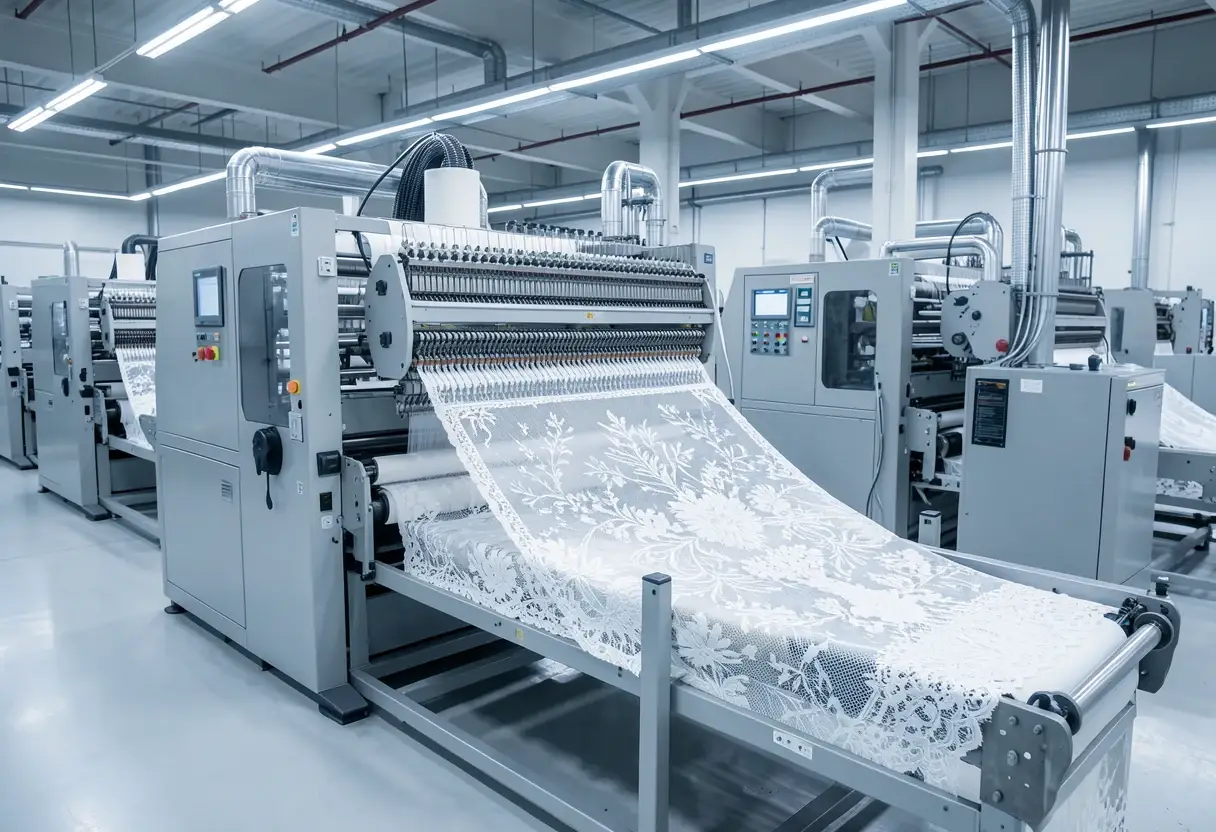
OEKO-TEX Standard 100 certification has become a baseline requirement for most of Pioneer Embroideries' brand customers — and without it, the company says it cannot move ahead with many of them. The 35-year-old Indian manufacturer of Schiffli embroidery, Torchon and Bobbin laces, Raschel laces and garment accessories is betting that compliance, not price, now decides who gets nominated.
"It is essentially non-negotiable, and without it, we cannot move ahead with many customers," said Manoj Pillay, Senior VP of Pioneer Embroideries Ltd, in an interview with Apparel Resources. Some brands go further, running their own audits and imposing their own compliance standards on top of third-party certification.
The company, which serves both domestic buyers and exporters, ships to the US and Europe, and supplies nominated garment manufacturers and vendors in Vietnam, Sri Lanka and Bangladesh. It also owns Hakoba, a heritage embroidered-fabrics brand established in 1959, and ranks among India's largest manufacturers and exporters of dope-dyed polyester filament yarns (yarn coloured during extrusion rather than dyed later, cutting water use).
What does an audit actually involve?
Pillay described third-party audits by firms such as Elevate as among the most rigorous in the industry. These assessments cover labour and social compliance, environmental practices, building structure and wider factory operations. Auditors get access to the entire factory and can speak to anyone during the process. He did not quantify audit frequency or cost — a gap worth noting when weighing the compliance investment against returns.
Pioneer claims to be among the few factories in its industry in India audited and certified for sustainable production, and says it is currently nominated by several well-known global brands. It names none of them. The claim is plausible but unverifiable from the interview alone.
Are brands paying for the standards?
Yes — selectively, according to Pillay. Niche-segment customers pay a premium and expect quality, sustainability and compliance simultaneously. Value brands, by contrast, buy in large volumes and require only minimum compliance assurance.
Support extends beyond payment. One unnamed brand approached Pioneer when the company was not fully compliant with its requirements, studied the business, decided it was worth investing in, and then handholded the supplier through remediation. During audits, Pioneer can approach that brand for guidance on fixing issues. Some brands also assure future business, which Pillay says gives the supplier confidence to invest — mutual commitment, in his words. Which brands, and what volumes, remains unsaid.
Quality tolerances are tightening
In lingerie, Pillay said, embroidery on bra cups must be extremely precise: a flower motif on left and right cups must be symmetrical with no missing elements, no dimensional deviation, and the design must retain its geometry throughout processing. Production rejections can run high under these requirements, but he argues the result is a better product. He offered no rejection-rate figures.
He frames this as part of a broader shift: India, traditionally known for mass-produced products, is moving into premium and niche segments where customers expect higher quality, sustainability and compliance. Pioneer says it entered this space over the last three to four years.
Where is the growth?
Sleepwear has delivered recent wins with niche brands. Pillay also sees potential in traditional wear across Cambodia, Thailand, Myanmar and Sri Lanka, where white embroidery is popular. "There is also significant potential in traditional wear across markets such as Cambodia, Thailand, Myanmar and Sri Lanka, where white embroidery is particularly popular," he said.
Home textiles may carry the largest volume upside. A garment uses two or three metres of fabric, whereas a bedsheet or curtain requires significantly more. Pioneer's embroidered fabrics and trims go into curtains, pillow shams and duvet covers, working with Indian home-textile manufacturers Indo Count and Faze Three, plus programmes with IKEA.
The domestic caveat is structural: embellished home furnishings remain nascent in India and largely niche, while Western markets consume far more pillow shams, duvet covers and seasonal curtains. Pioneer is effectively building export volume first and waiting for Indian demand to mature — a bet that depends on consumer habits it cannot control.
via Apparel Resources (Source)
More from Priya Raman
Show full bio
Correspondent covering people, launches and day-to-day practice in fashion industry as a trade and business at The Fabric Brief.
290 articles
Also on the board
- Oeko-Tex Launches 'Trust in Every Thread' as EU Label Rules Bite
- Auko-Tex Group Taps Textile Innovation Exchange on Factory-Level Innovation Culture
- Vertical Integrators Turn Sustainability Compliance Into Sourcing Leverage
- Unifi and 11 Mills Launch YarnProof Tracer for USMCA Origin Claims
- BKMEA Signs MOU with Textile Innovation Exchange