Swatch card No. SW-8241 · cut October 30, 2026
Sustainability & ComplianceMill spec card
Vertical Integrators Turn Sustainability Compliance Into Sourcing Leverage
Texport targets 50% Scope 1 and 2 cuts by 2032; Sakthi Infra Tex reuses 98% of water as integrated suppliers convert compliance into buyer leverage.
- Fiber
- Sustainability & Compliance
- Count
- 3 min read
- Cut
- Weight
- 632 words
Spec notes
- Texport Industries commits to 50% Scope 1 and 2 cuts by 2032 and 35% Scope 3 cuts by 2034, SBTi-validated.
- Sakthi Infra Tex recycles and reuses almost 98% of production water and self-generates electricity from wind and solar.
- Texport runs 13 Indian plants, produces 2.5 million pieces monthly, with two LEED Gold sites and ~30% renewable energy.
- GuruLaxmi Group reports monthly capacity of 1,700 tonnes yarn, 350 tonnes fabric, 300,000 garments and 1,500 tonnes ginning.
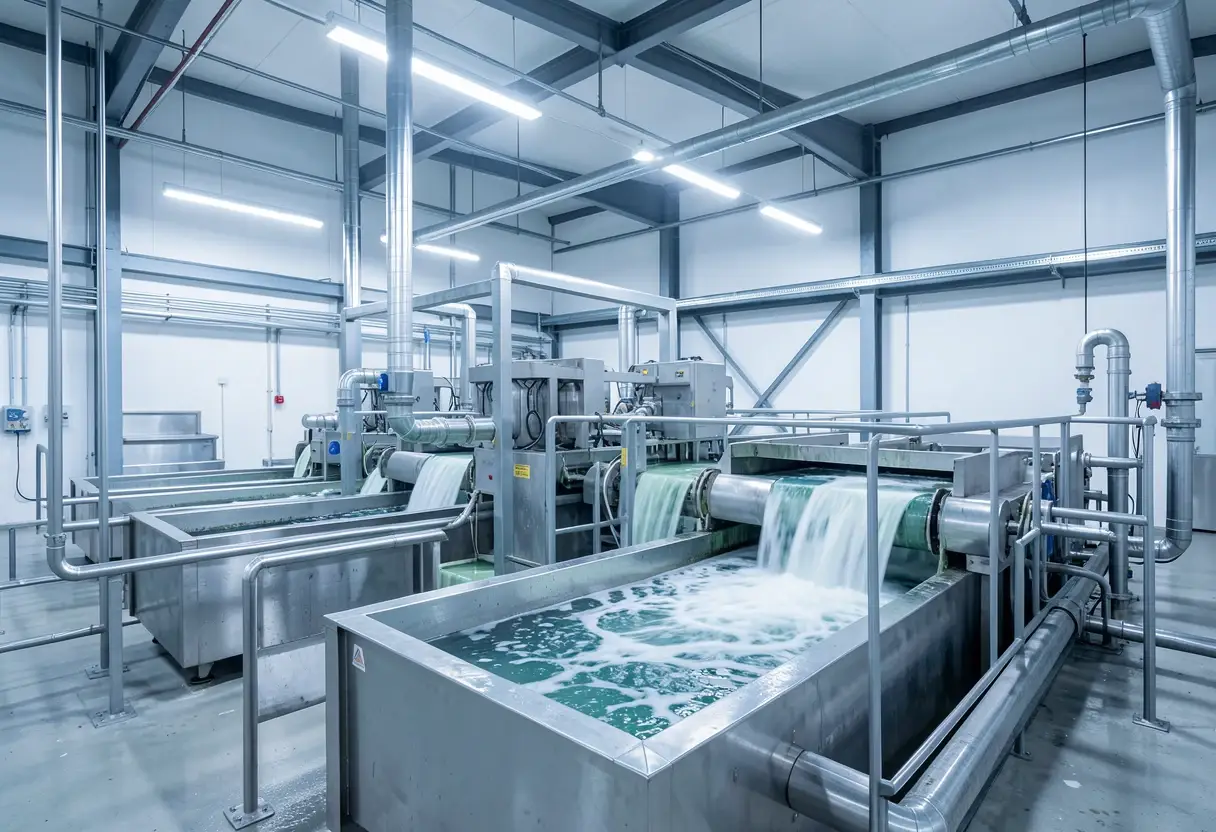
Texport Industries has committed to cutting absolute Scope 1 and 2 emissions 50% by 2032 and Scope 3 emissions 35% by 2034, with near-term science-based targets validated by the Science Based Targets initiative (SBTi). The commitment signals how vertically integrated Indian apparel manufacturers now position compliance capability as a commercial pitch to global buyers.
Buyers are widening sustainability audits from individual factories to the full chain — fibre, yarn, fabric, processing and garmenting — and demanding visibility into resources and environmental claims. Manufacturers controlling multiple production stages can offer that traceability at every point of the product lifecycle, an advantage standalone garmenting units struggle to match.
What are integrated suppliers actually delivering?
Sakthi Infra Tex recycles and reuses almost 98% of the water used in production. The Tirupur-based exporter serves Europe, the UK, North America, Australia, New Zealand, Japan, South Korea, the Middle East, Russia and South America, and has shifted toward eco-friendly dyes, processes and finishes.
"One of our key focus areas is sustainable fabrics, and we work with several customers in Europe and the UK to develop new sustainable options," said Sunil Kumar Nayak, GM, Sakthi Infra Tex.
The company has invested in windmills and, more recently, a solar park. Its manufacturing facilities now generate their own electricity, which is supplied to the grid and cross-subsidised.
How does Texport back its targets with capacity?
Texport operates 13 manufacturing facilities in India and produces around 2.5 million pieces a month, primarily for US clients, with additional presence in Europe and Japan. Two plants — in Kadapa district, Andhra Pradesh, and Haveri district, Karnataka — hold LEED Gold certification. Roughly 30% of the company's total energy requirement comes from renewable sources, mainly solar, and its factories follow zero-discharge practices.
"We work with clients focused entirely on sustainable fabrics and produce 100% organic products, recycled polyester and recycled cotton. We also work with buyers whose stores are moving towards 100% sustainable product offerings," said Ganesh KR, VP Sales, Texport Industries.
The company is currently setting up a high-end outerwear unit designed to be fully self-sustaining — a capacity addition that pairs premium product with independent resource supply.
What capacity sits behind GuruLaxmi's circularity push?
GuruLaxmi Group reports monthly capacity of 350 tonnes of fabric, 1,700 tonnes of yarn, 1,500 tonnes of ginning and 300,000 garments. The company started with organic cotton and is moving toward regenerative agriculture and Better Cotton Initiative (BCI) fabrics.
"On the raw material side, we are moving towards greater circularity and the use of renewable and organic materials... Dyeing is particularly water-intensive, which is why we continue to invest in machinery that can reduce water use. We also have an in-house ETP," said Vikram Kumar, GM, Exports, GuruLaxmi Group.
The effluent treatment plant and water-saving dyeing machinery target the most resource-intensive stage of the integrated chain, where buyer scrutiny of water use is sharpest.
Which certifications do buyers now require?
The three manufacturers hold or work toward a growing list of standards demanded by global buyers:
- Indian Green Building Council (IGBC)
- Better Cotton Initiative (BCI)
- Social & Labor Convergence Program (SLCP) and Higg Index
- Walt Disney Facilities and Merchandise Authorization (FAMA)
- BSCI and amfori BSCI
- ISO 9001:2000
- Sedex and International Compliance Standard (ICS)
- OEKO-TEX Standard 100, WRAP and GOTS
Certification stacking has become table stakes for exporters competing on European and North American programs, and vertically integrated operators can extend audit coverage across every production stage from ginning to garmenting.
What comes next?
The challenge is no longer simply to become more sustainable, according to the manufacturers, but to make that progress measurable, traceable and commercially viable — a shift that will keep rewarding suppliers able to prove environmental performance with data across the entire chain.
via Apparel Resources (Source)
More from Marcus Bennett
Show full bio
Senior reporter covering money, funding and market shifts around fashion industry as a trade and business at The Fabric Brief.
243 articles