Swatch card No. SW-3400 · cut October 14, 2026
Brands & Retail BusinessMill spec card
Levi's Knit Denim Capsule With Beams and Loopwheeler Lands Oct. 17
Levi's launches a six-piece knit denim capsule with Beams and Loopwheeler on Oct. 17, priced $30-$350 and made on 24-rpm loopwheel machines in Wakayama.
- Fiber
- Brands & Retail Business
- Count
- 3 min read
- Cut
- Weight
- 524 words
Spec notes
- Six-piece Levi's x Beams x Loopwheeler collection launches Oct. 17 at Beams Japan, Oct. 22 globally via Levi.com, Oct. 23 on Beams America.
- Retail prices range from $30 to $350.
- Loopwheel machines rotate 24 times per minute versus 240 for modern machines, per Loopwheeler.
- The capsule is the fifth Levi's x Beams collaboration and marks the partnership's 50th anniversary.
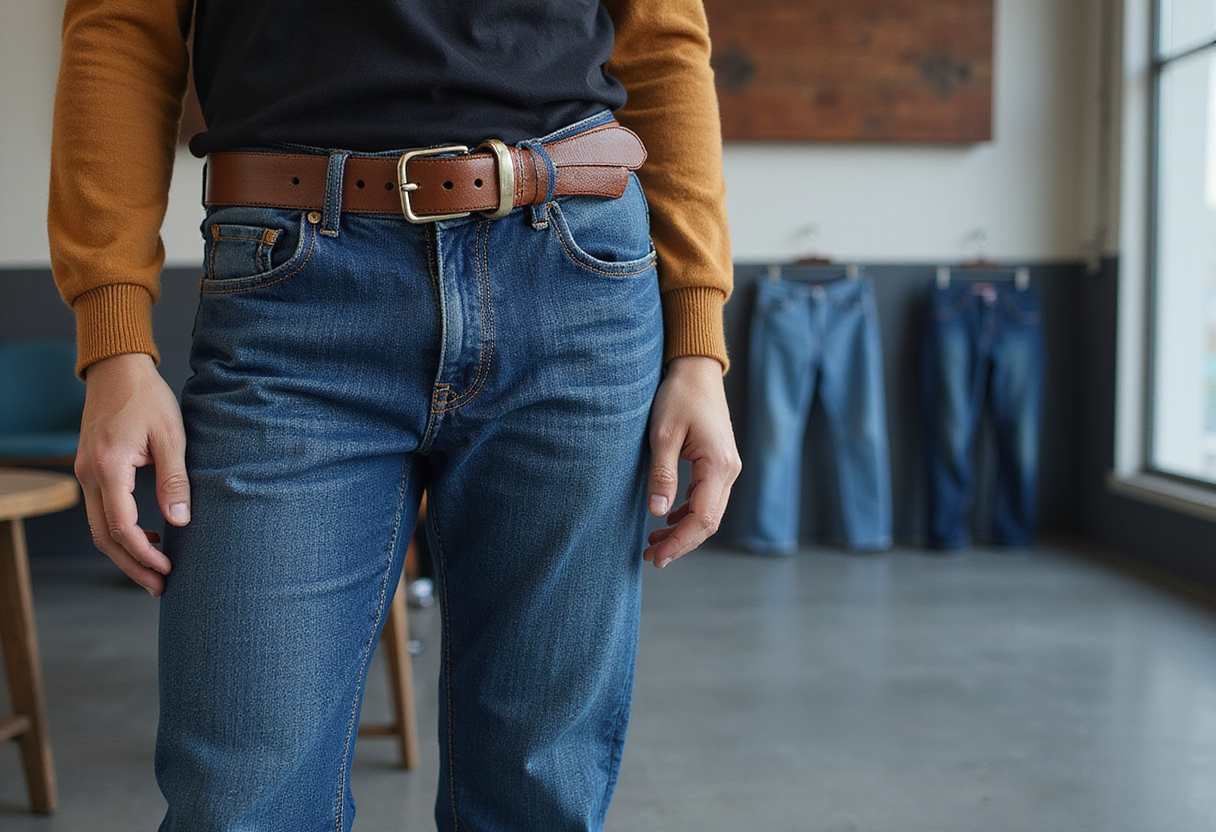
Levi's will launch a six-piece limited collection with Beams and Loopwheeler on Oct. 17, priced from $30 to $350 and made entirely on century-old loopwheel knitting machines in Wakayama, Japan. The capsule marks the 50th anniversary of Levi's partnership with the Japanese retailer Beams.
The collection is the fifth between the San Francisco denim brand and Beams, and the first to add Loopwheeler, a Japanese apparel maker known for traditional sweatshirt production. Previous collaborations focused on denim with exaggerated silhouettes and inside-out constructions. This one pushes a different construction story: knit fabric rather than woven denim.
What does the fabric change mean for the product?
Every piece uses Loopwheeler's signature "Tsuriami" fabric, produced on Tsuriamiki circular knitting machines. The machines run on belts and pulleys driven by a single motor. They rotate just 24 times per minute. Loopwheeler says modern machines rotate 240 times per minute, or ten times faster.
The slow rotation keeps the yarn relaxed, creating natural softness. It also caps throughput. Sourcing teams will recognize the constraint: loopwheel capacity is finite, and a six-piece limited run fits that reality. Levi's frames the slow process as proof of craft, with a companion documentary tracing the fabric's origins at Loopwheeler's century-old Wakayama factory, where workers transform raw yarn into fleece by hand. Levi's said the film offers "proof of the craft in motion."
What is in the collection?
The range carries forward the super-wide fits established in earlier Levi's x Beams collections:
- A Super Wide Trucker built on the classic Type I trucker silhouette, with co-branded logos at the cuff and front pocket
- A Super Wide Pant with color-blocked arcuate stitching at the back pockets, a co-branded back patch and a Loopwheeler clip-on front pocket
- A bandana set in red and blue, drawing on heritage Levi's designs
The garments come in grey melange and navy, colors Levi's said are closely associated with Loopwheeler.
When and where can buyers get it?
The rollout is staggered across three channels and three dates. The collection debuts Oct. 17 at select Beams stores in Japan. It reaches Levi.com and select Levi's stores globally on Oct. 22. Beams America follows on Oct. 23. The $30-$350 retail band spans accessories to outerwear, positioning the capsule as accessible limited-edition product rather than luxury-tier craft pricing.
How is Levi's marketing it?
The campaign was shot on location in Oakland, Calif., in the spirit of the 1969 film "Easy Rider." Levi's said the imagery centers on two riders from different generations sharing the same DNA, with "nothing posed, everything ridden." Fronting the campaign is Max Schaaf, an Oakland-based professional skateboarder, custom motorcycle builder and founder of 4Q Conditioning, whose lifelong relationship with Levi's, the brand stated, "makes him less a model than a genuine embodiment of American street culture."
For Levi's, the capsule extends a five-decade Japanese retail partnership into a craft-led, low-volume channel play — one that leans on Loopwheeler's constrained Wakayama capacity as the scarcity story itself.
via Sourcing Journal (Source)
More from Rebecca Stone
Show full bio
Staff writer covering people, launches and day-to-day practice in fashion industry as a trade and business at The Fabric Brief.
184 articles
Also on the board
- Harvard Turns Standard Knitting Machines Into Shape-Shifting Textile Lines
- Karl Mayer Turns 90 and Puts Its Weight Behind Textile Innovation
- KARL MAYER Opens Advanced Textile Innovation Center
- Karl Mayer Rolls Out Next-Gen Textile Innovation Platform
- Karl Mayer launches textile innovation programme for 90th year