Swatch card No. SW-1213 · cut October 11, 2026
Supply Chain & SourcingMill spec card
Harvard Turns Standard Knitting Machines Into Shape-Shifting Textile Lines
Harvard researchers built shape-shifting smart textiles on standard knitting machines, per Apparel Resources — a process claim that could shift smart-fabric economics.
- Fiber
- Supply Chain & Sourcing
- Count
- 3 min read
- Cut
- Weight
- 522 words
Spec notes
- Harvard researchers produced shape-shifting smart textiles using standard knitting machines
- The work removes the need for purpose-built hardware, per Apparel Resources
- No commercialization date, licensing terms or manufacturing partner were named in the report
- The claim concerns process compatibility on conventional industrial knitting equipment
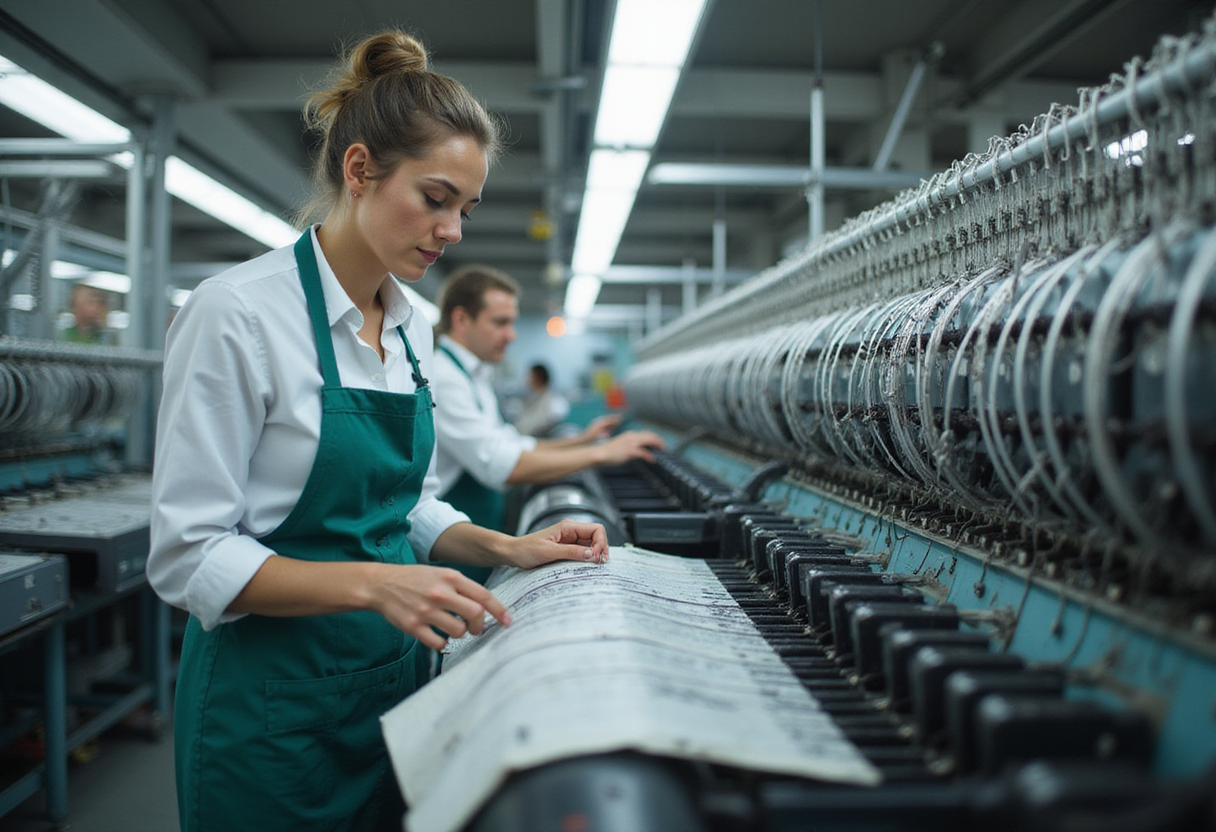
Harvard University researchers have produced shape-shifting smart textiles on standard industrial knitting machines, according to a report by Apparel Resources, removing the need for purpose-built equipment in a segment long constrained by custom hardware.
The headline fact matters for sourcing teams: if adaptive textiles can run on machines already installed in mills from Bangladesh to Honduras, the commercial barrier shifts from capital expenditure to programming and yarn supply. That changes who can realistically quote on such programs — not just technical-textile specialists, but mainstream knit suppliers with digital jacquard or flat-knit capacity.
What does the research actually claim?
Apparel Resources reports that the Harvard team used conventional knitting machinery — the same class of equipment brands already audit and book capacity on — to fabricate textiles that change shape on demand. The claim is about process compatibility, not a new fiber or a licensed product line.
For supply-chain professionals, three questions follow from any announcement of this type:
- What triggers the shape change? Actuation method determines cost, durability and washability — all unresolved in the public report.
- What yarns does it require? If specialty filaments are needed, sourcing shifts back up the chain to a small vendor base regardless of machine compatibility.
- What are cycle times and defect rates? Lab demonstrations rarely map directly to bulk production economics.
None of these parameters appear in the source report, and brands should treat the work as a research milestone rather than a manufacturing readiness announcement.
Why machine compatibility is the commercial story
Smart-textile programs have historically failed on unit economics, not concept. Conductive yarns, laminated sensors and bespoke looms push costs past what apparel margins absorb. A process that runs on installed knitting capacity attacks that problem at its root: no new machines, no re-tooling downtime, no separate compliance audit for unfamiliar hardware.
Standard machines also mean standard factories. A mill in Vietnam or Turkey that already knits performance uppers or seamless garments could, in principle, add adaptive-textile programs without new capital approval. That is the difference between a lab curiosity and a quotable sourcing option — though Harvard's work remains at the research stage, with no production partner, licensing deal or commercial timeline named in the report.
Who pays, and what comes next?
Because the announcement concerns academic research rather than a brand or vendor deal, no cost-sharing structure, licensing terms or capacity commitments exist yet. The path to commercialization would run through either an exclusive license to a mill or brand, or open publication of the knitting programs — each with very different implications for how quickly the capability spreads through the supply base.
Brands evaluating adaptive textiles should watch for follow-on signals: a named manufacturing partner, published wash- and durability-test data, and unit-cost figures from trial runs. Until those appear, the Harvard result is best filed as evidence that the hardware barrier to smart textiles is falling — and that the next constraints will be yarn supply, programming know-how and testing protocols rather than machines.
The Apparel Resources report gives no commercialization date, so the realistic takeaway for sourcing calendars is monitoring, not RFQs.
via Google News: Textile innovation & smart textiles (Source)
More from Marcus Bennett
Show full bio
Senior reporter covering business strategy at The Fabric Brief.
165 articles