Swatch card No. SW-6808 · cut October 13, 2026
Trade & TariffsMill spec card
Lesotho's garment workers carry the weight of Trump's tariffs
The Guardian reports from Lesotho's garment factories, where workers say the pressure of Trump's tariffs is already too much — an early signal for sourcing desks.
- Fiber
- Trade & Tariffs
- Count
- 3 min read
- Cut
- Weight
- 525 words
Spec notes
- The Guardian reports on Lesotho garment workers facing pressure from Trump tariff measures.
- A worker quoted in the report's headline says: "The pressure is too much."
- Lesotho's apparel sector has historically depended on preferential access to the US market.
- The report describes workers as "on the frontline" of US tariff policy.
- Confirmed order cancellations or job losses have not yet been quantified in the report.
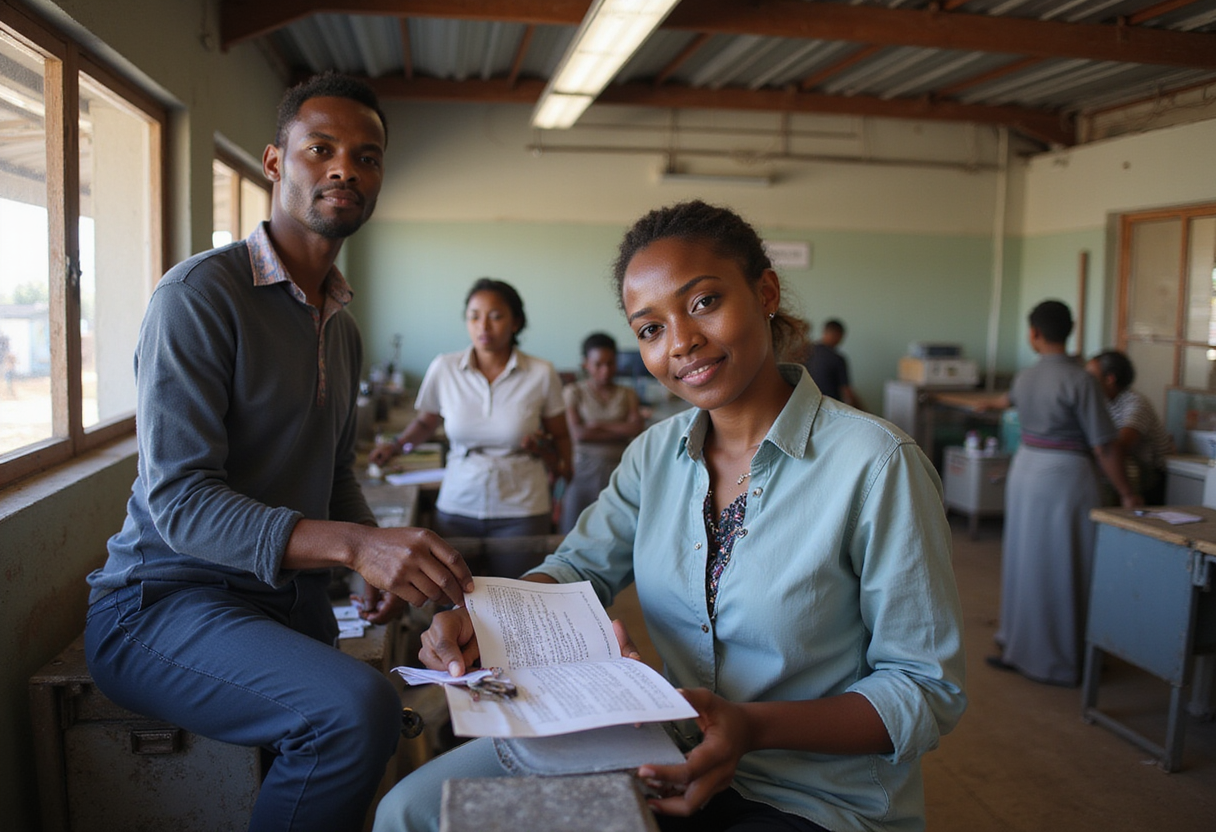
The Guardian has put a human face on a tariff story that most trade coverage reduces to a spreadsheet: garment workers in Lesotho, whose factory jobs sit directly in the path of the Trump administration's tariff measures. Their verdict, quoted in the report's headline, is blunt: "The pressure is too much."
For sourcing and supply-chain professionals, the piece is a reminder of an uncomfortable arithmetic. When a buyer in New York or London reacts to a new duty by shifting or trimming orders, the adjustment does not distribute itself politely across a supply chain. It concentrates wherever labour has the least pricing power. In Lesotho's apparel sector, that means the workers who stitch the orders, not the brands that place them.
Why Lesotho matters to apparel sourcing
Lesotho is not a marginal player in African garment manufacturing. Its apparel industry has long supplied US labels, and it has historically benefited from trade-preference arrangements that made its factory gate competitive despite the logistics of a landlocked southern African kingdom. US tariff policy that erodes that advantage does not merely shave a few points off a buyer's landed cost model. It can remove the commercial logic for the order entirely.
That is the mechanism The Guardian's reporting draws out from the factory floor. Workers describe pressure that predates any single announcement — production targets, wage constraints, the ordinary squeeze of a low-margin industry — now compounded by the uncertainty of American trade policy.
What does this change for sourcing desks?
The practical question is whether Lesotho remains a viable origin under the new tariff regime, and for how long. The report frames the answer as a human one rather than a financial one, but the underlying commercial facts are the same. If duties raise the effective price of Lesotho-made goods, buyers will re-tender. Capacity will idle. Contracts will not renew.
The workers' testimony quoted by the paper — including the headline's "The pressure is too much" — signals that the strain is already audible before any full tariff effect has worked through order books. Supply-chain managers reading such reporting should treat it as an early indicator, not a sentiment piece.
Confirmed effects versus announced intentions
A note of discipline is warranted. Worker testimony confirms pressure; it does not yet confirm order cancellations, factory closures or specific job losses attributable to named tariff lines. The Guardian's framing places Lesotho's garment workforce "on the frontline" of Trump tariffs, which is a position statement about exposure, not yet a measured result. Buyers and auditors will want to watch the concrete markers over coming quarters: order volumes by origin, factory utilisation rates, and any compliance or severance obligations triggered by capacity cuts.
What is not in doubt is the direction of risk. Lesotho's garment sector was built on preferential access to the US market. Any policy that narrows that access attacks the sector's foundation.
The coming months will show whether US buyers hold their Lesotho programs or redirect volume to tariff-favoured origins — and whether the workers quoted in this report still have those jobs when the answer arrives.
via Google News: Apparel & textile tariffs (Source)
More from Tom Whitfield
Show full bio
Market editor covering regulation, policy and their impact on fashion industry as a trade and business at The Fabric Brief.
211 articles
Also on the board
- AGOA Uncertainty Is Draining Orders From Africa's Garment Sector
- Tariffs Exposed the Limits of Apparel Sourcing, Not Its Rewiring
- US Tariff Responses Created Worker Rights Risks, Centre Report Finds
- Sri Lanka Locks In 10% US Tariff Rate for Apparel Exports
- US Tariff Report Flags Cambodia Garment Sector Risk