Swatch card No. SW-5626 · cut November 12, 2026
Apparel ManufacturingMill spec card
Gujarat Clears 627 Textile Unit Applications Worth Rs 1,521 Crore in Surat
Gujarat approved 627 textile unit applications in Surat worth Rs 1,521 crore, with Rs 300 crore in state subsidies and 3,500 jobs expected under the 2024 policy.
- Fiber
- Apparel Manufacturing
- Count
- 2 min read
- Cut
- Weight
- 444 words
Spec notes
- 627 textile unit applications approved in Surat district under Gujarat Textile Policy 2024
- Approved projects entail estimated investments of Rs 1,521 crore with Rs 300 crore in state support over five years
- Gujarat Textile Policy 2024 runs from Oct 1, 2024 to Sept 30, 2029
- Capital subsidy rates: 20–35% for Activity 1, 10–20% for Activity 2; power tariff subsidy of Rs 1 per unit for five years
- More than 3,500 jobs expected from the approved units
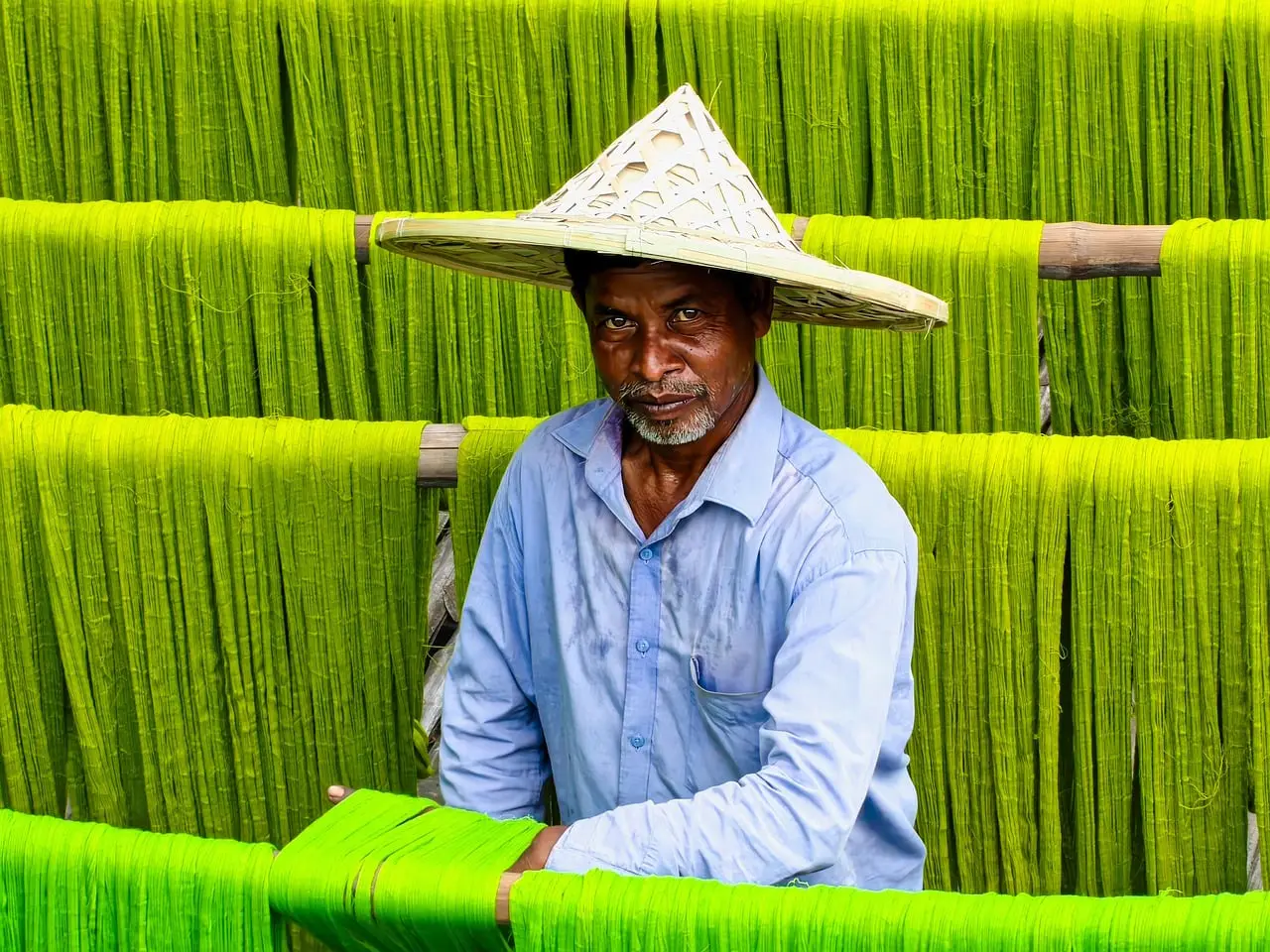
Gujarat has approved applications from 627 textile manufacturing units in Surat district, unlocking an estimated Rs 1,521 crore (roughly USD 180 million) in fresh investment across weaving, technical textiles and embroidery.
District collector Tejas Parmar chaired the approval meeting with officials of the District Industries Centre, which cleared files spanning the weaving, technical textile and embroidery segments. Officials said the approvals are designed to channel new capital into Surat's textile ecosystem, India's largest man-made fabric hub.
The state will pay for part of that build-out. Over the next five years, the approved units are expected to receive around Rs 300 crore in government support through a mix of interest assistance, power tariff subsidy and capital subsidy — roughly one rupee of public money for every five rupees of private investment committed.
What does the approval cover?
The clearances fall under the Gujarat Textile Policy 2024, in force from October 1, 2024 through September 30, 2029. The framework splits eligible activity into two streams:
- Activity 1: garments, apparel, made-ups and technical textiles, with capital subsidy rates of 20–35% depending on category and location.
- Activity 2: weaving, knitting, dyeing-processing, texturising, twisting and embroidery, with capital subsidy rates of 10–20%.
Both categories qualify for an interest subsidy of 5–7%. Units also receive a power tariff subsidy of Rs 1 per unit for five years — a meaningful line item for power-intensive processes such as texturising and dyeing.
Officials said special assistance has been announced to boost activities covered under Activity 1, signalling the state's intent to move investment beyond commodity weaving into higher-value garments and technical textiles.
Where does the money go?
Location determines the payout. Surat district's talukas are grouped into three categories, with less developed areas receiving higher support:
- Category 1: Umarpada and Mahuva
- Category 2: Mandvi and Bardoli
- Category 3: Surat city and all other talukas
The tiering gives investors a direct financial reason to site capacity outside the established Surat city cluster, where land and utilities are tighter.
What is the employment impact?
Officials project more than 3,500 jobs from the approved units — an average of roughly five to six positions per unit, consistent with a mix of small and mid-sized weaving and embroidery operations rather than large integrated plants.
Authorities said the approvals are expected to accelerate investment, expand production capacity and enhance job opportunities across the textile value chain.
For sourcing executives, the package translates into cheaper capital and cheaper power for new Surat-area capacity coming online through the policy window ending September 30, 2029 — with the heaviest incentives reserved for garment and technical textile projects.
via apparelviews.com (Source)
More from Elena Vasquez
Show full bio
News editor covering money, funding and market shifts around fashion industry as a trade and business at The Fabric Brief.
300 articles
Also on the board
- Odisha Lands $40 Million Textile Investment
- Karnataka Lines Up Textile Policy 4.0 to Push Investment Beyond Bengaluru
- India Builds Integrated Tax Framework for Textile Sector Costs
- Fibre2Fashion Spotlights AI Textile Push by Surat and Tiruppur SMEs
- India Weighs Four-Year Extension of Textiles PLI Scheme with Lower MSME Entry Bars