Swatch card No. SW-9530 · cut November 17, 2026
Apparel ManufacturingMill spec card
Cotton Fly Clogs Push Spinning Mill Compressors Into Costly Downtime
Cotton fly in intake filters is a leading trigger of unplanned compressor downtime in spinning mills, with surveyed industrial losses running to $10,000 or more per hour and compressed air absorbing up to 30% of plant energy costs.
- Fiber
- Apparel Manufacturing
- Count
- 3 min read
- Cut
- Weight
- 671 words
Spec notes
- A survey of 3,600 industrial decision-makers found 83% estimated unplanned downtime costs at least $10,000 per hour; 76% put costs at up to $500,000 hourly.
- Compressed air can account for up to 30% of total plant energy costs, with only 5-10% of input power reaching the point of use.
- Cotton fly loading raises intake filter pressure drop and lint on cooling surfaces impairs heat rejection, causing temperature trips.
- OSHA restricts compressed-air blowdown cleaning in covered US workplaces and requires respirators where exposure limits cannot be met.
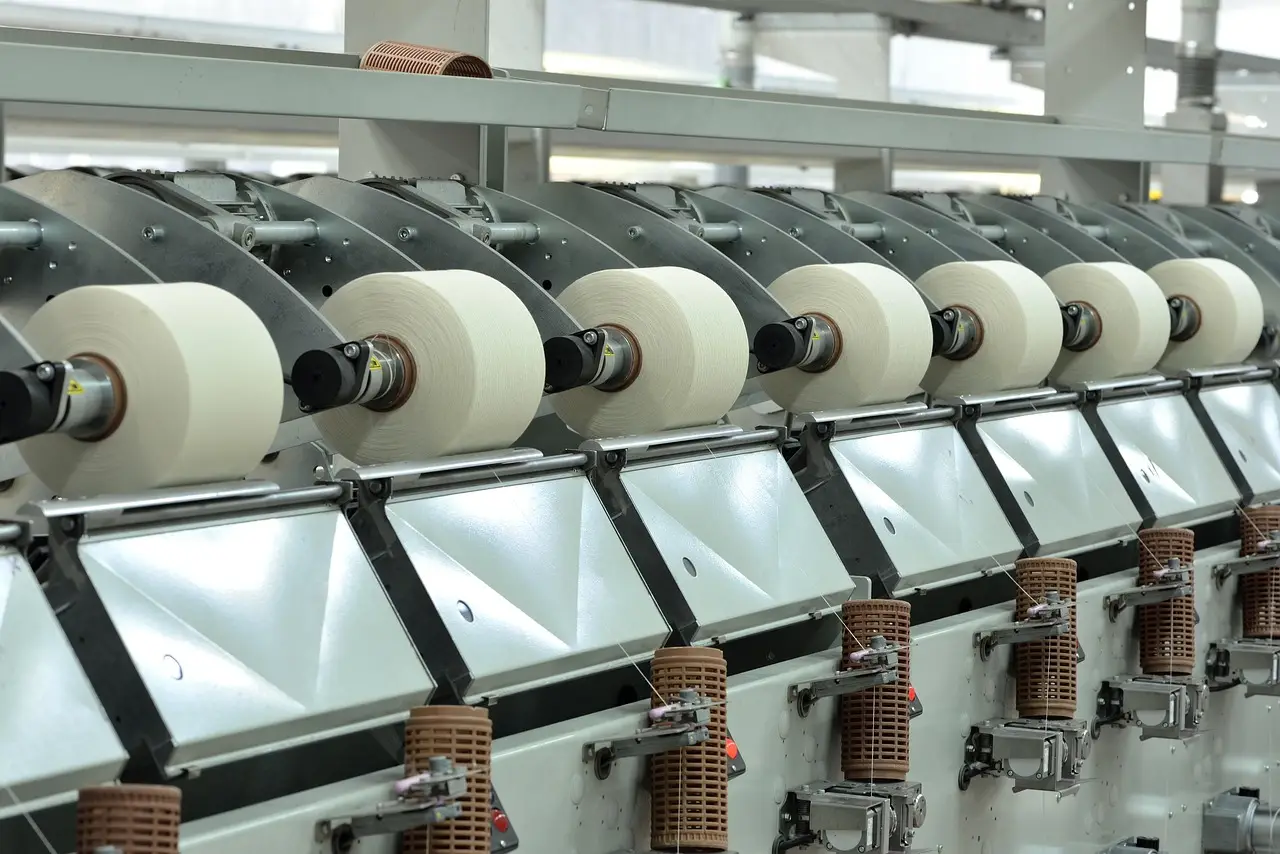
Unplanned compressor downtime costs 83% of surveyed industrial decision-makers at least $10,000 per hour, and 76% put the figure at up to $500,000 hourly — exposure levels that spinning mills ignore at their peril when cotton fly packs intake filters mid-shift.
The numbers come from a global survey of 3,600 senior decision-makers across multiple sectors, reported by ABB. The survey illustrates industrial exposure broadly but does not establish a textile-specific benchmark, so mills must build their own downtime calculations. A useful model includes overtime, restart waste and the value of production that cannot be recovered — a figure that gives maintenance spending a financial basis specific to each operation.
What does compressed air actually cost a mill?
Energy consumption compounds the problem even when the compressor keeps running. An Oak Ridge National Laboratory report found compressed air can account for up to 30% of total plant energy costs in some facilities. Efficiency is starkly poor: only 5% to 10% of input power reaches the point of use after system losses.
Because those figures describe whole systems, mills need measurements from their own installations. Comparing power consumption against delivered airflow under similar operating conditions isolates the financial benefit of intake maintenance without attributing every system loss to filter condition.
Why does cotton fly trigger compressor failures?
Rotary screw compressors create continuous air pressure as rotors move incoming air through progressively smaller spaces. The intake filter intercepts airborne material before compression, but accumulated cotton fly obstructs that supply path.
Fibers collecting across the filter media narrow the airflow passages. Pressure drop across the element rises as loading increases, forcing the compressor to draw air through an increasingly restrictive inlet. Severity depends on the installed filter and operating conditions, which rules out a universal replacement interval.
Lint on cooling surfaces creates a separate failure mode. Deposits that cover cooler surfaces or obstruct cooling airflow impair heat rejection, so a temperature trip should trigger a cooling-path check even when technicians also find a loaded intake filter. The controller's fault history distinguishes the actual cause: a restriction warning and a temperature shutdown describe different operating events, and the diagnosis should explain the recorded fault before the service job closes.
Which maintenance habits prevent intake clogs?
The compressor manual defines acceptable operating limits and approved access methods. The recommended schedule includes four steps:
- Check filter restriction. Installed indicators or a manufacturer-approved test procedure provide the reading. Log differential pressure under comparable conditions and replace at the specified threshold.
- Review the intake location. If filters repeatedly hit their service limit early, ask the manufacturer to assess the surrounding air supply; any ducting or prefiltration needs approval before installation.
- Match inspections to accumulation. Record filter condition against production activity and operating hours; shorten intervals when elements approach their limit early.
- Include the cooling path. Assign responsibility for cooler surfaces and ventilation openings within the service schedule.
Service records should carry a photograph, the relevant reading and a named responsible person — more useful than an entry stating the filter looked dirty.
What about compliance and worker health?
Intake prefiltration protects the machine, while workplace dust extraction addresses respiratory exposure on the spinning floor; each control needs its own inspection requirement and owner. Where compressed air contacts fibers, oil and moisture content matter — suitable air quality prevents lint clumping and supports consistent fabric finish, with specifications agreed with the equipment supplier and verified against agreed metrics.
In covered US workplaces, OSHA restricts air blowdown cleaning when feasible alternatives exist, requires suitable respirators for workers performing blowdown, and mandates that non-essential personnel leave the affected area. The same cotton dust standard calls for engineering and work-practice controls, supplemented by respirators where exposure cannot be reduced to within applicable limits, and prohibits compressed air on clothing or floors in favor of vacuuming.
Mills that equip technicians to adjust inspection schedules as lint levels fluctuate shift air management from reactive repair to disciplined prevention — protecting both compressor uptime and steady output across every shift.
via textiletoday.com.bd (Source)
More from Elena Vasquez
Show full bio
News editor covering money, funding and market shifts around fashion industry as a trade and business at The Fabric Brief.
331 articles
Also on the board
- US Cotton Cuts Soil Loss 45%, Positions Fiber for Brand Sourcing
- Cutting Automation Shifts From Shop Floor to CFO's Desk in India
- Dhaka Seminar Puts 15–25% Energy Savings on Factory Agenda
- SGTPA Sends Surat Boiler Operators Back to Class as Coal Costs Bite
- Cotton Tariffs Flagged as Apparel's Next Cost Shock