Swatch card No. SW-1751 · cut October 10, 2026
Supply Chain & SourcingMill spec card
China's Cotton Price Floor Reshapes Apparel Sourcing
Beijing's cotton price floor is pushing apparel buyers to revisit fabric sourcing, vendor margins and cotton-origin traceability across their China-based supply chains.
- Fiber
- Supply Chain & Sourcing
- Count
- 3 min read
- Cut
- Weight
- 508 words
Spec notes
- China's state cotton price floor is reshaping apparel sourcing patterns, Fibre2Fashion reports.
- The floor keeps domestic cotton costs elevated relative to international benchmarks.
- The cost gap flows through Chinese yarn, fabric and garment quotations.
- Buyers are weighing order reallocation against lead-time and traceability constraints.
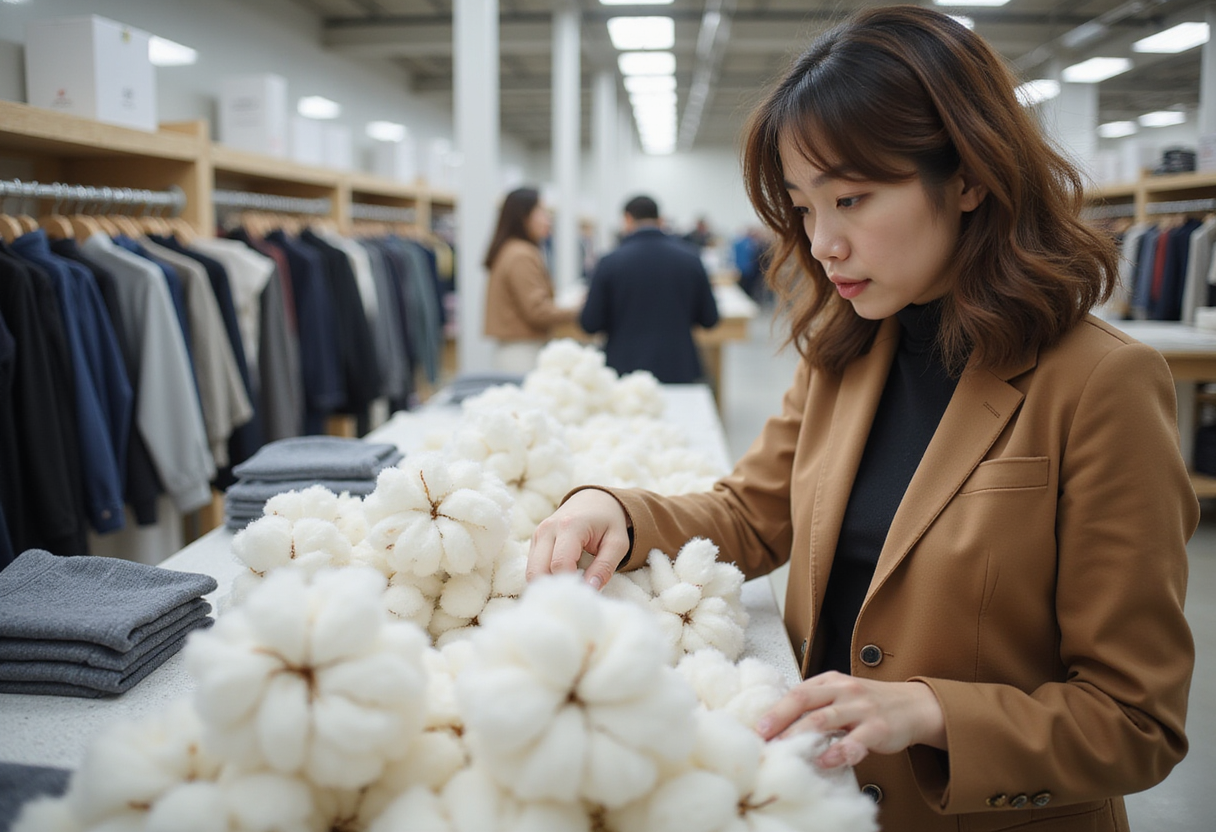
China's state-administered cotton price floor is actively reshaping apparel sourcing decisions, Fibre2Fashion reports, as the policy keeps domestic fibre costs elevated relative to world benchmarks and pushes buyers to reconsider where and how they place cut-and-sew orders.
For sourcing and supply-chain teams, the mechanism matters because it sets a floor under what Chinese spinners pay for cotton. When domestic prices sit above international levels, yarn produced in China becomes more expensive than yarn from competing origins, and that cost differential travels downstream into fabric and finished-garment quotations.
What does the price floor change for buyers?
The floor functions as a support level for Chinese cotton prices rather than a market-clearing price. Its practical effects for apparel buyers concentrate in three areas:
- Yarn and fabric cost. Chinese mills quoting on domestic cotton face input costs that can exceed those of mills sourcing Brazilian, Indian or US cotton, compressing the price competitiveness of China-based textile supply.
- Order allocation. Brands with multi-country vendor bases can shift fabric and garment volume toward mills outside China, or toward Chinese mills certified to use imported cotton, subject to traceability requirements.
- Compliance and traceability. Cotton origin documentation increasingly determines both duty treatment and eligibility for certain markets, so fibre provenance becomes a commercial variable, not just a compliance checkbox.
Confirmed policy versus market speculation
What is confirmed in the reporting is the direction: Beijing's price-support posture on cotton is influencing sourcing behaviour across the apparel value chain, from fibre procurement through garment placement. What remains open is magnitude — the extent to which individual buyers reallocate volume depends on their product mix, tolerance for lead-time changes in alternative origins, and the premiums alternative suppliers charge.
Sourcing executives reading vendor announcements tied to this shift should apply the usual tests. A mill claiming cost advantage from imported cotton should show documentation of fibre origin and volume; a factory pitching relocation should be asked about capacity, certifications and realistic ramp timelines before orders move.
Who pays for the spread?
The core commercial question the price floor raises is allocation of the cost gap. If Chinese yarn remains structurally pricier, the spread lands somewhere among three parties: the mill, through squeezed conversion margins; the brand, through higher FOB quotes; or the consumer, through higher retail prices. Trade-press reporting on the topic suggests buyers are actively testing the first option — pressing vendors on margins — before accepting price increases themselves.
Lead times add another constraint. Shifting fabric sourcing away from China typically lengthens development cycles and can complicate consolidated shipments for programmes that pair Chinese fabric with Chinese garment capacity. Sourcing teams balancing fibre cost against calendar risk will treat this not as a single decision but as a programme-by-programme calculation.
What comes next
Fibre2Fashion's analysis frames the price floor as a live structural factor in apparel sourcing rather than a temporary distortion, meaning buyers should expect cotton-origin economics to remain part of vendor negotiations and country-mix planning through the coming ordering cycles.
via Google News: Apparel sourcing & supply chain (Source)
More from Marcus Bennett
Show full bio
Senior reporter covering business strategy at The Fabric Brief.
164 articles