Swatch card · cut November 23, 2026
Sustainability & ComplianceMill spec card
Bangladesh Textile Sector Told to Innovate as Buyers Shift Green Focus
Seminar at Textile Innovation Expo 2026 hears Bangladesh's 290+ LEED factories no longer satisfy buyers, as ZDHC data shows 79% conformance among 1,000+ local factories.
- Fiber
- Sustainability & Compliance
- Count
- 4 min read
- Cut
- Weight
- 852 words
Spec notes
- Bangladesh holds 290+ LEED-certified factories, the most of any nation, yet exports worth USD 27 billion face climate risk by 2030.
- Only 5% of Bangladesh's 400,000 tons of annual textile waste is recycled.
- ZDHC counts 1,000+ Bangladeshi factories in its Roadmap to Zero, at 79% conformance versus 70% community-wide, targeting 100% MRSL conformance by 2030.
- DBL Group recycled 2.1 million kg of material last year, saving 196 million litres of water and 3,800 tons of carbon emissions.
- Vietnam's 2024 growth of 9.3% against Bangladesh's 0.2% framed the seminar's innovation warning.
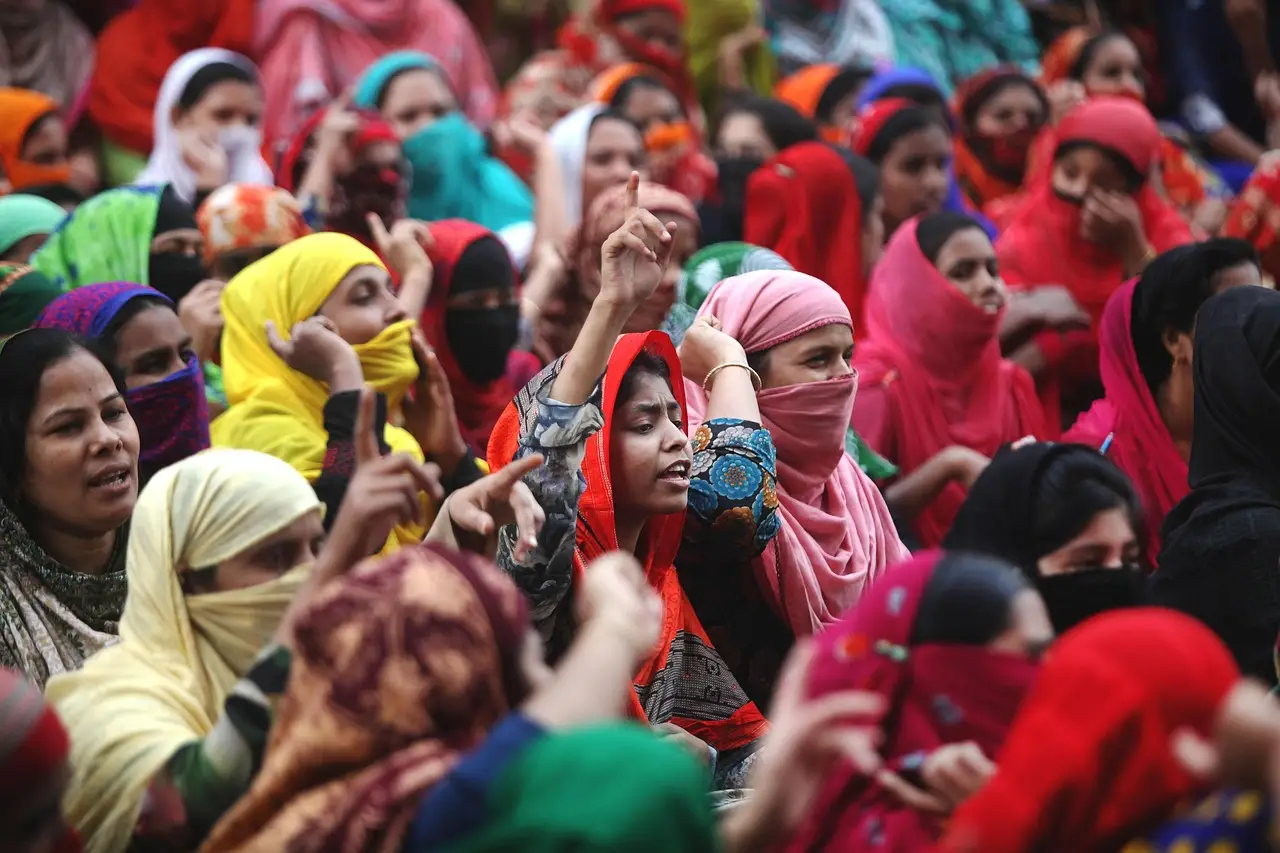
Bangladesh hosts more than 290 LEED-certified factories — more than any other country — yet buyer questions have shifted from green buildings to green products, sustainability leaders told a technical seminar at the Textile Innovation Expo 2026 in Dhaka.
Keynote speaker ABM Faqrul Alam, Sustainability Lead at Urmi Group, framed the stakes in hard numbers. Fashion accounts for roughly 8% of global emissions and 20% of industrial wastewater, and Bangladesh sits at the centre of that picture. He pointed to an innovation gap: in 2024, Vietnam's economy grew about 9.3% against roughly 0.2% for Bangladesh.
"Scale without innovation is a shrinking advantage," Alam said.
What can Bangladesh copy from competitors?
Alam cited three regional benchmarks. Vietnamese denim maker Saitex replaced old washers with jet washers and now recycles 98% of its water, using roughly 1.5 litres per pair of jeans against an industry average of 80. The USD 2 million plant saves USD 400,000 a year — a five-year payback.
In China, manufacturers dye with pressurised carbon dioxide, a process that uses no water and creates no wastewater. In Keqiao, 110 dyeing firms deploy AI, and one robotic dye lab delivers five times the output of manual sampling.
In India, Arvind cut wastewater discharge by 93% through zero-liquid-discharge and now sells its water expertise to other factories.
Where do waste, energy and EU rules bite?
Bangladesh generates about 400,000 tons of textile waste annually, but only 5% is recycled; raw material leaves the country and returns as yarn. On energy, Alam advocated a "3R" approach — reduce, recycle, repurpose — urging manufacturers to lean the process first, then turn to renewables.
He described the next three years ahead of EU regulation as "a readiness window, not a holiday," covering product and process traceability, emission reduction and capacity building. He cited USD 27 billion of exports at risk from heat and flood by 2030, plus productivity losses of around 4% from heat stress.
Urmi already holds three Digital Product Passports — a first for Bangladesh — which revealed gaps it can now close. A national green growth committee found 66 information gaps, and Alam wants traceability treated as national infrastructure. His five shifts: compliance to capability, water use to water loops, gas to green heat, samples to digital twins, and waste to feedstock.
What does ZDHC's chemistry roadmap demand?
S M Rayhan Hossain, Country Manager for Bangladesh at ZDHC Foundation, said the country has built strong foundations in export leadership, health and safety, social compliance and green factories. The next frontier is chemicals, water, waste and resource efficiency.
"Chemical risk is a business risk," he said, citing tightening due-diligence rules and hazardous substances such as PFAS.
More than 1,000 Bangladeshi factories participate in ZDHC's Roadmap to Zero programme, with 79% conformance against 70% across the wider community. The programme manages chemistry across input, process and output, with the MRSL as its backbone; Supplier to Zero version 2 and MRSL 4.0 were published this year. ZDHC targets 100% MRSL conformance by 2030. Only two Bangladeshi suppliers, Envoy and Epyllion, are ZDHC contributors, and Hossain called for more. Next steps include an ETP assessment protocol, a water-efficiency focus from 2027 and a new circularity concept.
How do factories translate targets into practice?
Mohammed Al Tauhidul Islam, Additional General Manager, Sustainability at Envoy Textiles, explained how five pillars — water stewardship, energy and GHG, waste, chemicals and circularity — cascade to departments and individuals. A 50% groundwater reduction target for 2027 is split by consumption, with dyeing accounting for about 30% of water use. Progress is reviewed monthly.
Mehedi Hasan Rubel, Country Relationship Manager at bluesign technologies ag, argued the industry invests heavily in effluent treatment plants — the cure — rather than responsible chemical selection, the prevention. Chemicals should be judged not only on price and performance but on whether they are hazardous, PFAS-free, or ZDHC or bluesign approved; optimising recipe, pH and temperature in dyeing prevents wasted batches.
Mashook Mujib Chowdhury, Senior Manager, Sustainability at DBL Group, showed how recycling cut-panel waste (jhut) and spinning waste lets the group skip fabric dyeing, the most resource-intensive step. Last year 2.1 million kg of recycled material saved a calculated 77 million megajoules of energy, 3,800 tons of carbon emissions, over 85,000 kg of waste and 196 million litres of water. Volumes rose from under 100,000 kg in 2020 as brands set recycled-content targets. Green chemistry, such as dyeing cotton and polyester in one batch, is the next step.
Dr. Ummul Khair Fatema, Professor and Head of Environmental Science and Engineering at BUTEX, said the RMG sector must meet environmental standards alongside quality, and urged universities to add green chemistry, sustainable production and cleaner production to curricula ahead of buyer standards expected by 2030. Moderator Md. Abdul Muhit, Manager – Sustainability at Amin & Jahan Corporation, closed by stressing sustainability as integral to innovation, operational excellence and long-term business growth.
With ZDHC's 2030 conformance deadline and EU traceability rules converging, suppliers that move from compliance paperwork to measured capability now hold the pricing conversation.
via textiletoday.com.bd (Source)
More from Elena Vasquez
Show full bio
News editor covering money, funding and market shifts around fashion industry as a trade and business at The Fabric Brief.
355 articles
Also on the board
- Bangladesh dyehouses urged to cut 250–300L water use per kg
- Bangladesh Urged to Break Cotton Habit as Recycled Fibre Gap Widens
- Bangladesh's Dhaka Factories Dump 634 Million Gallons of Untreated Effluent Daily
- Bangladesh’s expo test: factory gains must reach buyers
- Bangladesh Garments at a Crossroads: Tech and Green Manufacturing