Swatch card No. SW-6956 · cut November 10, 2026
Supply Chain & SourcingMill spec card
Bangladesh Bets $65 Billion on Maheshkhali Hub for RMG Energy and Logistics
Bangladesh's $60–65bn Maheshkhali-Matarbari masterplan targets 6,060MW of power, an 8,000-TEU deep-sea port and petrochemical feedstock for RMG exporters ahead of LDC graduation in November 2029.
- Fiber
- Supply Chain & Sourcing
- Count
- 3 min read
- Cut
- Weight
- 586 words
Spec notes
- Bangladesh targets $60–65 billion in investment for the Maheshkhali-Matarbari hub by 2056.
- RMG exports reached $38.70 billion in FY2025-26, or 80.62% of total export earnings.
- The plan includes a $10 billion refinery processing 150,000–200,000 barrels of crude daily.
- Matarbari port is designed for 8,000-TEU vessels with an 18.5-metre draft; the SPM system is projected to save $67 million annually.
- Bangladesh's revised LDC graduation deadline is November 2029.
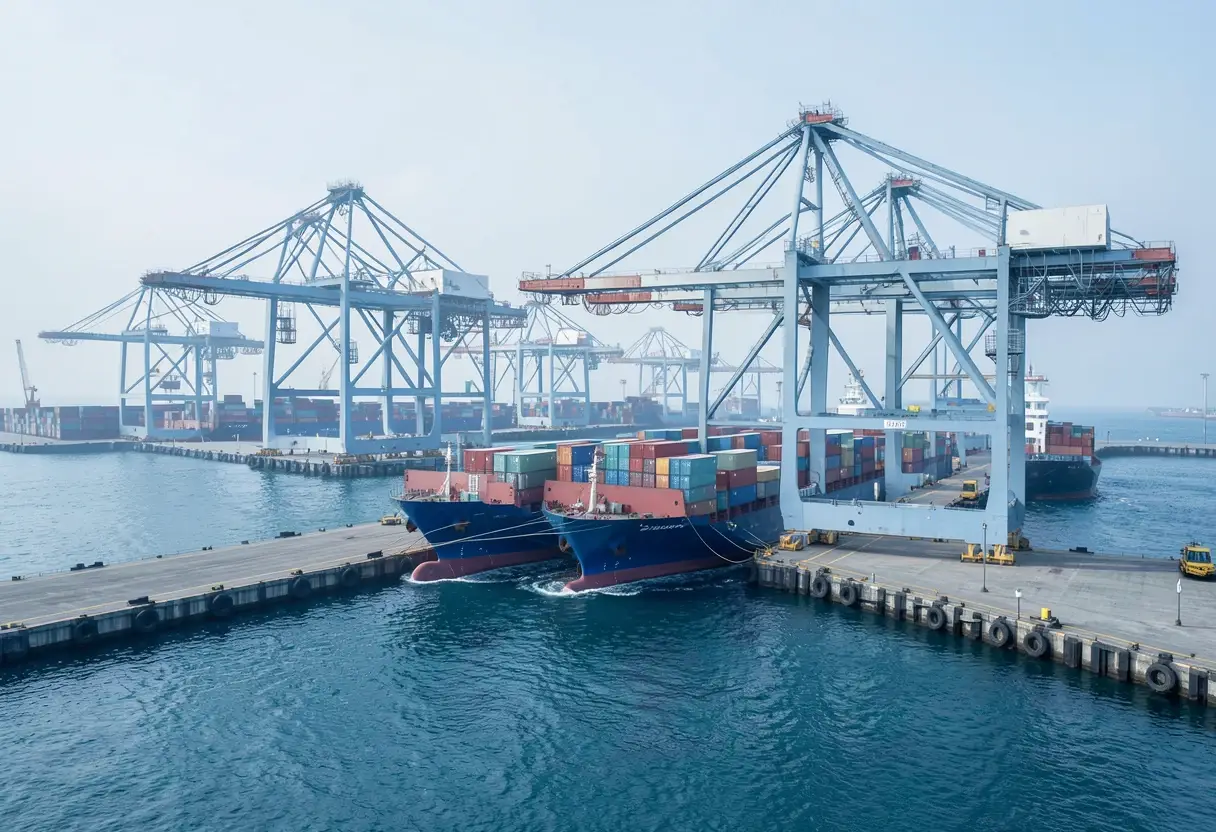
Bangladesh has put a $60–65 billion price tag on turning Maheshkhali-Matarbari into an integrated industrial, energy and logistics hub by 2056, and the ready-made garment sector is the intended beneficiary. The apparel industry exported $38.70 billion in FY2025-26 — 80.62% of national export earnings — while energy shortages, captive generator costs and rising production expenses continue to squeeze manufacturers' prices and delivery schedules.
The masterplan, drawn up by the Maheshkhali Integrated Development Authority (Mida), is an ambition, not a banked deal. It targets at least $5 billion in foreign direct investment, 150,000 direct jobs and 2.5 million indirect jobs. Official project estimates project a $150 billion contribution to the economy, $4 billion in reduced logistics costs, and $16–18 billion saved in foreign exchange transactions across 30 years. Buyers and sourcing teams should read those projections accordingly: modelled results, not measured ones.
What does the plan change for apparel supply chains?
Potentially three things: power reliability, petrochemical feedstock, and port capacity. The energy package includes a $10 billion oil refinery and petrochemical complex, a $2 billion onshore LNG terminal, a third floating storage and regasification unit, and a $150 million LPG plant.
The refinery is planned to process 150,000–200,000 barrels of crude daily across roughly 1,200 acres. That output could supply domestic petrochemical feedstocks, creating backward linkages for synthetic yarn, polyester and man-made fibre manufacturing — a gap Bangladesh has talked about closing for years. The plan also targets 6,060MW of generation capacity by 2050, mixing coal and solar. Reliable power underpins spinning, knitting, dyeing, washing and garmenting alike.
The coal-heavy mix is the compliance wrinkle. Aligning grid expansion with buyer ESG mandates, decarbonisation targets and Scope 2 carbon accounting remains, in the source's word, critical. Rooftop solar, grid-scale storage, clean corporate power purchase agreements and industrial efficiency upgrades will determine whether high-value export markets accept the electricity on offer. A factory running on cheap coal-fired power may find the saving cancelled out at the buyer's scorecard.
Can the port move the lead-time needle?
Matarbari deep-sea port is designed to take vessels of up to 8,000 TEUs on an 18.5-metre draft. The wider scheme adds a 27km port access road, container and multipurpose terminals, logistics facilities and further LNG and LPG terminals. Authority projections claim the Single Point Mooring system will save around $67 million (Tk800 crore) a year by cutting crude oil unloading from nine days to three — roughly two-thirds off the current wait.
For apparel exporters, fewer shipping constraints, lower transshipment costs and improved connectivity translate directly into lead-time and landed-cost arithmetic. That is the commercial case.
Financing and timelines remain the open questions
The clock matters. Bangladesh faces its revised LDC graduation deadline in November 2029, and with apparel above four-fifths of exports, energy reliability and port efficiency will decide whether the sector defends its position and attracts higher-value manufacturing investment.
The obstacles are listed plainly: land acquisition, complex project financing, fuel supply stability, environmental safeguards, continuous port maintenance dredging and modern digital customs clearance. None is trivial; several have stalled Bangladeshi infrastructure before. The $60–65 billion figure is a long-term investment ambition, not secured financing.
Sourcing directors would be well advised to track Mida's FDI commitments and the refinery's financial close rather than the headline number. Bangladesh has a plan. Whether it has the money will become clear well before 2056.
via textiletoday.com.bd (Source)
More from Tom Whitfield
Show full bio
Market editor covering regulation, policy and their impact on fashion industry as a trade and business at The Fabric Brief.
326 articles
Also on the board
- Bangladesh Apparel Sector Eyes FY2026-27 Budget With Concrete Asks
- US-Bangladesh Textile Pact: Zero-Tariff Promise Meets Supply Chain Reality
- Bangladesh Apparel Told to Scale AI and Tech Ahead of LDC Exit
- Bangladesh Garment Slump Triggers Mass Layoffs, Factory Closures
- Textile Innovation Expo 2026 to spotlight Bangladesh's value shift