Swatch card · cut November 24, 2026
Fashion TechMill spec card
Ssense AI Imagery Misrepresented Designer Trademarks
Ssense removed distorted listings after its Virtual Try-On rollout, leaving designers to absorb returns and lost sell-through while wholesale contracts stay silent on AI imagery.
- Fiber
- Fashion Tech
- Count
- 6 min read
- Cut
- Weight
- 1,152 words
Spec notes
- Ssense laid off full-time photography and retouching teams in June and launched AI Virtual Try-On in August.
- Designers Reese Cooper and Gerrit Jacob found distorted product imagery; Ssense acknowledged inaccuracies and took accountability.
- Fake AI images of Nvidia CEO Jensen Huang in Saint Laurent circulated in the same month; CNN and Vanity Fair verified they were AI-generated.
- Most wholesale agreements reviewed by attorney Shermin Lakha do not address AI-generated product imagery.
- AI fake images in 2025 hit Balenciaga, Louis Vuitton and the Swatch–Audemars Piguet collaboration teasers.
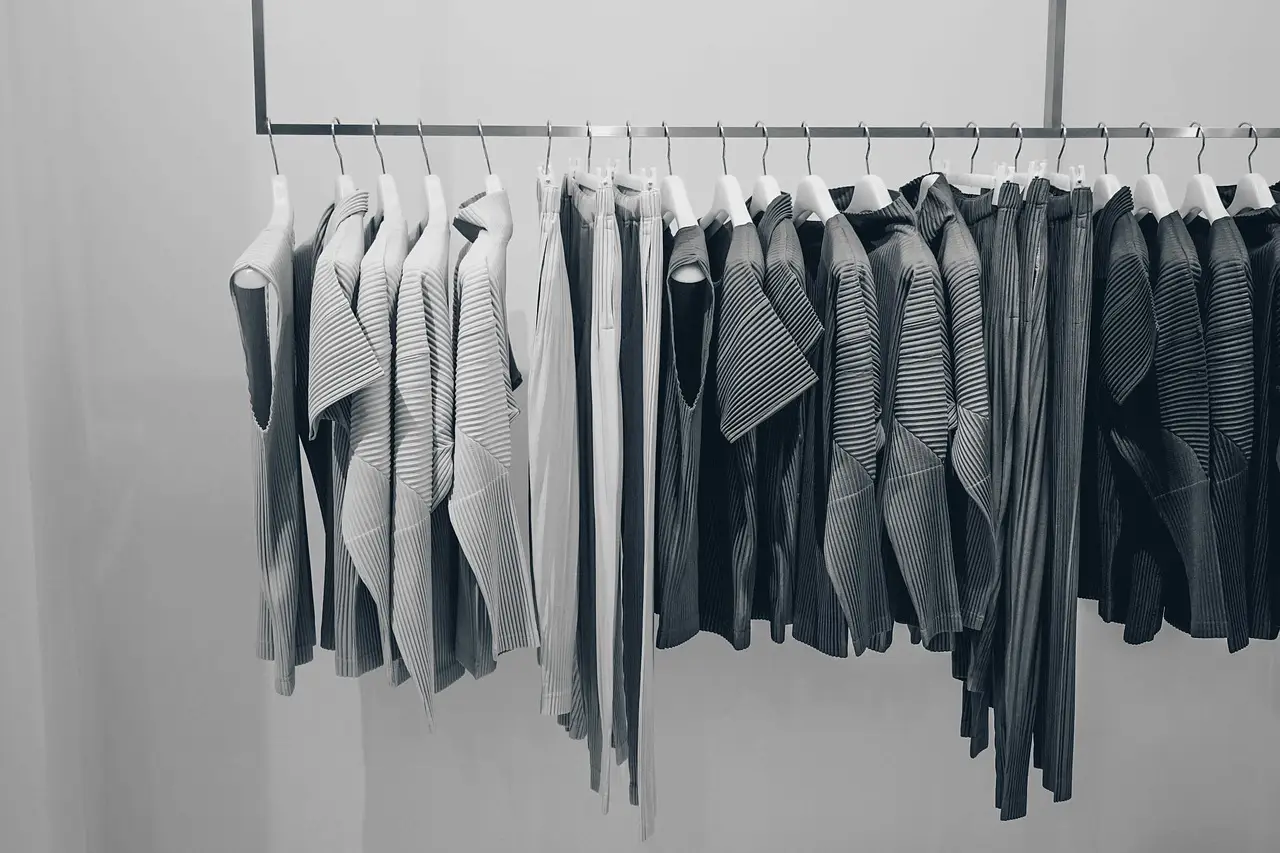
Ssense has removed distorted product imagery for Reese Cooper and Gerrit Jacob garments after designers publicly accused the luxury retailer of misrepresenting their clothes on its e-commerce pages — a commercial failure, not a cosmetic one, that arrived shortly after the retailer laid off its full-time photography and retouching teams.
Cooper, founder of Reese Cooper and RC Outdoor Supply, found the inaccuracies while browsing the site himself. No one had consulted him. The images showed his brand's trademarked hook at twice its actual size.
"There's a lot of sewing and design detail inaccuracies but the important issue is misrepresenting my trademarks — our hook is a major part of our branding, and of course all of the logos," Cooper said. He noted the legal cost of protecting those marks. "It takes an overwhelming amount of time and resources to protect your brand legally with these trademarks, not to mention the work going into designing the clothes themselves."
What does the episode cost the brands?
The damage is measurable in sell-through. Cooper said the corrected listings did not restore the lost sales window. "Ssense has removed the images, which I'm thankful for. However, it also removed the ability for anyone to purchase those items, which will result in low sales when looking at this season's data," he said.
Fashion commentator Odunayo Ojo identified missing design details and Gerrit Jacob trousers with an invented waistband, additional seams and altered lettering. The errors were subtler than old AI signifiers such as extra fingers or missing limbs. On a product page, that subtlety is precisely the problem.
"AI pulls everything toward an average, but design lives in the details that depart from that average," Ojo said. "Generative models are built to make something that looks plausible, not something that's precise. Plausible is fine for a moodboard. On a product page, plausible is misrepresentation."
In luxury, the arithmetic is unforgiving. "In luxury, the details are the price," Ojo said. "If the image erases them, you've erased the reason the garment costs what it costs — the problem isn't AI as a tool, it's using it for the one job where accuracy is the whole point."
A confirmed rollback, an unconfirmed cause
A Ssense spokesperson acknowledged the errors in a statement. "Accurate representation of our brand partners and their products is fundamental to Ssense. We recognize that some recent e-commerce imagery did not meet that standard, resulting in inaccuracies in product details. We take full accountability and have taken steps to resolve this issue with urgency," the spokesperson said.
Local media reported over the summer that the retailer laid off its full-time photography and retouching teams as it invested in AI Virtual Try-On, launched in August to support content production. The spokesperson confirmed the organizational mechanics but not the causation: "In preparation for the transition to Virtual Try-On (VTON), Ssense made organizational changes in June that affected certain roles within its visual content department." Ssense did not explicitly confirm that the AI technology caused the inaccuracies. Readers may draw their own conclusion from the calendar.
Who pays when the contract is silent?
The answer, at present, is the designer. Shermin Lakha, founder and managing attorney at Lvlup Legal, reviewed the paper trail. "When a retailer's AI imagery misrepresents a garment, the designer absorbs the returns and the reputational harm, and most of the wholesale agreements I review do not address AI-generated product imagery," she said.
The problem runs in two directions. In the same month, Instagram account @hidden.ny posted fabricated images of Nvidia CEO Jensen Huang wearing an archival silver-studded Saint Laurent leather jacket from Hedi Slimane's tenure, captioned as if he wore it after admitting to an affair with an alleged Chinese spy — an affair Nvidia was investigating at the time. CNN first revealed the images were fake; Vanity Fair verified AI generation or alteration. The originals showed Huang in Dior at Seoul airport in June. The post came down. The fantasy had already traveled.
April brought AI images of Megan Fox and Robert Pattinson in fictional Balenciaga designs made from cardboard shipping boxes, and a fake Louis Vuitton campaign featuring the Olsen twins. In May, after Swatch and Audemars Piguet teased a collaboration, AI images of a colorful Royal Oak wristwatch circulated. The actual release was Bioceramic pocket watches. Fans were disappointed by a product that never existed.
Limited legal remedies
Susan Scafidi, founder of the Fashion Law Institute at Fordham Law School, was blunt about the options. "There is no single, universal cause of action that a brand can invoke to target unauthorized imagery that includes its products, whether that imagery is created by AI or not," she said. Trademark and false advertising claims may apply where recognizable products or logos appear. Lakha agreed: "Existing law is effective against commercial actors and leaves a gap for the viral fake that nobody monetizes."
The calculation changes only when an account monetizes — the Balenciaga cardboard images were tied to an account promoting a course on viral AI visuals. Even then, Scafidi noted, "Luxury brands have for decades chafed against the imprecise nature of parody and other forms of 'fair use' under US law."
Detection is also straining. Daniel Shapiro, a brand protection executive at Red Points, said logo-scanning tools are increasingly inadequate; newer systems analyze whole images for unreleased colorways, inaccurate hardware or recognizable patterns with logos stripped out. Synthetic media expert Henry Ajder, founder of Latent Space Advisory, traced the shift to tooling: "It's now at the point where it's really easy to create highly realistic content with minimal knowledge of how to optimize for the tool you're using, and there's plenty of tools to choose from." Fashion, with its vast trove of stylized imagery, supplied unusually good training data.
What does this change for sourcing and wholesale teams?
Practical fixes exist, and they are cheap relative to the exposure. Ojo wants human review against physical garments, designer approval and disclosure. "A small [AI] label costs nothing. Finding out later is what causes scandals and also costs Ssense the customer," he said. Lakha recommends tighter contracts and internal verification before brands share viral images. Scafidi urges brands to separate harmful images from passing memes before acting.
Lizzie Wheeler, founder of archival bridal salon Studio Dorothy, expects the market to price the difference: luxury is moving back toward human work, such as the hand-drawn Prada holiday campaign, and visible AI shortcuts will dissuade the luxury client. "Ssense does rely heavily on the luxury client and I imagine this type of error will impact them seriously," she said. Her closing advice to retailers was one line: "I'd advise all retailers against pulling wool over the customer's eyes." As imitation gets cheaper, proof of the real thing is becoming the asset worth paying for.
via vogue.com (Source)
More from Tom Whitfield
Show full bio
Market editor covering regulation, policy and their impact on fashion industry as a trade and business at The Fabric Brief.
397 articles