Swatch card No. SW-6730 · cut November 18, 2026
Supply Chain & SourcingMill spec card
Punjab Cotton Acreage Slides to 80,000 Hectares, a Decade Low
Punjab cotton acreage hits 80,000 hectares, a decade low, as mandi arrivals rise 18% and CCI buys just 204 quintals with prices above MSP.
- Fiber
- Supply Chain & Sourcing
- Count
- 3 min read
- Cut
- Weight
- 541 words
Spec notes
- Punjab cotton acreage fell to 80,000 hectares in 2026-27, the lowest in a decade.
- Mandi arrivals rose 18% to 1.8 lakh quintals by 16 November, from 1.5 lakh a year earlier.
- CCI procured only 204 quintals versus 5,978 quintals last season, as prices sit above MSP.
- Raw cotton prices range Rs 8,800-9,200 ($94-$98) per quintal; season high Rs 9,365 ($100).
- Acreage has collapsed from 4.2 lakh hectares in 2014-15 due to pest attacks and a shift to paddy and basmati.
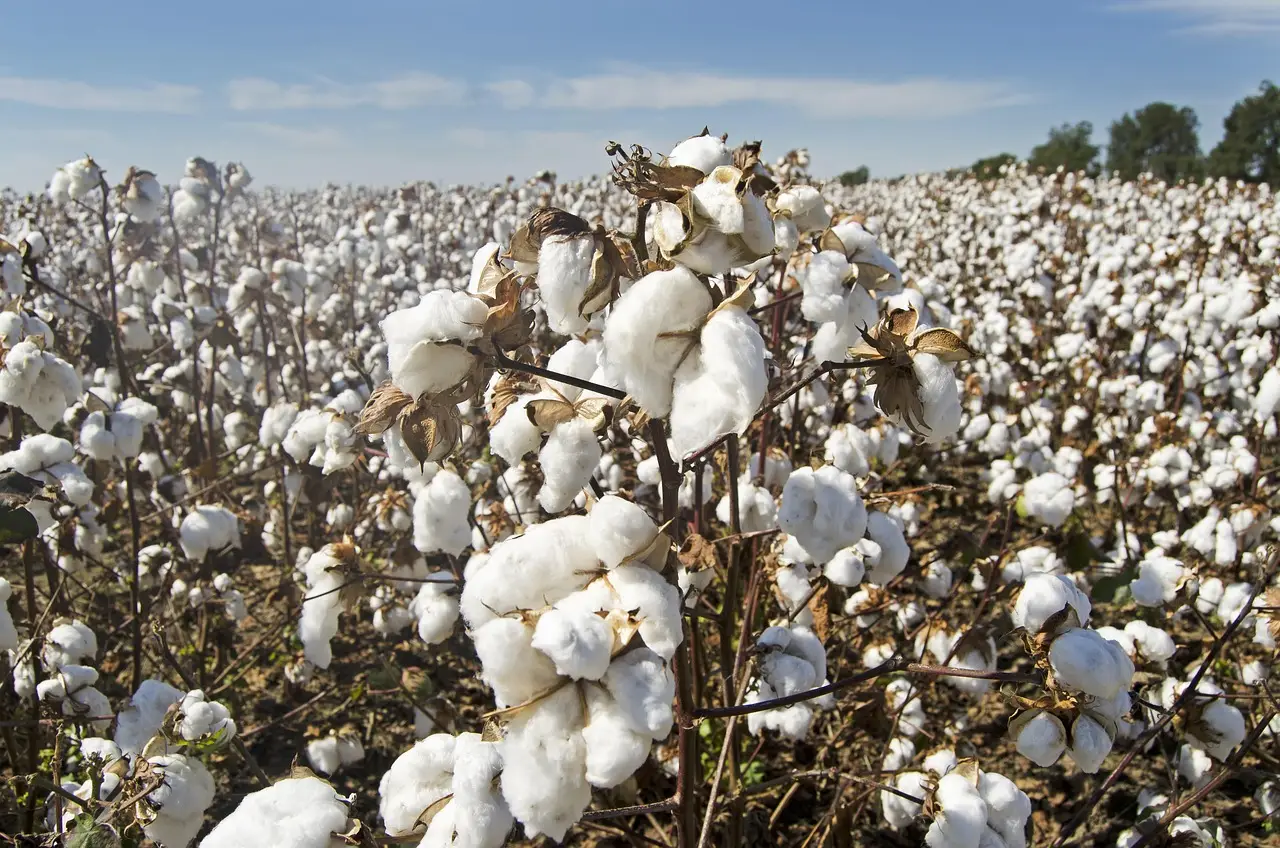
Punjab's cotton acreage has fallen to 80,000 hectares in the 2026-27 season, its lowest level in a decade. The figure marks the continuation of a steep, decade-long contraction: the state planted 4.2 lakh hectares in 2014-15, 1.2 lakh hectares in 2025-26, and now 80,000 hectares this season.
For textile mills and spinners sourcing Indian cotton, the immediate market signal is price, not volume. Raw cotton prices currently range between Rs 8,800 (US $94) and Rs 9,200 (US $98) per quintal, above the minimum support price (MSP). Prices peaked at Rs 9,260 ($99) per quintal on Monday. The season high stands at Rs 9,365 ($100) per quintal, according to Punjab State Agricultural Marketing Board (PSAMB) chairman Harchand Singh Barsat.
What is driving the acreage decline?
Farmers have shifted land out of cotton after successive pest attacks, reallocating it to paddy, basmati and other cash crops. Punjab's cotton belt has contracted by roughly 80% over ten years. That trajectory compresses the regional supply base available to northern Indian mills and ginners.
The shrinkage has not yet dented arrivals. Cotton arrivals in Punjab mandis rose 18% to 1.8 lakh quintals as of 16 November, up from 1.5 lakh quintals in the same period last year, according to PSAMB data. Purchases matched arrivals at 1.8 lakh quintals, against 1.5 lakh quintals a year earlier. Improved reported yields partially offset the smaller planted area.
Who is buying?
Private traders accounted for almost all purchases this season. The Cotton Corporation of India (CCI) procured only 204 quintals, compared with 5,978 quintals a year earlier.
CCI's withdrawal is price-driven, not strategic. Dinesh Rajpoot, section officer (marketing) at CCI's Bathinda centre, said: "the corporation was staying away from procurement because market prices were currently above MSP."
He added that if the prices come around the MSP, CCI will start making purchases. That condition leaves CCI as a price-floor backstop rather than an active buyer while rates hold near Rs 9,000 per quintal.
What does it mean for the supply chain?
For buyers, the data points cut in different directions:
- Supply: Punjab is a marginal and shrinking contributor to national cotton output, and the 80,000-hectare base limits upside from yield gains.
- Prices: Market rates running $94-$98 per quintal above MSP signal firm near-term procurement costs for mills drawing on northern arrivals.
- Quality risk: A pest-driven exit from cotton suggests recurring agronomic pressure, which can affect fibre consistency and raise ginning rejection risk in remaining lots.
- Procurement channel: With CCI largely absent, private traders set the clearing price. Mills negotiating direct farm-gate or mandi purchases face concentrated intermediary activity rather than a state buyer of last resort.
The contrast with last season is instructive: CCI bought 5,978 quintals in 2025-26 when MSP-level intervention was needed. This season's 204 quintals confirm the price floor has not been tested.
What comes next?
The sustainability of current farmer returns — built on above-MSP prices and better yields rather than acreage — will determine whether Punjab's cotton area stabilises or continues to erode toward a further decade low in 2027-28.
via Apparel Resources (Source)
More from Marcus Bennett
Show full bio
Senior reporter covering money, funding and market shifts around fashion industry as a trade and business at The Fabric Brief.
320 articles
Also on the board
- India Set to Extend Duty-Free Cotton Imports to December 31
- India Extends 11% Cotton Import Duty Waiver to December 31
- Kasturi Cotton Bharat Certification Climbs to 213,000 Bales
- Organic Cotton Is Under 1% of Pakistan's Cotton Area, Study Finds
- Cotton Futures Climb Toward 86 Cents as 2026/27 Deficit Nears 5.6 Million Bales