Swatch card No. SW-5853 · cut November 11, 2026
Brands & Retail BusinessMill spec card
Nike Bets on Scarcity to Cure Retro Fatigue as Air Jordan 1 Sits at Retail
CEO Elliott Hill says Nike has been oversupplying retro product and will cut Jordan Retro volume and frequency. October's Royal Air Jordan 1 reissue sits in stock and discounted at retail.
- Fiber
- Brands & Retail Business
- Count
- 5 min read
- Cut
- Weight
- 962 words
Spec notes
- CEO Elliott Hill said Nike will deliberately reduce volume and frequency of Jordan Retro launches, discussing the plan with wholesale partners
- The Royal Air Jordan 1 reissued in October remains fully in stock nearly a month after launch and is discounted at some doors
- Royal reissues in 2013 and 2017 drew massive hype and resale premiums
- Nike hosts Investor Day Nov. 16-17; analysts expect 2027 innovations focused on performance over lifestyle
- Asics, New Balance, Saucony and Salomon have taken lifestyle market share from Nike
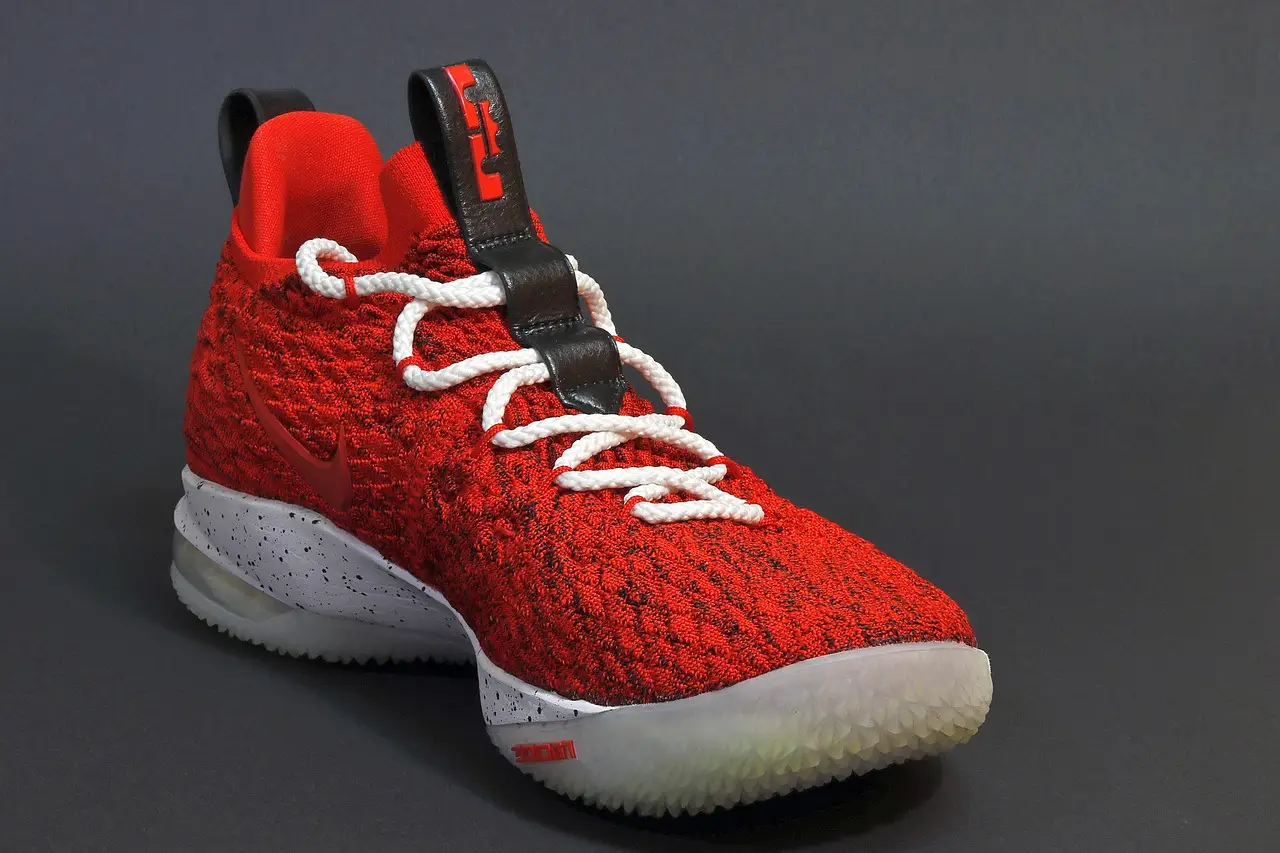
Nike will deliberately reduce the volume and frequency of Jordan Retro launches, chief executive officer Elliott Hill confirmed on his first-quarter fiscal-year 2027 earnings call, as October's reissued Royal Air Jordan 1 sits fully in stock at retail less than a month after launch and already carries discounts at some doors.
The statement signals a supply-side correction to a problem the trade has watched build for seasons: retro product that once sold out within minutes now moves first-come, first-serve. There were no lengthy queues for the Royal Air Jordan 1 release in October. Many stores that typically hold raffle drawings dropped them. Nike's own social media marketing around the launch read unenthused, as if it knew what was coming.
What did previous Royal reissues achieve?
The contrast with history is stark. Royal Air Jordan 1 reissues in 2013 and 2017 generated immeasurable hype and aftermarket resale values to match. The October 2025 launch produced none of it.
"I think right now, with everything moving so fast, it's just like there's no room for it," Cristian Rodriguez, founder and co-owner of Los Angeles-based resale boutique Syndicate, told Footwear News. "The fact that there's no hype behind it, it just came and went and people already focused on the next thing."
Why is Nike pulling back on supply?
"With Jordan Brand Footwear, we're going to get back to leading the scarcity model that we created," Hill said. "Simply put, we've been oversupplying our iconic retro product, asking them to do too much. And as we've done with the Air Jordan 1, we will deliberately reduce the volume and frequency of specific Jordan Retro launches. We've discussed it with our wholesale partners. Together, we will restore balance to the marketplace to create a foundation for more profitable and sustainable growth."
For wholesale partners, the message is direct: expect tighter allocations and fewer launches on flagship franchises including the Air Force 1, Air Jordan 1 and Dunk — models Nike has throttled before. The stated goal is more profitable and sustainable growth, a phrasing that puts margin recovery ahead of volume.
The company declined to comment on the story beyond Hill's remarks.
Is nostalgia the problem or the pipeline?
Analysts often frame Nike's weakness as an innovation crisis. The picture is more nuanced. Nike's most impactful launches have historically been wholly new: Flyknit debuted at the 2012 London Olympics; the Air Foamposite One turned heads on Mike Bibby's feet at the 1997 NCAA tournament; Tinker Hatfield's 1987 Air Max reshaped the company's design language for decades.
Recent output leans the other way. The 2025 GT Future basketball sneaker, despite early noise, was essentially a reskinned Foamposite, a shoe that arrived nearly 30 years prior. Nike's partnership with German 3D-printing firm Zellerfeld came years after the novelty of 3D-printed footwear wore off and has so far produced only spins on retro Air Max designs. Flyknit itself was diluted once the knitted construction spread across performance running, Air Jordans and Air Force 1s.
Genuine novelty still performs. The science-informed Mind recovery shoe became a runaway hit this year, and the New York City Marathon-winning Apex running shoe is set to launch in 2027. Even one of 2026's most celebrated Nike shoes, the Air Force 1 '01 collaboration with a legendary Japanese designer, is a retread of yesteryear.
"I think nostalgia is a powerful drug for any company that has any amount of meaningful heritage," Luke Fracher, founder and owner of NYC luxury resale boutique Luke's, told Footwear News. "And Nike probably has more heritage than any company on earth, realistically. I think it's very easy to rely on old designs. But also, there was a time when every single one of those designs that people think they're relying on now were innovative and were way ahead of their time."
Even the archive was once radical. The 1985 Air Jordan 1 drew a reported $5,000-per-game NBA fine for its black-and-red "Banned" colorway — though it was actually the Air Ship that first drew the league's ire. Skateboarders including Steve Caballero, Christian Hosoi, Mark Gonzales and Lance Mountain adopted the shoe, evidence of design reach beyond basketball.
Who is taking the market share?
Rhys McKee, a U.K.-based brand consultant who runs the @cakenotcrumbs Instagram account, hypothesized the global economy played a role in the Royal flop. He also flagged competition: Asics, New Balance, Saucony and Salomon have taken a chunk of Nike's share, particularly in lifestyle, by releasing "more interesting" sneakers not destined for repeated reissues.
A generational disconnect compounds the pressure. Gen Z shoppers did not watch Michael Jordan play and are less swayed by 1980s and 1990s marketing conventions. Fracher also cited the music gap: "Jordan Brand, in particular, has not done a good job of connecting with musicians that younger people actually care about. Travis Scott is cool, but putting all your eggs in one basket like that doesn't really work."
What comes next?
Nike hosts its Investor Day on Nov. 16 and 17, where analysts expect a showcase of 2027 innovations weighted toward performance over lifestyle product. Fracher's prescription is blunt: "They should be aspirational... Making them more limited seems like such a simple fix, but it probably will help because hype sells at the end of the day. People want what they can't have. And when something's too attainable, they don't want it, as crazy as that is."
Whether scarcity alone can restore both margin and demand will become clearer once the reduced Jordan Retro cadence reaches wholesale books in fiscal 2027.
via WWD (Source)
More from Rebecca Stone
Show full bio
Staff writer covering people, launches and day-to-day practice in fashion industry as a trade and business at The Fabric Brief.
285 articles