Swatch card No. SW-3860 · cut October 10, 2026
Supply Chain & SourcingMill spec card
India's Textile Edge Now Hinges on Capacity, Not Tariffs: Fibre2Fashion
A Fibre2Fashion analysis argues India's textile competitiveness has pivoted from tariff differentials to physical capacity, reframing sourcing diligence around mill-level throughput, utilization and expansion runway.
- Fiber
- Supply Chain & Sourcing
- Count
- 3 min read
- Cut
- Weight
- 552 words
Spec notes
- Fibre2Fashion analysis is headlined 'India's textile edge now hinges on capacity, not tariffs'
- The framing shifts sourcing diligence from tariff engineering to mill-level capacity audits, including line speeds, shift patterns and finishing throughput
- The source provides no quantification in rupee, dollar or percentage terms for the capacity-versus-tariff shift
- The source does not name individual Indian mills, expansion projects or specific buyer commitments
- Capacity-stretched Indian suppliers raise parallel risk under buyer codes of conduct and the EU Corporate Sustainability Due Diligence Directive timeline
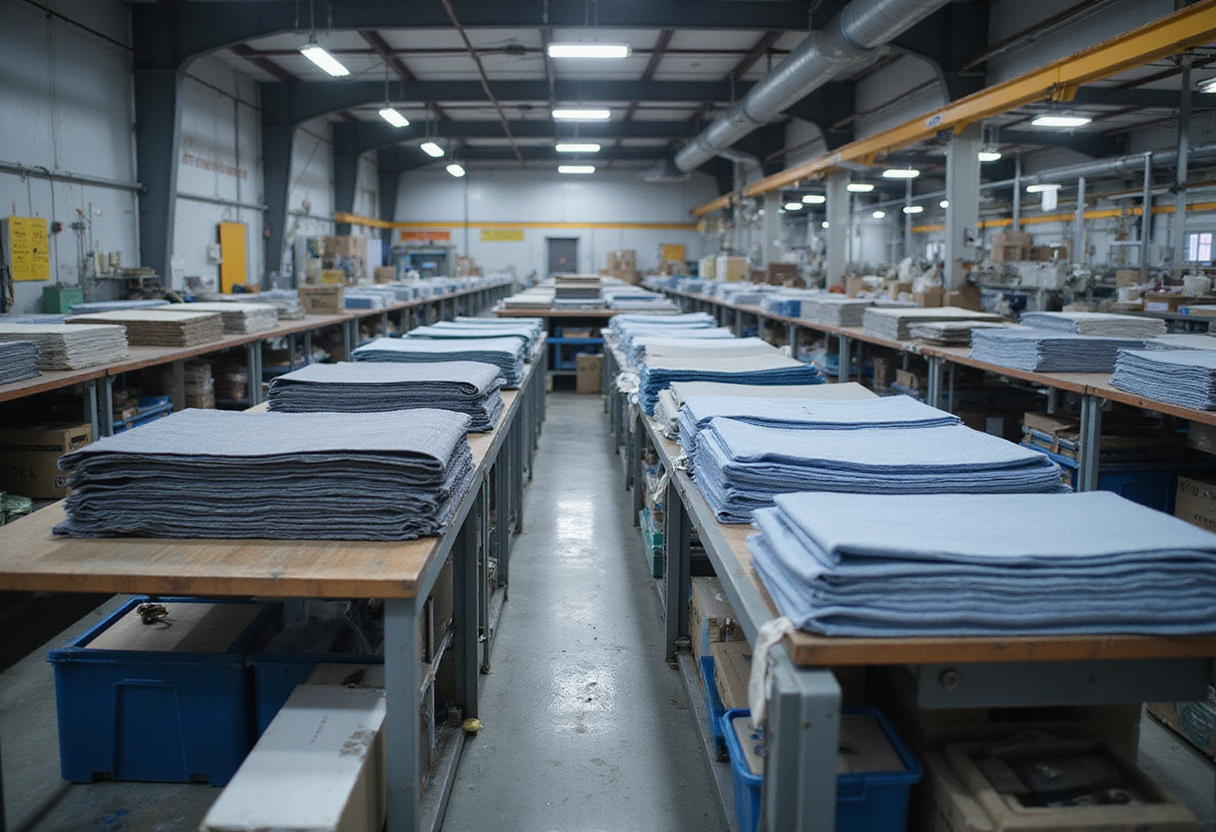
India's textile competitiveness no longer rests on duty differentials but on whether mills can physically deliver the volumes buyers need, a Fibre2Fashion analysis argues under the headline "India's textile edge now hinges on capacity, not tariffs."
The reframing matters for sourcing teams that have historically modeled India as the lower-duty alternative to Bangladesh, Vietnam and China. Tariff engineering still belongs in the landed-cost stack, but the binding constraint on India's next growth leg, per the analysis, sits inside the factory gate: spinning frames, knitting capacity, fabric preparation, processing lines and finishing throughput.
For brand sourcing and supply-chain professionals, the shift recalibrates what factory diligence must cover. Audits once oriented around compliance certificates, wage registers and piece-rate records now require a harder conversation: how many lines run per shift, what is the dye-house queue, where do bottlenecks sit between grey fabric and finished goods, and what is the documented expansion runway for each nominated supplier? The answers determine whether India can absorb a reallocation from another hub without schedule slippage or quality drift.
Capacity also reorders vendor selection at the mill level. A unit in a tariff-advantaged state that cannot scale beyond a fixed monthly output loses to a unit in a slightly higher-duty geography with documented expansion headroom. Lead time compresses where spare capacity exists; it stretches where mills run above 90% utilization and queue every new purchase order behind existing commitments. The implication for buy-house analysts is that capacity utilization, not headline freight or duty rates, now sets order-to-shipment reliability.
A second-order impact lands on compliance teams. Capacity-stretched operations historically cut corners first on social compliance audits, effluent treatment and chemical management — exposures already covered by buyer codes of conduct and on the implementation timeline of the EU's Corporate Sustainability Due Diligence Directive. Brands planning to scale Indian sourcing at speed will need to scale verification at the same pace, or accept elevated risk in supply-chain disclosures, brand-level sustainability reports and investor-facing filings.
The headline analysis does not, on the available text, quantify the capacity-versus-tariff shift in rupee, dollar or percentage terms, leaving buying teams without a benchmark figure for what the new calculus implies on landed cost. Nor does it name individual mills, expansion projects or buyer commitments — an absence that itself signals capacity is a mill-by-mill variable rather than a national statistic.
Three operational questions follow for sourcing leaders. First, what is the present utilization rate of nominated Indian suppliers, and is there headroom for double-digit volume growth without fresh capital expansion? Second, what is the realistic timeline for India-based capacity additions to come online, and how does it compare with the sourcing windows for the next two seasons? Third, how should tariff modeling be down-weighted in the total cost stack relative to capacity validation, and what dataset supports the new weighting?
Buyers should also test the capacity claim during RFQ stages by requesting documented line speeds, shift schedules and recent on-time delivery metrics, rather than treating capacity as an assumption embedded in the supplier's commercial pitch.
The forward implication for sourcing teams planning the next cycle is direct: tariff modeling should no longer lead the India file. Capacity modeling should.
via Google News: Apparel & textile tariffs (Source)
More from Elena Vasquez
Also on the board
- India's Textile Edge Now Hinges on Capacity, Not Tariffs
- US Tariff Rates Hand India a Textile Edge — But No Free Pass
- 'No Excuses Left': Goyal Presses Indian Textiles on Tariff Edge
- India's IIP Data Flags Widening Textiles-Apparel Output Gap
- India Positioned to Capture Apparel Sourcing Shift Away from China: Report