Swatch card No. SW-1937 · cut October 10, 2026
Apparel ManufacturingMill spec card
Humanoid Robots Move Onto the Apparel Factory Floor
WWD reports humanoid robots are entering the apparel workforce, an early signal for sourcing teams tracking automation's impact on labor costs and lead times.
- Fiber
- Apparel Manufacturing
- Count
- 2 min read
- Cut
- Weight
- 440 words
Spec notes
- WWD reports humanoid robotics is entering the apparel workforce
- No factory locations, order volumes or deployment dates are confirmed in the report
- Labor is the dominant cost in garment assembly, making robotics a landed-cost variable
- Prior apparel automation efforts since 2016 achieved only narrow category adoption
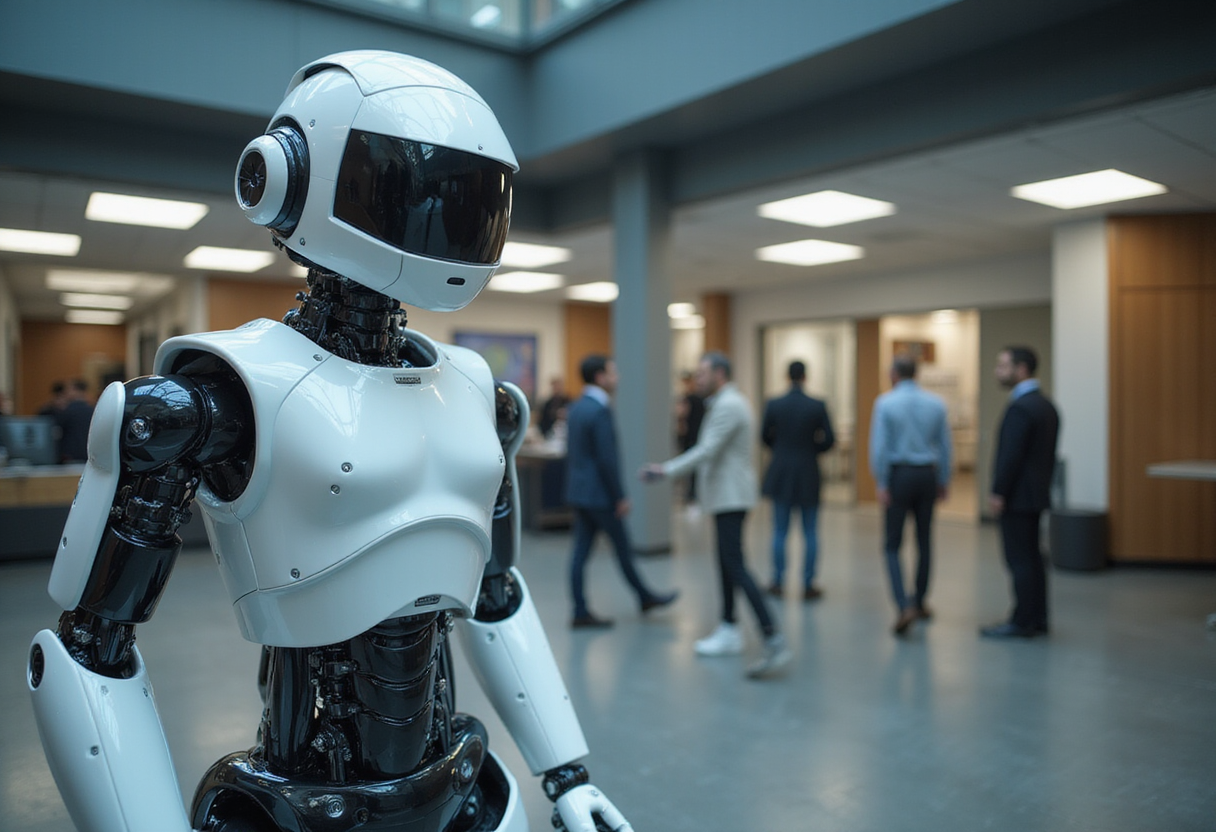
Humanoid robotics is entering the apparel workforce, WWD reports, marking one of the first signals that general-purpose robots — rather than fixed automation — are being positioned for cut-and-sew and garment handling tasks.
The headline development matters for sourcing teams because apparel has long resisted full automation. Fabric is limp, sewing requires fine motor control, and most automation investments to date have targeted spinning, cutting and pressing rather than assembly. A humanoid form factor, if it reaches commercial viability, could retrofit into existing factory lines without re-engineering the floor plan.
What is confirmed — and what is not
The WWD report confirms the direction of travel: humanoid robots are being introduced into apparel production contexts. The article as surfaced here does not specify:
- Which brands or manufacturers have placed orders
- Factory locations or deployment timelines
- Unit costs, capacity figures or labor-saving estimates
- Certifications or compliance frameworks covering robotic labor
Sourcing executives should treat the news as an early-stage signal, not a proven cost case. History counsels caution: Sewbo's robotic garment assembly demo in 2016 and SoftWear Automation's Sewbots each promised to displace sewing labor, yet adoption at scale has remained limited to narrow product categories such as T-shirts and denim.
Why the workforce angle matters now
Labor is the largest cost component in garment assembly, typically dominating ex-factory price. Any technology that reduces direct labor hours changes landed-cost math across entire sourcing regions. It also touches compliance: buyers auditing against labor standards will need protocols for facilities where robots and workers share tasks, and unions and governments in major producing countries will scrutinize displacement claims.
Lead times are the second lever. Robotic cells that run continuous shifts could compress production cycles and support nearshoring arguments in the US and Europe, where wage gaps have historically ruled out domestic cut-and-sew at volume.
Questions buyers should ask vendors
Before adjusting sourcing strategies, procurement teams can pressure-test any humanoid robotics announcement with standard questions:
- What specific operations will the robots perform, and at what cycle time per garment?
- Who bears the capital cost — the factory, the robot vendor or the brand under a capacity commitment?
- What is the measured defect rate versus human benchmarks on the same operation?
- Is the deployment a pilot or a contracted volume commitment with dates attached?
The road ahead
WWD's report signals that apparel automation is shifting from specialized machinery toward adaptable humanoid systems, a development that could eventually reshape labor-cost comparisons across sourcing destinations. Watch for named factory deployments, order volumes and unit economics in subsequent announcements before pricing the shift into sourcing plans.
via Google News: Apparel manufacturing (Source)
More from Rebecca Stone
Show full bio
Staff writer covering industry trends and analytics at The Fabric Brief.
142 articles
Also on the board
- CreateMe Launches Robotic Apparel Manufacturing Platform
- Jack Technology and Siemens Target AI-Driven Apparel Manufacturing
- Rotostitch Raises $1M Pre-Seed to Scale Automated Apparel Manufacturing
- AI-Driven Smart Textiles Reshape Sportswear Production Planning
- Style3D Repurposes Fashion Simulation Tech for Robotics