Swatch card No. SW-2180 · cut October 10, 2026
Wholesale & Trade ShowsMill spec card
FaW TOKYO 2026 opens registration, expands to nine specialised shows
FaW TOKYO will stage its 2026 edition as nine specialised shows, with registration now open, according to Apparel Views. The expanded architecture reshapes buyer time-on-site economics and exhibitor stand-cost calculations for sourcing teams.
- Fiber
- Wholesale & Trade Shows
- Count
- 3 min read
- Cut
- Weight
- 574 words
Spec notes
- FaW TOKYO opened registration for its 2026 edition, per Apparel Views
- The 2026 cycle will be structured around nine specialised shows
- FaW TOKYO is billed as Japan's largest fashion trade show
- Dates, venue, hall map and exhibitor list were not disclosed in the registration notice
- The registration notice was first published by trade publication Apparel Views
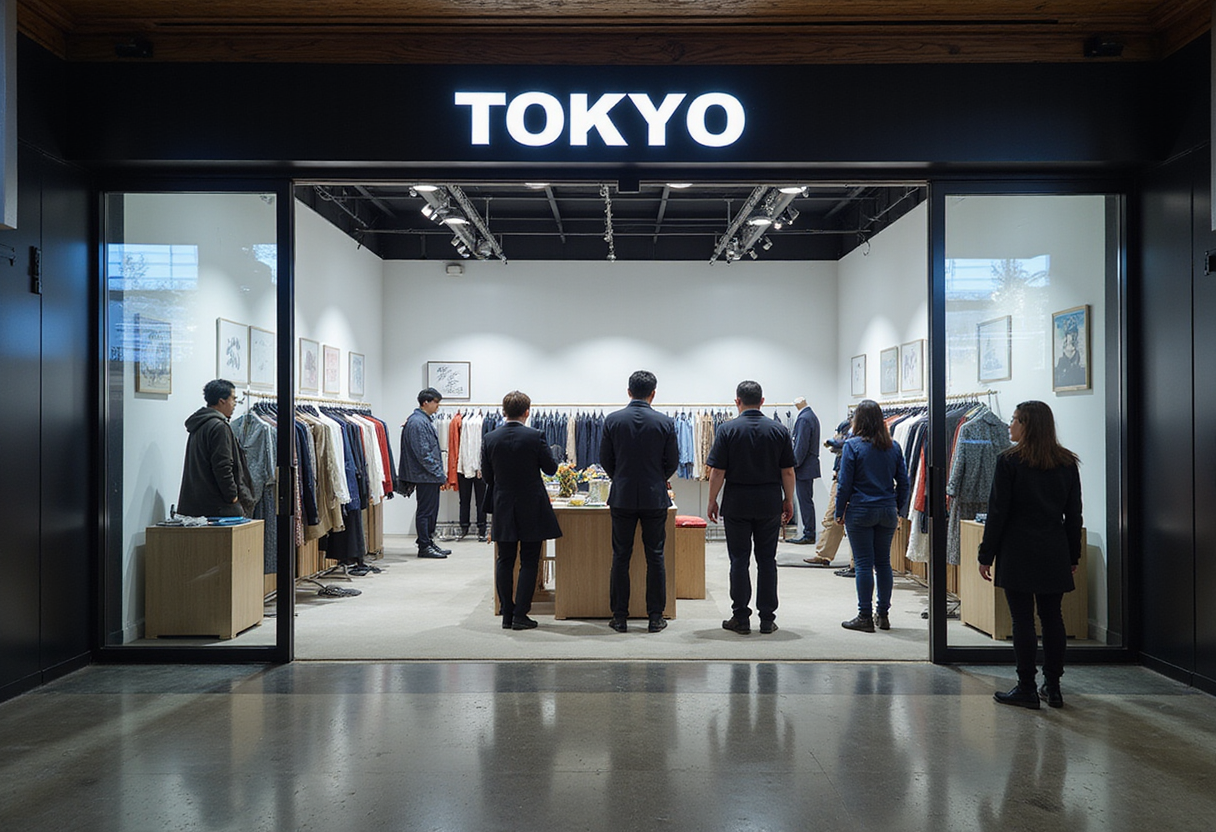
FaW TOKYO will stage its 2026 edition as nine specialised shows, with registration now open, according to trade publication Apparel Views.
The registration notice is the first confirmed commercial signal for the 2026 cycle and the first public disclosure of the expanded show architecture. For sourcing managers, mills, OEM/ODM factories and brand-licensing teams planning Japan-market penetration, the move from a smaller cluster of themed halls to nine specialised shows changes both buyer time-on-site economics and exhibitor stand-cost calculations.
What does the nine-show structure change for buyers?
Granular category splits inside a single venue reduce walking time between textile mills, apparel manufacturers, accessories vendors and finished-goods brands. A nine-show architecture typically signals the organiser's intent to match buyers with narrower product categories.
The model has worked at European fairs such as Première Vision and Milano Unica, where fabric, yarn and finished goods occupy distinct halls under the same roof. For sourcing teams managing Japan ranges, that segmentation can compress meeting density: more supplier conversations per hour, fewer cross-hall transits, and a clearer separation between a denim mill conversation and a footwear-component conversation.
The trade-off is typically a longer total show footprint, which raises day-one versus day-two attendance questions for overseas buyers on short trips.
How does FaW TOKYO position within regional sourcing?
As Japan's largest fashion trade show, FaW TOKYO anchors domestic order-writing for department-store buyers, select-shop owners, online retailers and licence-driven brands. It runs as a recurring order-writing venue, complemented by international shows where Japanese mills and OEM/ODM factories exhibit — most prominently Première Vision Paris and Milano Unica.
The move to nine specialised shows for 2026 signals the bid to retain relevance against smaller domestic fairs and against the international circuit, where Japanese mills increasingly take standalone booths. For brands sourcing technical fabrics, circular knit and indigo denim, FaW TOKYO functions as a domestic filtering stage — a checkpoint before committing to show-floor travel for European fairs.
What does the expansion signal for exhibitor economics?
Adding show categories typically lifts revenue per square metre only when buyer attendance scales in proportion. Organisers expanding into nine specialised shows generally pursue one of two logics: enlarging total floor space with new category halls, or re-segmenting existing space into more targeted zones.
The Apparel Views registration notice does not yet confirm which approach the 2026 edition is taking, nor does it disclose floor area, hall capacity, or stand rates. For mills and OEM/ODM factories evaluating participation, three variables drive the return-on-participation calculus: stand cost per square metre, expected order volume from category-matched attendees, and travel subsidy eligibility for international exhibitors.
What should sourcing and licensing teams verify before registering?
- Whether the nine shows replace existing zones — a re-segmentation — or expand total hall footprint
- Booth pricing tiers across the nine shows and whether rates differ by category
- Hosted-buyer programme eligibility for international visitors, including travel subsidies
- Participation terms for OEM/ODM exhibitors, particularly any pricing-transparency rules
- Confirmed dates, venue and hall map — none disclosed in the registration notice to date
What is the forward signal?
A registration opening and a nine-show structure for 2026 point to deeper segmentation rather than broader floor growth. The next material data point will likely be the disclosure of dates, venue, hall allocation and the full exhibitor list in subsequent organiser releases.
via Google News: Fashion wholesale & trade shows (Source)
More from Priya Raman
Show full bio
Correspondent covering industry trends and analytics at The Fabric Brief.
159 articles