Swatch card No. SW-4169 · cut October 30, 2026
Sustainability & ComplianceMill spec card
BGMEA ESG Dashboard Goes Mandatory as 326 Factories File Reports
BGMEA's new ESG Dashboard has drawn reports from 326 garment factories, with mandatory participation for members planned and possible BKMEA coordination ahead.
- Fiber
- Sustainability & Compliance
- Count
- 3 min read
- Cut
- Weight
- 558 words
Spec notes
- 326 factories have submitted reports via the BGMEA ESG Dashboard so far
- BGMEA president Mahmud Hasan Khan called participation 'insufficient' and said reporting will become compulsory
- Bangladesh expects LDC graduation in 2029
- Denmark's embassy financed the platform; BRAC Institute and Mapped in Bangladesh provided technical support
- BGMEA may partner with BKMEA to enforce the reporting requirement
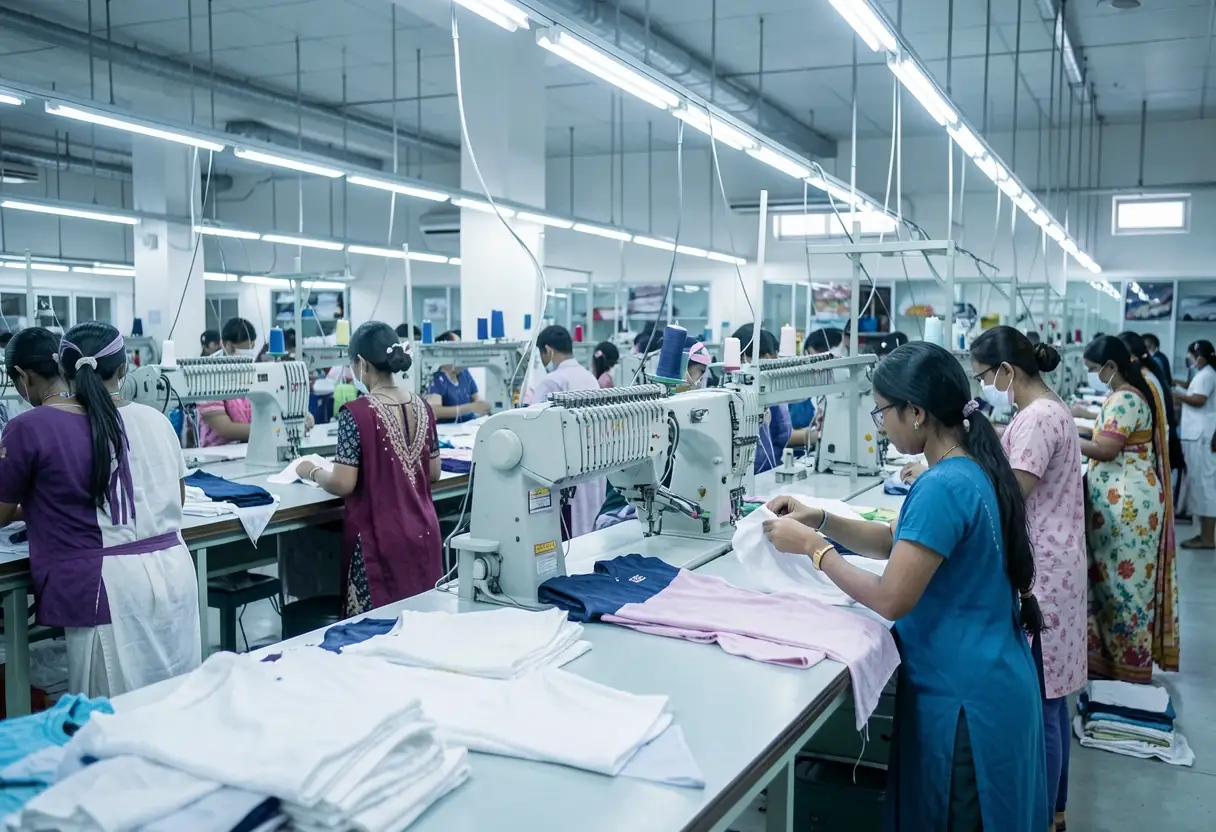
Only 326 factories have submitted ESG reports through the BGMEA ESG Dashboard, and the trade body's president calls that participation rate "insufficient." Mahmud Hasan Khan, president of the Bangladesh Garment Manufacturers and Exporters Association (BGMEA), said reporting would soon become compulsory for members, marking a shift from voluntary disclosure to enforced compliance data collection across the country's largest export sector.
The dashboard collects and assesses environmental, social and governance (ESG) performance data from garment factories. BGMEA designed the system to help manufacturers respond to changing requirements in international markets — a direct response to tightening due-diligence rules in the EU and other export destinations.
Who built it, and who paid?
Denmark funded the initiative. The Embassy of Denmark in Bangladesh provided financial support, and the BRAC Institute of Governance and Development plus Mapped in Bangladesh delivered technical assistance. Sheikh Hossain Muhammad Mustafiz, a BGMEA director who led the project, built the current system using data from the 326 participating factories.
Mustafiz said the industry needed to treat compliance as part of its competitive position rather than solely as an obligation. That framing matters for buyers: it signals factory-side pressure to convert ESG data into a commercial argument rather than a regulatory checkbox.
What did the launch reveal?
The launch took place at BGMEA's complex in Uttara, Dhaka. Attendees included:
- Dr Rashed Al Mahmud Titumir, adviser to Bangladesh's Ministry of Finance and Ministry of Planning
- Christian Brix Møller, Denmark's ambassador to Bangladesh
- Government, industry and academic representatives
Titumir said the government aims to expand manufacturing investment, domestic revenue and spending on education and healthcare while managing economic pressures and employment needs. He referenced Bangladesh's expected graduation from the Least Developed Country category in 2029 — a milestone that will phase out trade preferences and raise the stakes for competitiveness.
Will reporting actually widen?
Two caveats deserve attention. First, no date has been set for making reporting compulsory; "soon" remains undefined. Second, BGMEA alone cannot cover the sector. Khan said the association may work with the Bangladesh Knitwear Manufacturers and Exporters Association (BKMEA) to implement the requirement, which suggests the mandatory rule's scope depends on negotiations that have not concluded.
Professor Munshi Sulaiman, research director at the BRAC Institute of Governance and Development, called for all BGMEA member factories to be included on the dashboard to produce broader sector data. BGMEA's membership runs well beyond the 326 current reporters, so the coverage gap is substantial.
What happens next?
Dr M. Masrur Reaz, chairman and CEO of Policy Exchange Bangladesh, urged the sector to move beyond conventional compliance towards sustainability. He stressed that a robust export sector remains central to Bangladesh's development objectives and that turning ESG data into practical measures would support long-term progress. Møller, for his part, linked Danish support to broader reforms, citing national unity, sector rebuilding and execution of the July Charter as steps toward a stable parliamentary democracy and Bangladesh's trillion-dollar economy goal.
For sourcing teams, the immediate question is verification: whether the dashboard's data will be auditable, standardized and comparable across factories. BGMEA has not yet detailed validation methods. Buyers and vendors should watch for the compulsory-reporting timeline and the BKMEA agreement — both will determine whether the platform becomes a genuine sector-wide data source or a partial register of volunteers.
via Just Style (Source)
More from Priya Raman
Show full bio
Correspondent covering people, launches and day-to-day practice in fashion industry as a trade and business at The Fabric Brief.
290 articles
Also on the board
- BGMEA to Honour 12 Bangladesh Garment Sustainability Initiatives
- Textile Today urges innovation ecosystem build-out for Bangladesh apparel
- Sri Lanka Apparel Sector Flags GSP+ Risk, JAAF Tells EU
- Textile Innovation Expo 2026 to Showcase Bangladesh's Move Up the Value Chain
- Jordan Signs Agreement With ILO to Improve Garment Factory Conditions