Swatch card No. SW-7877 · cut October 17, 2026
Supply Chain & SourcingMill spec card
Bangladesh Apparel Faces the Digital Passport Question
Textile Today asks whether Bangladesh's apparel industry can deliver item-level garment traceability — a question that now sits at the centre of sourcing decisions.
- Fiber
- Supply Chain & Sourcing
- Count
- 3 min read
- Cut
- Weight
- 539 words
Spec notes
- Textile Today published an article questioning Bangladesh's apparel industry readiness for garment-level 'passports'.
- The piece frames item-level traceability as an open question for the sector rather than a settled capability.
- The headline, 'A passport for every dress', targets product documentation across Bangladesh's garment export base.
- The publication poses the question without declaring the industry ready, placing the burden of proof on suppliers.
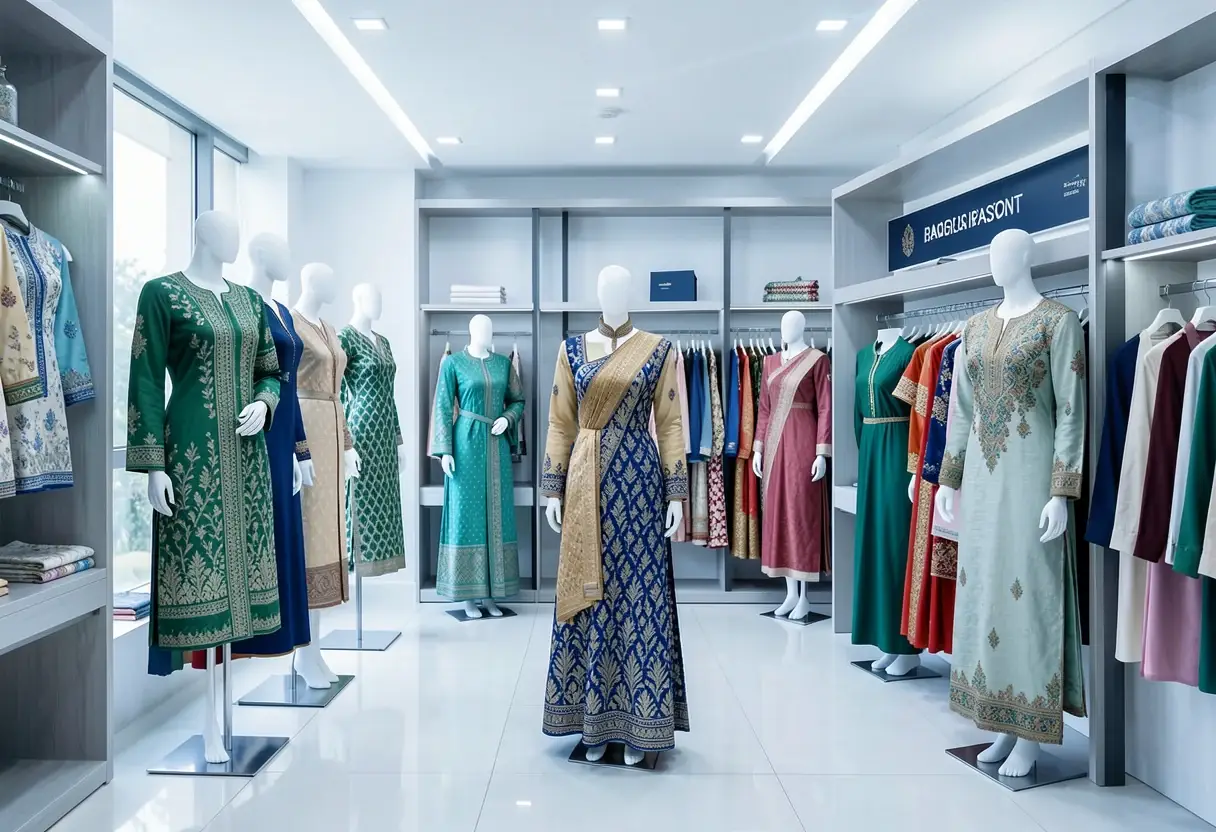
Textile Today has published a pointed question for Bangladesh's apparel sector: is the industry ready to attach a passport to every dress? The headline frames the challenge directly. The article, headlined "A passport for every dress: Is Bangladesh's apparel industry ready?", puts the country's garment export machine on notice that product-level traceability is becoming a condition of trade rather than a marketing option.
The phrasing matters for sourcing teams. A "passport" for a garment refers to digital product documentation — the kind of item-level data record that regulators and brands increasingly demand before an order ships. For Bangladesh, the world's second-largest apparel exporter after China, readiness is not an abstract question. It determines whether factories keep their place in brand order books as compliance requirements tighten.
Why the question lands now?
The article's central claim is contained in its framing: the industry's preparedness is uncertain, and the uncertainty itself warrants scrutiny. Textile Today, a Dhaka-based trade publication that covers the country's textile and apparel value chain closely, chose to pose the readiness question rather than declare the sector prepared. That editorial choice signals where the publication believes the burden of proof sits.
For buyers, the practical questions follow from the headline. Which factories can generate item-level data today? Which mills and cut-make-trim units can document inputs, processes and provenance at the level a passport implies? And who absorbs the cost of the systems, training and verification that item-level traceability requires across a supply base that spans thousands of facilities?
What does 'ready' mean for suppliers?
Readiness divides into measurable components rather than a single yes-or-no verdict. The Textile Today piece invites exactly that disaggregation:
- Data capture at the factory floor, from fabric lot to finished garment.
- System integration, so supplier records connect to buyer and regulatory platforms.
- Cost allocation, since traceability infrastructure carries a price that someone in the chain must pay.
- Timeline discipline, because passports attached to garments imply deadlines, not aspirations.
Bangladesh's apparel sector exports garments worth tens of billions of dollars annually and employs roughly four million workers, so the stakes span both commercial access and industrial policy. A sector that cannot document its products at the item level risks exclusion from markets that can. A sector that can may convert compliance into a sourcing advantage over competitors slower to build the capability.
The article does not declare the industry ready or unready. It asks. In trade-press terms, that is often the sharper verdict.
What should sourcing executives watch?
The question Textile Today raises will be answered by evidence, not announcements. Watch for factory-level pilots that produce verifiable item records. Watch for certifications and platform integrations that survive audit. Watch, above all, for which Bangladeshi suppliers move first — and whether brands reward that movement with orders or merely with praise.
The readiness question will resolve on lead times, order volumes and retained contracts. Until then, buyers assessing Bangladeshi capacity should treat passport capability as a live diligence item, and the coming months of pilot results and regulatory clarifications will show whether a passport for every dress becomes a licence to export or a bottleneck at the port.
via Google News: Apparel & garment industry (Source)
More from Rebecca Stone
Show full bio
Staff writer covering people, launches and day-to-day practice in fashion industry as a trade and business at The Fabric Brief.
203 articles
Also on the board
- A Passport for Every Shirt: Bangladesh Asks If It Is Ready
- Textile Today urges innovation ecosystem build-out for Bangladesh apparel
- Bangladesh Apparel Told to Scale AI and Tech Ahead of LDC Exit
- Bangladesh Apparel Faces a Shifting Fabric Equation
- Bangladesh Apparel Sector Eyes Circular Production Shift