Swatch card No. SW-6992 · cut October 30, 2026
Brands & Retail BusinessMill spec card
Aritzia Leads Specialty Retail’s Double-Digit Sales Gains
Aritzia’s 44.1% second-quarter sales gain led a group of double-digit specialty performers, while Lululemon, Nike and other rivals struggled in a low-single-digit market.
- Fiber
- Brands & Retail Business
- Count
- 4 min read
- Cut
- Weight
- 895 words
Spec notes
- Aritzia’s second-quarter sales rose 44.1%.
- Uniqlo’s North American sales rose 34.6% in the fiscal year ended Aug. 31.
- Aerie and Coach each posted 25% last-quarter sales growth.
- Ralph Lauren rose 17%, Urban Outfitters 13.7% and Gap brand 10%.
- Fast Retailing gained 16.6% annually; Zara posted a 9% second-quarter gain.
By Marcus Bennett
Aritzia’s 44.1% second-quarter sales increase led fashion specialty retailers posting double-digit gains, while Fast Retailing-owned Uniqlo lifted North American sales 34.6% in its latest fiscal year, ended Aug. 31. Fast Retailing recorded a 16.6% overall annual gain.
Which retailers posted double-digit growth?
- Aerie and Coach: Each posted 25% last-quarter sales growth.
- Ralph Lauren: Sales increased 17% last quarter.
- Urban Outfitters: Sales rose 13.7% last quarter.
- Gap brand: Sales advanced 10% last quarter.
Toteme and Fast Retailing were also named among the high-performing set, although no separate Toteme figure was provided. The gains came amid widespread macroeconomic uncertainty and consumer strain from rising food, gas, housing and health costs. Double-digit growth remained rare in that setting.
Executives from many retailers said second-quarter momentum continued into the third quarter and should extend into fourth-quarter holiday selling. That remains an expectation, not a reported result. Outside the group, Lululemon, J.Crew, Nike, Athleta and Old Navy have underperformed lately. Allbirds closed every store, while Francesca’s liquidated.
What is driving the sales gains?
William Susman, head of the consumer and retail practices at Cascadia Capital, identified three drivers: demand for more product, a balance between quality and perceived relative value, and strong retail execution. He said: “The consumer is not stupid. She wants what she wants and wants to pay a fair price.” He also emphasized detail and basic merchandising discipline.
Craig Johnson, president of research and consulting firm Customer Growth Partners, said consumer spending was solid, not great. Upper-market specialty apparel players performed better by combining value, newness and casual elegance, creating white space with organic demand.
He described much of retail as going sideways. He linked stronger specialty results to product, front-end execution and higher-income customers outside the top decile. Geographic expansion and an expanding brand concept also mattered.
Jennifer Foyle, president and executive creative director of Aerie and American Eagle, spoke at the Wharton Baker Retailing Center CEO Summit in Manhattan this month. She said building proprietary brands within a portfolio is hard and differs from the collaborations many peers announce.
Her prescription: create more owned businesses within the existing portfolio, remain in search of the next white space and stand out by doing what competitors do not. She said Aerie had only just started and that the approach had made the brand relevant. Foyle also said teams should return to the core customer, wardrobe that customer, move ahead of fast-moving trends and stay with the product.
What does the store evidence show?
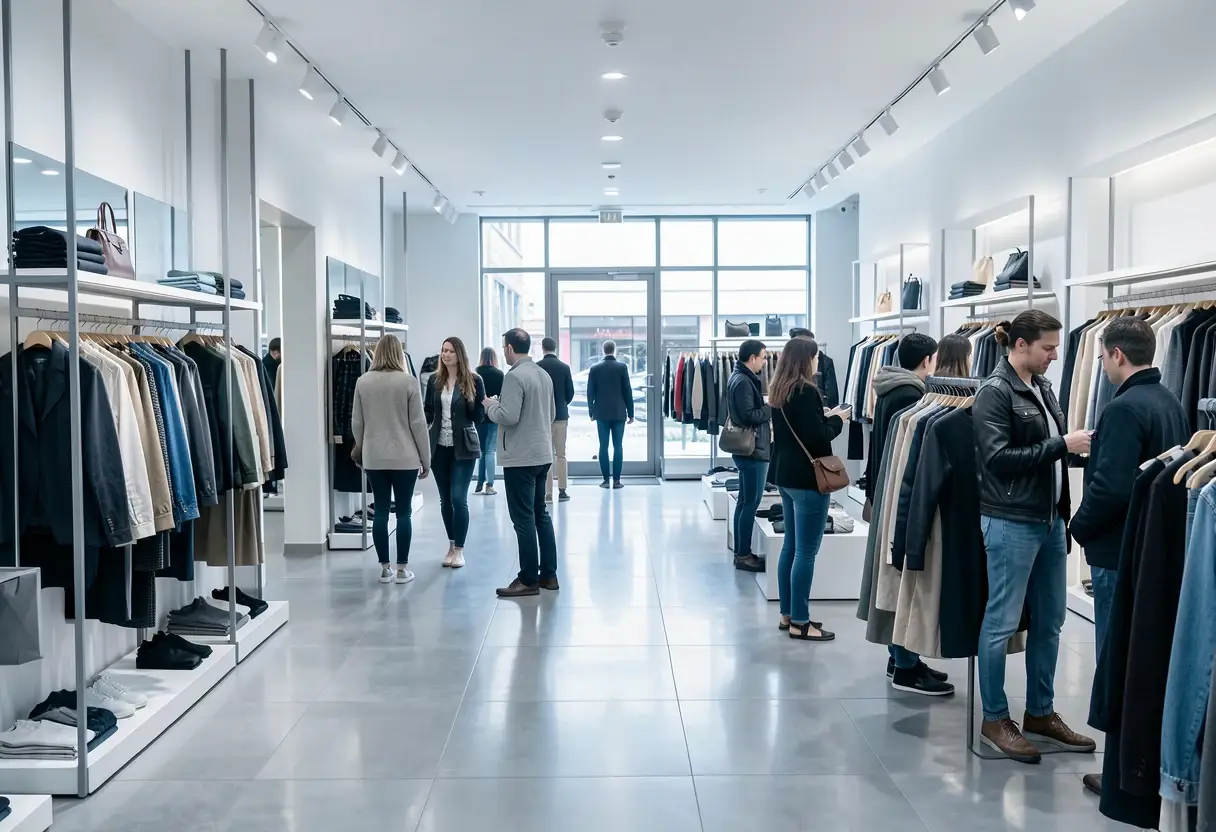
One week before publication, Adrienne Lazarus, who has served as president or CEO of Madewell, Intermix Ann Taylor, Frye and Bandier, visited Aritzia at The Westchester mall in White Plains, N.Y. She found the store packed with shoppers across age groups.
Her assessment: elevated, tailored, refined clothes for work and going out, including coats, luxe sweaters, cashmere cardigans, blouses, skirts and trousers. Upstairs, she found casualwear and puffers for work and weekends. The store visit provides qualitative product evidence, not comparable-sales or margin data.
Lazarus said winners behave like the truest versions of themselves. Customers still want Polo to be Polo and Levi’s to be Levi’s, she said. Gap can be Gap again while evolving, and Aritzia stays close to its customer.
She described luxury trade-down, also termed quiet luxury, as a shared thread. Aritzia calls its version everyday luxury; Coach resists the accessible-luxury label; Sweden’s Toteme sits between contemporary and accessible designer fashion.
Lazarus said leading brands are investing in better-quality garments that last. Zara management put it differently: the goal is not a race to the bottom but a better item customers will pay more for. Zara reported a 9% second-quarter sales gain.
She identified back-to-office blazers, tailoring, suiting, cardigans and little heels as the strongest categories. Higher-unit retail is performing better than casual.
Where are brands taking share?
Susman said Ralph Lauren has built global, multiple lifestyle appeal around one brand world. The system spans Ralph’s Coffee, the Polo Bar and core Polo Ralph Lauren merchandise. Ralph Lauren earns its money on the bread-and-butter label rather than Purple Label, the highest-priced, most luxurious tier. He added that the wider brand communicates a desirable lifestyle and how customers want to live.
Susman said shoppers have reasons to return to Gap. Merchandise, marketing and presentation in stores and online now match what customers remember and why they love the brand again.
Johnson said Free People, Anthropologie and Nuuly drive double-digit growth within the Urban Outfitters portfolio. The namesake brand has improved after turnaround efforts. He called Aritzia’s U.S.-focused expansion thoughtful.
Johnson set the operating limit for expansion: “It isn’t just about adding more square footage. It’s about also bringing real newness in.”
Lazarus said the best-performing specialty brands are taking share. The total market is growing by low single digits, at best, according to her assessment. No margin, inventory, lead-time or unit-cost data accompanied the results, leaving brand and sourcing teams unable to isolate volume, price and product-mix effects. The next test comes in fourth-quarter holiday selling, where executives expect momentum to continue and brand teams must preserve product quality and disciplined execution.
via WWD (Source)
More from Marcus Bennett
Show full bio
Senior reporter covering money, funding and market shifts around fashion industry as a trade and business at The Fabric Brief.
239 articles
Also on the board
- US Retail Sales Climb for 12th Straight Month to $560.8bn in September
- Holiday 2026 Forecasts Point to 2–6% Sales Gains
- Fashion GMV Climbs 22–25% in First Two Days of India Festive Sales
- Promotions Split Footwear Brands in September, BTIG Finds
- Apparel Sales Rebound Holds Despite Tariffs and Consumer Anxiety